FDA Readiness Toolkit for Pharmaceutical Companies

The guidelines set forth by the FDA are a major factor in ensuring that pharmaceutical companies manufacture and sell products that are safe, reliable, and effective. Compliance with FDA regulations is simply just a part of doing business for pharmaceu…

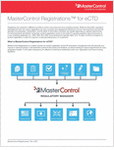
MasterControl Registrations for eCTD

While the information required is essentially the same for various registrations as many countries have adopted the Electronic Common Technical Document (eCTD) standard, the preparation, presentation, and the depth of information submitted vary greatly…

Qualifying Clinical Site Personnel Using Embedded Automation

As clinical trials continue to expand globally, technology plays a critical role in maintaining data integrity and at the same time accelerating study start-up. Consider a study management team that must travel globally to hold investigator meetings. Given that clinical trials in Asia had experienced 30% average annual growth from 2005 to 2012, travel takes up a much greater portion of the study management team’s time and energy. That’s why study teams have turned to technology to reduce this effort – from preclinical R&D and regulatory communication to packaging/distribution and postmarketing studies.

To be successful, site personnel qualification technology must be targeted to each role within the clinical research site. Otherwise, each individual within the site would receive too much or not the right material that pertains to their function within the study. As a provider of clinical site qualification technologies to the Life Sciences industry, UL Compliance to Performance has identified four guiding rules for structuring an automated Clinical Qualification solution within a company’s clinical system architecture.

Request Free!

Finding The Best PLM to Fit Industrial Equipment Manufacturers

While smaller Industrial Equipment Manufacturers may be able to control, access, and share product data with relatively simple Product Data Management (PDM) tools, larger Industrial Equipment Manufacturers rely on full-featured PLM systems that help automate processes and share data across global supply chains.

Industrial Equipment Manufacturer companies may find themselves in-between because:

  • Product and organizational complexity drive them beyond basic PDM capabilities
  • A full-featured PLM implementation may feel out of reach

They need to choose a system that quickly delivers the core capabilities they need to streamline product development but also gives them room to grow value over time. What’s the right size PLM to fit an Industrial Equipment Manufacturer? Let’s take a look.

Request Free!

The Definitive Guide to Employee Wellbeing

If you’re like most employers you want to create a culture that promotes health and wellbeing among your employees. But choosing the right path can be overwhelming, there are so many new tools, programs and services…it’s hard to know where…