
AI Summary
Find out where AI genuinely adds value in a B2B marketing workflow and where human creativity, judgment, and brand voice can't be substituted. The two aren't in competition, they work best when AI handles the volume and execution work, and humans own the strategy, the tone, and the final call on what goes to market.
Key Takeaways
- AI is a production tool, not a strategy tool.
- Average content is now cheap and abundant.
- The balance isn't complicated, but it does require discipline.
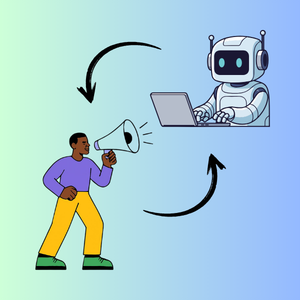 There’s a version of the AI debate that’s getting a little tired. On one side, you’ve got people treating every AI tool like it’s a magic wand. On the other, marketers clutching their brand guidelines like a life jacket, terrified that one ChatGPT prompt will turn their company into a content factory churning out beige nonsense.
The truth? Both sides are missing the point.
For B2B marketers especially, the real challenge isn’t whether to use AI. It’s figuring out where human creativity is genuinely irreplaceable, and where you’re wasting time on tasks that a machine can handle in seconds. Get that balance right, and you don’t just save time. You get better at your actual job.
The Numbers Tell a Complicated Story
AI isn’t coming to marketing. It’s already there. According to HubSpot’s 2025 State of Marketing Report, 92% of marketers say AI has already impacted their roles. It’s embedded in workflows, showing up in content creation, data analysis, and campaign automation.
But here’s the tension. That same report found that 54% of marketers feel overwhelmed by the prospect of implementing AI into their day-to-day work. Adoption is high. Confidence is not. And that gap matters, because marketers who are uncertain about where AI fits tend to either overuse it or avoid it entirely. Both are costly mistakes.
HubSpot’s 2026 State of Marketing Report sharpens the picture further. It found that 61% of marketers now believe the industry is experiencing its biggest disruption in 20 years. And the clearest signal of what’s at stake? The report notes that today, more content is generated by AI than by humans, but that most of it is average. Consumers are already tuning it out.
That’s not an argument against AI. It’s an argument for using it with intention.
Where AI Actually Earns Its Keep
AI isn’t competing with your creativity. It’s competing with your admin. Think about what most B2B marketing teams actually spend their time on: writing briefs, repurposing content, drafting first-cut copy, testing subject lines, categorizing leads. These aren’t the tasks that require deep knowledge of your buyer’s psychology or your brand’s point of view. They’re the tasks that sit between the good work.
The B2B use cases where AI is already pulling its weight:
- Personalizing outreach at scale across different verticals and buyer personas
- Generating content variations for testing, not as finished output
- Summarizing call recordings and CRM notes for account intelligence
- Flagging patterns in campaign performance data before humans spot them
- Lead Scoring and Prioritization based on intent signals
When AI handles the volume work, your team gets time back for the strategic work. That’s not a minor efficiency gain. That’s the difference between a marketing team that’s always catching up and one that’s actually leading.
Where Human Creativity Isn’t Optional
There are things AI genuinely can’t do. And being honest about that is what separates smart AI adoption from lazy AI adoption.
Authentic point of view. AI can write a take on any topic. It can’t have one. In B2B, where thought leadership is a primary trust-building channel, the perspective that comes from real experience and genuine industry knowledge is what separates content that builds pipeline from content that fills a content calendar.
Brand voice under pressure. AI can learn your tone of voice guidelines. It can’t feel them. When you’re writing something edgy, taking a stand on a contested industry issue, or crafting something that needs to feel unmistakably like your company, that’s a human call every time. When Coca-Cola used AI for their 2024 Christmas campaign, the public backlash was swift. Consumers noticed the absence of warmth and human craft that the brand had spent decades building.
Judgment on what not to publish. AI can produce at volume. Humans are still the ones responsible for what goes out under your brand’s name.
Emotional resonance in complex sales. B2B buying committees are made up of people with competing priorities, internal politics, and real pressure on their decisions. The content that moves them isn’t the most optimized. It’s the content that makes them feel genuinely understood.
HubSpot’s 2026 report is direct on this point: audiences reward brands that feel authentic, helpful, and human. That’s not a soft sentiment. It’s a commercial reality.
A Practical Framework for Getting the Balance Right
Here’s a working model that reflects how the best B2B marketing teams are actually operating right now:
- Strategy stays human. Positioning, messaging, campaign narrative, and ICP definition aren’t tasks to outsource. These decisions require context that lives in your team’s experience, not in a prompt.
- Production gets accelerated by AI. First drafts, content repurposing, email sequencing, and ad copy variations are all fair game. Use AI to generate options, not final answers.
- Humans edit and approve everything. No AI output should go to market without someone who understands your brand and your buyers reviewing it. This isn’t a compliance step. It’s where quality actually happens.
- Data and optimization is a shared job. AI is faster at spotting patterns. Humans are better at knowing which patterns matter and why.
The teams winning right now aren’t the ones using the most AI. They’re the ones who’ve been honest about what their human marketers are uniquely good at, and built AI into the workflow around that.
What This Means for Lead Generation
For B2B organizations focused on lead generation, this balance isn’t abstract. It directly affects pipeline quality.
AI can help you reach more people. It can personalize outreach, identify intent signals earlier, and improve the efficiency of your nurture sequences. But the content that makes someone want to give you their contact details, book a demo, or share your report with a colleague? That still needs a human brain behind it.
AI handles volume and velocity. Humans handle voice and value. The companies seeing the best results are treating AI as a production layer underneath a human-first content strategy, not as a replacement for one.
Want Better Leads, Not Just More Content?
At Knowledge Hub Media, we work with B2B organizations to build lead generation programs that combine smart targeting with content that actually converts. If you’re thinking about how to use AI to scale your marketing without losing what makes your brand worth following, let’s talk.
Visit knowledgehubmedia.com to find out more.
Frequently Asked Questions
Isn't AI just going to replace B2B marketing teams eventually?
Not the good ones. AI is genuinely brilliant at handling volume, repetitive tasks, and pattern recognition. But it can't replicate a real point of view, a brand voice built over years, or the judgment that comes from actually knowing your buyers.
How do I know which marketing tasks to hand over to AI and which to keep human?
A good rule of thumb is to ask whether the task requires genuine judgment or just execution. Writing a first draft, repurposing a blog into social posts, scoring leads, testing subject lines, these are execution tasks. AI can handle them well. But positioning your brand, crafting a campaign narrative, deciding what not to publish, or writing something that needs to feel emotionally real to a stressed buying committee, those are judgment calls. Keep those human.
We're already using AI tools but our content still feels flat. What are we doing wrong?
You're probably using AI as the finish line rather than the starting point. The fix is simple but requires discipline: use AI to generate options, then have a human who genuinely understands your brand and your buyers shape the final output. AI gives you volume. The human edit is where the quality comes from.
