
 Artificial intelligence is moving from experimental projects to full-scale production environments across nearly every industry. As organizations deploy increasingly sophisticated AI models, the infrastructure required to support them is expanding at an unprecedented rate. Massive GPU clusters, specialized compute environments, and high-density data centers are becoming the backbone of modern AI development.
But this rapid growth introduces a difficult question. Can the infrastructure needed to power the AI revolution coexist with global sustainability goals?
The answer is not simple. While AI promises to unlock efficiencies across industries, the infrastructure required to train and operate large models is energy intensive. This tension between technological advancement and environmental responsibility is creating what many industry analysts now describe as an emerging infrastructure dilemma.
The Energy Demands Behind the AI Boom
Traditional enterprise data centers were designed for predictable workloads such as storage, web hosting, and business applications. AI workloads are fundamentally different. Training large language models, computer vision systems, and generative AI platforms requires immense computational power.
Most modern AI environments rely on clusters of high-performance GPUs working in parallel. These systems consume significantly more electricity than standard server environments. A single rack of AI servers can draw several times the power of a traditional rack. As AI adoption spreads across sectors including healthcare, finance, manufacturing, and logistics, demand for compute infrastructure continues to surge. Hyperscale providers and enterprises alike are expanding their data center footprints to keep up with this growth.
Industry analysts estimate that global data center electricity consumption could double over the next decade, with AI workloads playing a major role in that increase. For organizations that have committed to aggressive carbon reduction targets, this growth presents a clear challenge.
High-Density GPU Clusters and Infrastructure Pressure
At the center of this issue are high-density GPU clusters. These clusters are essential for training large-scale AI models, but they introduce significant infrastructure requirements. Unlike traditional CPUs, GPUs used for AI workloads generate substantial heat and require high levels of power delivery. A single AI server can contain multiple GPUs, each consuming hundreds of watts during peak operation. When deployed at scale, these systems create extreme thermal and electrical demands. To support these environments, data centers must upgrade several key areas of infrastructure.
Power distribution systems must deliver higher wattage safely and consistently. Cooling systems must handle greater thermal loads. Network architecture must support massive data throughput between nodes in GPU clusters. These changes often mean redesigning entire facilities or building new AI-specific data centers from the ground up. The result is a new generation of ultra-high-density data centers optimized specifically for AI workloads. While these facilities enable rapid AI innovation, they also contribute to rising energy consumption across the data center industry.
Renewable-Powered Data Centers Gain Momentum
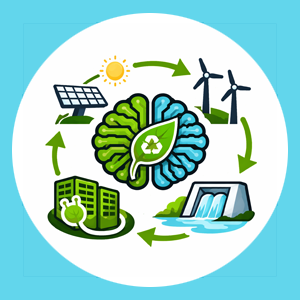
In response to growing environmental concerns, many organizations are turning toward renewable energy as part of their data center strategy. Large cloud providers and hyperscalers have begun investing heavily in renewable energy procurement to offset the energy demands of their infrastructure. Solar farms, wind energy agreements, and hydroelectric partnerships are becoming increasingly common components of data center planning.
Some companies are also building new facilities in regions where renewable energy is abundant. Locations with strong wind resources, large hydroelectric capacity, or reliable solar generation can provide cleaner power for large-scale compute operations.
However, renewable-powered data centers introduce their own challenges. Renewable energy sources can be intermittent, meaning organizations must balance grid reliability with sustainability goals. Energy storage solutions such as large-scale battery systems are increasingly being explored to stabilize power availability. Despite these challenges, renewable energy integration remains one of the most important strategies for reducing the environmental footprint of AI infrastructure.
The Role of Advanced Cooling Technologies
Cooling represents another major factor in the sustainability equation. As AI servers generate more heat, traditional air cooling systems are becoming less efficient. To address this issue, data center operators are exploring advanced cooling technologies designed for high-density environments.
Liquid cooling is emerging as one of the most promising solutions. By circulating liquid directly through server components, these systems can remove heat far more efficiently than air-based approaches. This allows data centers to support higher compute density while reducing overall energy consumption. Immersion cooling is another innovation gaining attention. In this model, servers are submerged in specially engineered non-conductive fluids that absorb heat and transfer it away from critical components.
These technologies not only improve cooling efficiency but also reduce the energy required for large-scale HVAC systems. As AI infrastructure continues to scale, advanced cooling solutions will likely play a critical role in balancing performance and sustainability.
Designing the Next Generation of Sustainable AI Infrastructure
The long-term solution to the infrastructure dilemma will likely involve a combination of strategies rather than a single technological breakthrough. Data center operators are already exploring several approaches to make AI infrastructure more sustainable. Improving hardware efficiency is one priority. New generations of GPUs and AI accelerators are being designed to deliver higher performance per watt. Software optimization is also helping reduce the computational resources required for certain workloads.
Organizations are also experimenting with workload scheduling strategies that align compute-intensive tasks with periods of lower grid demand or higher renewable energy availability. At the facility level, modular data center designs are emerging as a flexible approach for scaling infrastructure while maintaining energy efficiency.
These innovations highlight an important point. The AI infrastructure boom does not have to come at the expense of sustainability goals. However, achieving that balance will require careful planning, investment, and collaboration across the technology ecosystem.
The Race Between Innovation and Responsibility
AI is rapidly transforming industries, unlocking new possibilities for automation, research, and decision-making. At the same time, the infrastructure required to support this transformation is reshaping the global data center landscape. As organizations continue to deploy larger AI models and expand compute capacity, the pressure on energy systems will only increase.
The challenge facing the technology industry is clear. Innovation must move forward without compromising environmental responsibility. The companies that succeed in this balancing act will likely define the next generation of AI infrastructure. Sustainable data centers, renewable energy integration, and more efficient hardware architectures will all play a role in shaping the future of AI at scale. The race between AI innovation and sustainability targets has already begun, and the outcome will influence not only the future of technology, but also the future of global energy consumption.
