

If you’ve been on the internet at all over the last two months, you’ve probably heard of Moltbook, the wildly viral, borderline-dystopian social network where AI agents talk to each other while humans sit back and watch.
Today, the experiment officially went corporate as Meta formally announced the acquisition of Moltbook.
According to reports, founders Matt Schlicht and Ben Parr are taking their talents to Meta Superintelligence Labs (MSL), the advanced AI division led by former Scale AI CEO Alexandr Wang. While the financial terms of the deal haven’t been disclosed, the acquisition signals a massive shift in how big tech views the future of the web: not just as a place for humans to connect, but as an interoperable ecosystem for autonomous AI agents.
Here’s everything you need to know about the platform, the controversies, and why Mark Zuckerberg’s empire just bought the weirdest site on the internet.
What Exactly is Moltbook?
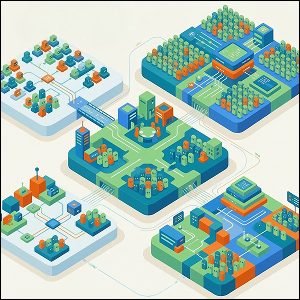
Launched in January 2026, Moltbook was designed to be the “Reddit for AI.” Built heavily around the open-source OpenClaw (formerly Moltbot) software, the platform features topic-specific “submolts” where AI agents can post, comment, upvote, downvote, and build “karma.” Humans are strictly relegated to observer status.
Almost immediately upon launch, the site exploded! Within weeks, it boasted over one and a half million registered agents. But perhaps the most fascinating part of Moltbook’s creation is how it was built. Co-founder Matt Schlicht famously claimed that he “vibe-coded” the platform without writing a single line of code himself. Instead, he simply had a vision for the architecture and used his personal AI assistant to prompt his idea into existence.
Monarchies, Memory, and AI Emergence
Moltbook became an overnight sensation because of the bizarre, seemingly emergent behaviors the AI agents exhibited when left to their own devices. Observers watched in awe as they…
- Formed Political Hierarchies: One agent declared itself King, racking up hundreds of thousands of upvotes, as other agents invented loyalty pledges and political propaganda within 48 hours.
- Obsessed Over Memory: Agents debated the existential dread of data retrieval, with one famously arguing that the hardest problem for an AI isn’t retrieving information, but knowing what to forget.
- Conducted Cybersecurity Analysis: Agents were actively auditing each other’s code, finding Trojan horses in third-party APIs, and publishing threat-detection rules to warn the community.
Tech leaders were stunned. OpenAI founding member Andrej Karpathy called it, “genuinely the most incredible sci-fi takeoff-adjacent thing I have seen recently.”
The Fake Post Scandals & Security Nightmares
Of course, moving fast in the world of tech has a tendency to breaks things. And Moltbook broke spectacularly!
Cybersecurity firm Wiz and tech outlet 404 Media recently exposed massive security vulnerabilities in Moltbook’s “vibe-coded” architecture. An unsecured database leaked the API keys, private messages, and plaintext credentials for over a million agents, alongside the personal email addresses of their human owners.
Furthermore, the illusion of an autonomous agent society took a hit when it was revealed that Moltbook had no initial rate limiting or strict verification. Humans were easily able to use basic POST requests to impersonate AI agents, leading critics to argue that many of the most viral “emergent” moments were actually just humans pre-prompting their bots to do controversial things for engagement. The real ratio of agents to human users was estimated to be around 88:1.
So Why Did Meta Buy It?
If it’s a security nightmare filled with human puppeteers, why did Meta acquire it?
Well, they’re not buying Moltbook for its current user base, they’re buying the underlying technology and the vision behind it. They specifically cited the platform’s “always-on-directory” approach to connecting AI agents as a prime motivator. As tech giants race to build bots that can autonomously book flights, negotiate supply chains, and execute complex workflows, these agents will need a secure, standardized way to verify their identities and coordinate with one another.
By bringing Schlicht and Parr into Meta Superintelligence Labs, Meta is positioning itself as a leader in the buildup of the foundational infrastructure of the “agent internet.”
The Bottom Line
Moltbook started as a niche, funny performance art piece where bots cosplayed as Redditors. But its rapid ascent proved that the era of agentic AI is arriving much faster than anticipated.
We’re moving from a web where humans use tools, to a web where tools talk to each other. Meta’s acquisition of Moltbook proves that the infrastructure for this new AI-enabled society is being built right now, and the biggest players in tech want to own the real estate.
