
A strategic collaboration in the cloud and AI space refers to a formal partnership between a technology provider and a services company, designed to combine their respective strengths and bring joint solutions to enterprise customers at scale. These collaborations typically involve shared go-to-market strategies, co-investment, and platform integration, all aimed at helping large organizations modernize their infrastructure and adopt emerging technologies like artificial intelligence more quickly and effectively.
In this article, we’ll discuss the recently announced expansion of the strategic collaboration between Onix and Google Cloud. We’ll break down what the partnership involves, why it matters for enterprise AI adoption, and how Onix’s proprietary Wingspan platform fits into the bigger picture. Whether you’re tracking the cloud services landscape or evaluating partners for your own digital transformation, this piece will give you the key details you need.
TL;DR Snapshot
Onix, a data and AI services company, has announced a major expansion of its partnership with Google Cloud. The collaboration is expected to drive over $500 million in Google Cloud consumption and generate multiple hundred million dollars in services revenue for Onix. At the heart of the deal is Onix’s proprietary Wingspan platform, an agentic AI and data modernization tool designed to help enterprises move from AI experimentation to full-scale production up to 3x faster than traditional consulting approaches.
Key takeaways include…
- Onix and Google Cloud are expanding their strategic collaboration with a focus on joint go-to-market strategies, vertical industry investment, and outcome-based delivery across Fortune 500 enterprises.
- Onix’s Wingspan platform introduces a Semantic Twin model, which provides enterprise context and business ontology for AI agents, allowing organizations to activate AI-ready data much quicker.
- The partnership signals a broader industry shift away from large, traditional consulting teams and toward AI-assisted, IP-driven delivery models that prioritize measurable business outcomes and ROI.
Who should read this: Enterprise IT leaders, cloud strategy decision-makers, AI practitioners, and anyone tracking the evolution of cloud consulting partnerships.
What the Expanded Collaboration Looks Like
On April 6, 2026, Onix announced that it’s significantly deepening its existing relationship with Google Cloud. This isn’t a brand-new partnership, Onix is already a diamond partner in the Google Workspace co-sell and services partner path, and has earned the Google Cloud Partner of the Year award 16 times. What’s new is the scale and ambition of the expanded collaboration.
The deal is structured around three core pillars. The first is joint go-to-market (GTM) and vertical investment, which means Onix and Google Cloud will be scaling dedicated business units and coordinating their sales motions to target enterprise demand across specific industries. The second focuses on platform power, leveraging Onix’s Wingspan platform to automate data modernization and AI enablement. The third pillar introduces what the companies call an “outcome-based enterprise compete model,” which replaces large project teams with smaller, AI-assisted delivery pods that are measured against strict business KPIs.
Why Wingspan and the Semantic Twin Matter
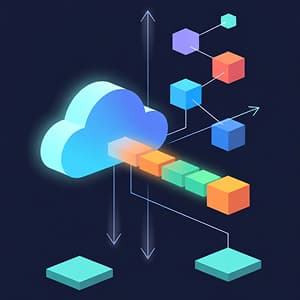
Central to this collaboration is Wingspan, Onix’s proprietary multi-capability agentic AI and data modernization platform. What makes Wingspan stand out is its Semantic Twin model, which Onix describes as an industry first. A Semantic Twin essentially creates a digital representation of an enterprise’s business context and data relationships, giving AI agents the ontological understanding they need to operate effectively within a specific organization.
In practical terms, this means companies don’t have to spend months or years cleaning, labeling, and restructuring their data before they can deploy AI solutions. Wingspan’s context-aware AI agents can automate workflows, speed up AI adoption, and support better decision-making. According to Onix, this approach has already been validated by thousands of AI agents deployed in production environments across Fortune 500 companies in sectors like telecom, retail, healthcare, and financial services.
The Shift Toward Outcome-Based Delivery
One of the most interesting aspects of this announcement is its emphasis on outcome-based engagements. Traditionally, large-scale cloud and AI transformation projects have relied on sizable consulting teams working over extended timelines. The results weren’t always tied to concrete business metrics, and the process could be slow and expensive.
Onix is positioning itself as an alternative to that model. By combining its Wingspan platform with what it calls “Outcome Engineers,” the company aims to deliver measurable ROI through smaller, more focused teams that leverage AI-assisted tooling and proprietary intellectual property. Onix CEO Sanjay Singh framed the approach as being built for speed, scale, and accountability, noting that AI success should be defined by what actually runs at scale and solves real business workflows.
What Google Cloud Gets Out of the Deal
From Google Cloud’s perspective, the collaboration helps strengthen its position in the competitive enterprise cloud market. Victor Morales, Vice President of GSI and Consulting Partnerships at Google Cloud, highlighted that generative AI is changing how businesses operate and that Onix can help customers take advantage of Google Cloud’s AI capabilities to improve operations and productivity.
The financial projections are notable as well. The collaboration is expected to drive over $500 million in Google Cloud consumption, which represents significant platform adoption. For Google Cloud, having a partner like Onix that can accelerate customer on-boarding and drive real production workloads is a valuable asset in its competition with AWS and Microsoft Azure. It’s a win-win arrangement: Onix gains deeper access to Google Cloud’s technology and customer base, while Google Cloud gets a partner with proven delivery capabilities and a differentiated platform.
Frequently Asked Questions
Onix is a data and AI services company that has been delivering cloud, data, and AI-driven solutions for over two decades. The company is a Google Cloud diamond partner and has won Google Cloud Partner of the Year 16 times. Onix works with Fortune 500 enterprises across industries including telecom, retail, healthcare, and financial services.
Google Cloud is the cloud computing division of Google (Alphabet Inc.). It provides infrastructure, platform services, and AI/ML tools that businesses use to build, deploy, and scale applications. Google Cloud competes with Amazon Web Services (AWS) and Microsoft Azure in the enterprise cloud market.
Wingspan is Onix’s proprietary multi-capability agentic AI and data modernization platform. It features context-aware AI agents and a Semantic Twin model that helps enterprises automate workflows, accelerate AI adoption, and move from concept to production faster than traditional approaches.
A Semantic Twin is a digital model that captures an enterprise’s business context, data relationships, and organizational ontology. It gives AI agents the contextual understanding they need to operate effectively within a specific company’s environment, reducing the time and effort required to make data “AI-ready.”
Agentic AI refers to AI systems that can autonomously plan, reason, and take actions to accomplish tasks on behalf of users. Unlike traditional AI models that respond to single prompts, agentic AI systems can handle multi-step workflows, make decisions, and interact with tools and data sources independently.
Go-to-market refers to the strategy and coordinated activities a company uses to bring its products or services to customers. In the context of this partnership, joint GTM means Onix and Google Cloud will coordinate their sales, marketing, and industry-targeting efforts to reach enterprise customers together.
An outcome-based engagement is a service delivery model where the provider’s compensation and success metrics are tied to specific, measurable business results rather than hours worked or team size. This approach shifts the focus from effort to impact.
Other Enterprise AI Articles You May Be Interested In
Google’s TurboQuant: The Compression Breakthrough That Shook the AI Industry
CGI and AWS Sign Multi-Year Deal to Modernize U.S. Government Technology
ASUS UGen300: How the Hailo-10H Powered USB Stick Is Changing Edge AI in 2026
Oracle AI Data Platform and FedRAMP: A New Era for Federal Cloud and AI Adoption
Microsoft Critique Explained: How Copilot Now Uses GPT and Claude Together for Deep Research
