

For many IT leaders, maintaining legacy on-premises infrastructure can feel like wrestling an octopus. The more you try to control it, the more tentacles (expenses, bottlenecks, surprise outages, etc.) you get wrapped up in. While on-prem systems were once the backbone of enterprise IT, today’s market demands agility, scalability, and the seamless access to modern services that on-prem setups often struggle to deliver.
The solution, as you might expect, is hybrid cloud. This strategic fusion of private and public cloud with your existing on-prem resources offers a lifeline for organizations wanting flexibility, without having to fully let go of their familiar systems. But making the leap to a hybrid setup is challenging. How do you avoid the dreaded downtime? What are the risks? How can you prove ROI to the C-suite without a flowchart that requires its own instruction manual?
Not only will this article answer those pressing questions, it will also arm you with a definitive, expert-led framework for seamlessly migrating from on-premises to hybrid cloud. Drawing on authoritative industry standards, government and vendor guidelines, and the latest best practices, you’ll gain practical tools, step-by-step guidance, and the confidence to overcome legacy limitations once and for all. And importantly, we’ll explain how to optimize for cost and security along the way.
Ready to retire from octopus wrangling? Let’s get started!
Table of Contents
- Understanding Hybrid Cloud and Its Advantages
- Identifying Limitations of On-Prem Infrastructure
- A Definitive Step-by-Step Migration Framework
- Hybrid Cloud Deployment Strategies and Best Practices
- Selecting Cost-Effective Hybrid Cloud Solutions
- Ensuring Security and Compliance Throughout Migration
- Conclusion
- References
Understanding Hybrid Cloud and Its Advantages
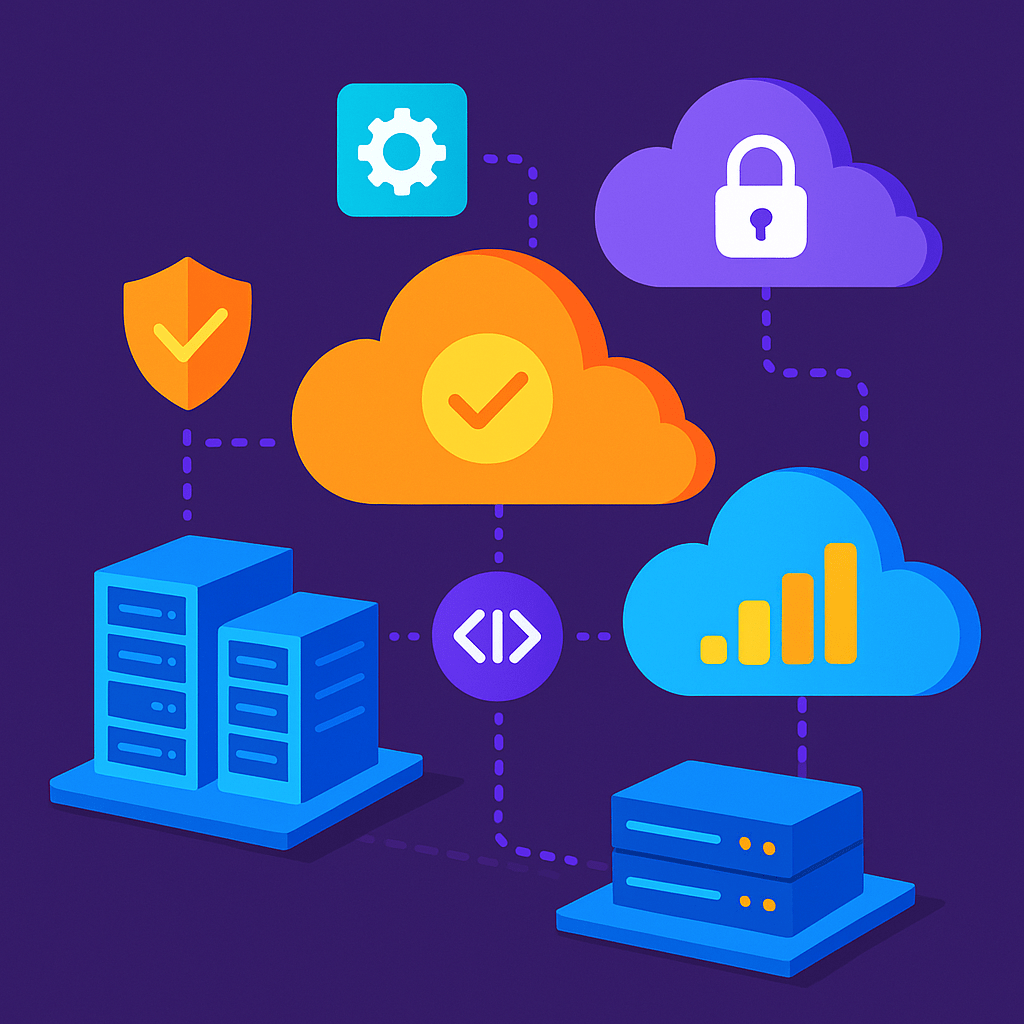
Hybrid cloud is more than industry jargon, it’s a strategic operating model that integrates on-premises infrastructure, private cloud, and public cloud services into a single, unified ecosystem. Imagine it as your IT Swiss Army knife! You get the raw power and control of your on-prem data centers, the rapid scalability of the cloud, and the flexibility to run workloads wherever they make the most business sense.
But don’t just take our word for it. According to IBM, “Hybrid cloud seamlessly combines public cloud, private cloud, and on-premises infrastructure into a single, flexible solution that offers portability for running applications and workloads. It supports agility and scalability through rapid provisioning and auto-scaling, enhances security with centralized management of encrypted APIs and access controls, and facilitates compliance with regulatory requirements by allowing strategic data storage. Hybrid cloud’s pay-as-you-go model optimizes costs by balancing workloads across cloud environments[1].”
Hybrid cloud architecture typically connects private data centers with at least one public cloud provider (such as AWS, Azure, etc.) via standardized APIs and secure networking. Workloads can move dynamically between environments, enabling real-time scaling, disaster recovery, and compliance with data residency regulations. Technical diagrams from industry leaders illustrate invaluable components such as cloud gateways, orchestration layers, and unified security controls, making the hybrid stack both robust and adaptable. It’s no wonder so many enterprises are making the switch!
Gartner reports validate this trend, noting steady, double-digit growth in hybrid cloud adoption over the past few years, especially among industries with fluctuating resource needs and tight compliance requirements. With interest in topics like hybrid cloud security and services growing markedly (search trends up 34% and 9% respectively), it’s clear that the hybrid model is no passing fad.
For a broader perspective, the U.S. federal government’s Multi-Cloud and Hybrid Cloud Guide provides strategic best practices for adoption and management[2]. Further, it stresses the importance of centralizing core infrastructure services while distributing business functionality for resilience and agility. In short, hybrid cloud lets you focus on running your business, not maintaining your servers.
Identifying Limitations of On-Prem Infrastructure

If on-premises systems were a gym membership, many IT leaders would be rethinking their subscriptions. The challenges are numerous and all too familiar. Sky-high operational costs, management headaches, cringe-worthy scaling delays, and relentless maintenance cycles.
Let’s talk about scalability first, as it’s often the Achilles heel of on-prem. While cloud services can scale resources in minutes, doing so with on-prem hardware can mean weeks of procurement, racking, stacking, and late-night pizza-fueled overtime. Power and cooling limits further hamper expansion.
Let’s talk numbers next. IDC has found that ongoing maintenance for on-prem systems can eat 18–22% of upfront costs every year[3]. And that’s before you count personnel! Further, studies show that monitoring and support labor can account for 50–85% of total costs across the system’s lifespan, especially given the need for round-the-clock oversight[4]. Throw in patching, security updates, and hardware failures, and the hidden losses start to spiral.
Industry experts like Michael Kenny have mapped out total cost of ownership (TCO) for on-prem, highlighting that maintenance costs over five years typically surpass any initial savings from “owning” hardware, especially when compared to modern cloud subscription models[5]. Evozon and SentinelOne analyses point out additional headaches that are also well worth considering, including resource provisioning slowness, an inability to respond to sudden spikes, and the difficulty of managing compliance across aging assets.
For a more strategic approach to understanding these limitations and planning ahead, the Planning a Cloud Migration Effort Guide offers a thorough breakdown of cost considerations and infrastructure requirements[6].
A Definitive Step-by-Step Migration Framework
So, you’re ready to make the leap, but you’d rather not go splat. Migrating to hybrid cloud is best approached as an iterative series of small, manageable steps, not a single leap of faith. This lowers risk, minimizes disruption, and lets your team learn and adapt along the journey.
The U.S. Department of Defense’s OSD Cloud Migration Primer, along with related frameworks from both Microsoft Azure and AWS, emphasize the inherent benefits of a staged approach grounded in robust governance and risk controls[7][8][9]. Industry experts recommend these as the gold standard for both private and public sector migrations, emphasizing that each stage should be tested, validated, and improved on before scaling further.
The blueprint below distills these best practices into four critical phases…
Phase 1: Assessment and Workload Analysis
Before reaching for your company credit card, you need a 360-degree view of your current IT estate. Start by inventorying all on-prem workloads. Databases, line-of-business apps, file servers, you name it. Evaluate each component for cloud readiness. Is it cloud-native, legacy but portable, or so old and crusty it should be retired altogether?
Microsoft and Teradata’s workload assessment tools recommend breaking applications into categories: “lift-and-shift,” “refactor,” “retain,” or “retire.” This matrix helps you prioritize high-impact, low-risk candidates for early migration, while flagging the “too hot to handle for now” apps for later on. For example, a global retailer used this method and found that 40% of its workloads were ready for immediate migration, with legacy ERP systems marked for future modernization.
Alignment with business value is key. Engage stakeholders to understand which workloads drive revenue, support compliance, or interface with customers. Don’t migrate just for the sake of it, focus on what delivers tangible business outcomes.
Phase 2: Planning and Designing the Hybrid Architecture
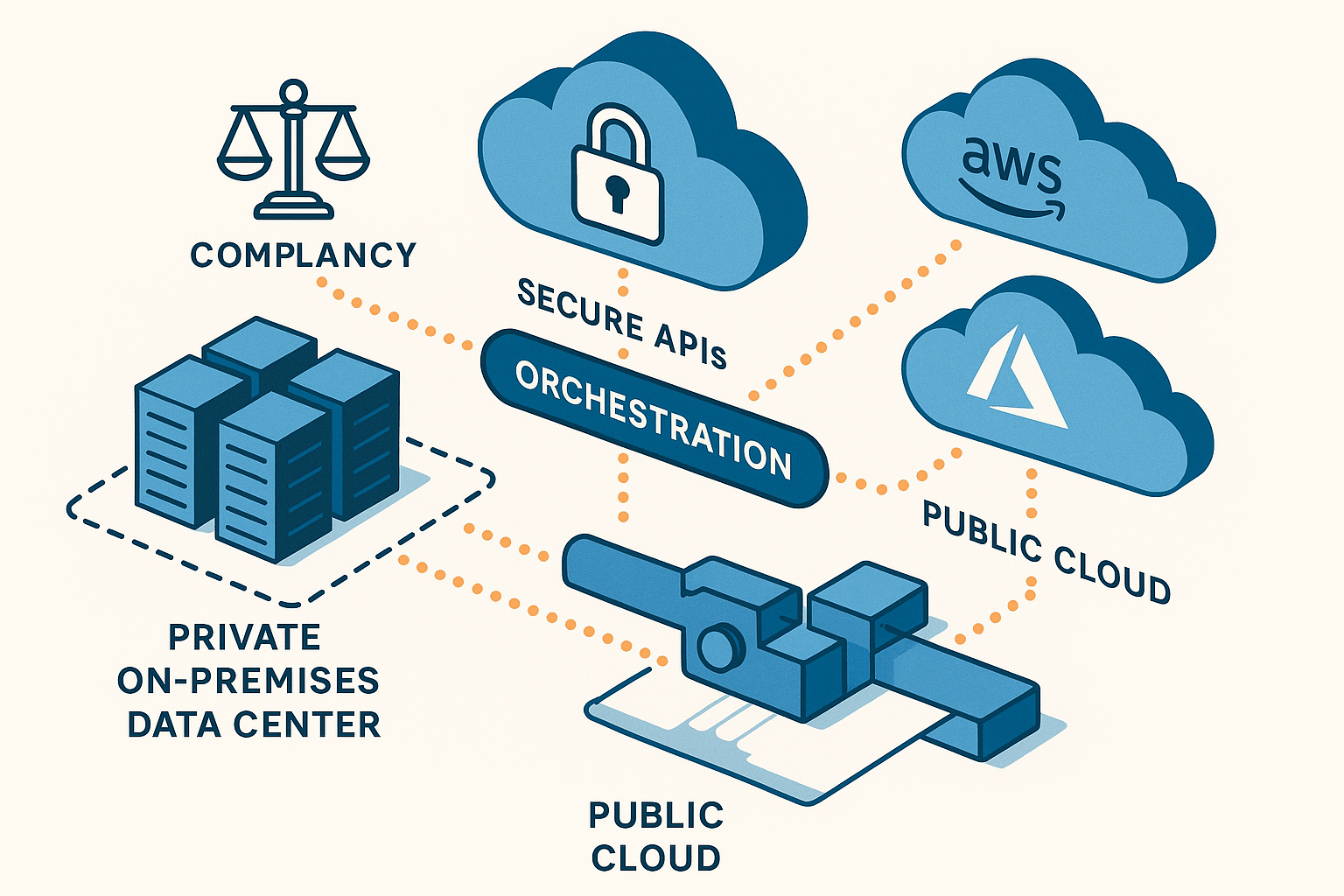
Planning is where the magic happens (or, if ignored, where the disaster starts). Once you’ve mapped your workloads, define your migration strategy. Will you lift-and-shift, replatform, or refactor? Each approach comes with trade-offs in speed, risk, and long-term flexibility.
Selecting the right hybrid cloud provider is crucial. Evaluate key players like AWS, Azure, IBM, and VMware on factors such as interoperability, security features, reliability, cost models, and integration with your on-prem assets. Authoritative documentation and market analysis from IBM and industry analysts highlight that no one-size-fits-all here. AWS may lead in global scale and AI add-ons, Azure often shines with seamless Microsoft ecosystem integration, and IBM’s hybrid cloud tools are renowned in highly regulated industries. A little friendly rivalry among providers just happens to work in your favor, as each one brings something unique to the table.
Whichever one you decide on, it’s vital to balance cost and performance. Expert reviews show that hybrid cloud models can dramatically reduce capital expenses while optimizing operational costs, but only if migration strategies are tailored to workload characteristics and business priorities[10]. Remember to bake in cost controls and monitoring tools from the start, it’s easier to say no to sprawling resource creep before it happens.
Alongside infra planning, design your orchestration and governance frameworks. According to AWS and IBM Hybrid Cloud Strategy whitepapers, mature organizations implement policy-driven automation for resource provisioning, centralized monitoring, and unified access control across environments[11][12]. Security compliance should be part of the foundation, not an afterthought. The Cloud Operations Best Practices Guide is a valuable resource on implementing governance at scale[13].
Choosing the Right Cloud Providers and Hybrid Models
Let’s zoom in further: AWS, Azure, IBM, and VMware each offer unique flavors of hybrid cloud. Here’s what to prioritize when making your choice…
- Cost Efficiency: IBM’s modular, pay-as-you-go hybrid stack and Azure’s reserved instance pricing stand out for budget-conscious organizations.
- Security & Compliance: Look for providers with certifications such as FedRAMP, SOC 2, ISO 27001, and built-in encryption capabilities.
- Interoperability: Multi-cloud-friendly tools (like VMware Cloud Foundation) and robust APIs minimize vendor lock-in and ease multi-cloud integration.
- Performance: Evaluate latency, network architecture, and direct on-prem connectivity options.
Expert opinions agree, the right provider matches your business context. Hybrid cloud is not a race to the biggest datacenter, but a search for the smartest alignment of goals, risk tolerance, and application needs.
Security and Compliance Planning for Migration
If your hybrid migration is a house move, security and compliance are the locks on your front door and the safe for your valuables. Start by mapping all regulatory requirements (GDPR, HIPAA, PCI DSS, etc.), along with any relevant industry-specific mandates. Design security controls and data residency policies into the architecture before migrating a single byte.
Follow NIST frameworks and leverage guidance from the OSD Cloud Migration Primer to embed compliance into every step[7]. Key practices include encrypted transit (TLS, VPNs), access management (IAM roles, SSO), and real-time monitoring for anomalous activity. CrowdStrike highlights that hybrid cloud allows centralized management of encrypted APIs and real-time access controls, often making compliance easier, not harder, when designed correctly[14].
Phase 3: Migration Execution and Minimizing Downtime

No one wants to be “that company” with a migration-induced service outage trending on social media. The execution phase is about precision. Use established tools such as AWS Migration Hub or Device42 to orchestrate data and app moves incrementally, verifying integrity and function after each cutover.
Implement a “test-validate-iterate” approach. Migrate non-critical workloads first, monitor for issues, and refine your process before tackling mission-critical systems. Real-world examples, like those from KelserCorp, demonstrate that incremental migration with robust rollback plans is the gold standard for minimizing business impact.
Proactive monitoring and rollback procedures are not just safety nets, they’re insurance policies against small glitches turning into headline-grabbing disasters. For comprehensive migration execution strategies, the Planning a Cloud Migration Effort Guide includes practical tips on risk mitigation[6].
Phase 4: Post-Migration Optimization and Management
Congratulations! Your workloads are finally in the hybrid cloud, but the journey isn’t over. Now comes continuous optimization. Monitor resource performance, right-size capacity, and streamline costs. According to MissionCloud and Device42 best practices, organizations should automate cost tracking, enforce budget alerts, and periodically audit configurations for drift or security gaps.
Security audits, compliance checks, and proactive patching ensure your hybrid landscape doesn’t morph back into a sprawling maintenance monster. Set policies for continuous improvement, using metrics like performance, cost per transaction, and incident response times to measure and refine your environment.
For ongoing management frameworks, the Cloud Operations Best Practices Guide provides actionable insights[13].
Hybrid Cloud Deployment Strategies and Best Practices
Building an effective hybrid environment is not just about connection, it’s about choreography. Strategic deployment frameworks emphasize workload portability, unified security models, robust orchestration, and clear governance.
Leading cloud providers like AWS and IBM set the benchmark for deployment maturity. AWS Prescriptive Guidance outlines modular, policy-driven frameworks for automating resource allocation, managing burst workloads, and securing both cloud and on-prem connections[11]. IBM’s Hybrid Cloud Strategy documentation details layered architectures, unified IAM across mixed environments, and dynamic scaling techniques for peak performance[12].
Workload portability is of course a primary concern, and technical summaries from Akamai and Coherence Inc. show how automated orchestration tools and API-driven automation can help organizations shift workloads in response to real-time demand, regulatory changes, and operational hiccups. Without strong automation and monitoring, even the best-laid hybrid plans can lag behind business pace.
Selecting Cost-Effective Hybrid Cloud Solutions
As your finance team’s unofficial favorite IT leader, balancing cost, security, and performance is your ticket to hero status. Hybrid cloud unlocks significant cost savings by moving capex-heavy workloads to public cloud while preserving investments in private on-prem hardware.
Use comparative pricing matrices to evaluate vendors for features like management automation, and native security controls. IBM and Cloudian hybrid strategies highlight how integrating on-prem storage with public cloud object storage can minimize long-term expenses without sacrificing flexibility or compliance[15]. Industry analysts and F5 also emphasize the hidden value in centralized management and tiered storage options that can invisibly keep your accountants smiling.
Ensuring Security and Compliance Throughout Migration

Hybrid cloud is a double-edged sword. It empowers, but it requires robust security to do so. Best-in-class protection necessitates integrating DoD-recommended phased approaches and NIST-aligned controls throughout the migration lifecycle[7]. This means enforced encryption for data at rest and in transit, strong identity and access management, and zero-trust networking models. Continuous compliance validation ensures adherence to regulations as environments evolve.
CrowdStrike and Cortex insights reinforce that the hybrid approach brings unique threat mitigations, such as centralized encrypted API management and fast deployment of new security controls across environments. Security automation is your friend. Leverage real-time intrusion detection, automated patching, and compliance assessment tools to maintain a defensible posture no matter how rapidly workloads shift.
Conclusion
Migrating from on-premises to hybrid cloud represents not just a technological uplift, but a business transformation. As we’ve explored, a structured, phased migration isn’t just practical, it’s essential. This approach, grounded in the latest government and industry frameworks, minimizes downtime, optimizes costs, and proactively addresses security and compliance from day one.
By understanding hybrid cloud’s architecture and benefits, exposing on-prem’s hidden liabilities, and following a definitive migration roadmap, you position your organization for sustained agility, innovation, and a strong competitive edge. The tools, strategies, and best practices outlined here, backed by leading cloud providers, government agencies, and industry experts, are your guideposts toward a secure, cost-optimized, and future-proof hybrid IT environment.
Now it’s time to turn knowledge into action. Download the authoritative guides referenced above, use the step-by-step checklists provided, and consider engaging certified experts to accelerate your organization’s journey. IT leadership isn’t about avoiding risk, it’s about navigating it wisely. And with hybrid cloud, you’re practically holding a map.
References
- Susnjara, S. (2024). Hybrid Cloud Advantages & Disadvantages. IBM. Retrieved from https://www.ibm.com/think/insights/hybrid-cloud-advantages-disadvantages
- U.S. General Services Administration Office of Government-wide Policy. (2023). Multi-Cloud and Hybrid Cloud Guide. Retrieved from https://www.cio.gov/assets/resources/Multi-Cloud%20and%20Hybrid%20Cloud%20Guide_v4_Final.pdf
- IDC Research. (2023). IDC Reviews on TCO for on-prem vs cloud. Retrieved from https://www.idc.com/
- SentinelOne. (2024). Cloud vs On-prem Security Analysis. Retrieved from https://www.sentinelone.com/cybersecurity-101/cloud-security/cloud-vs-on-premise-security/
- Kenny, M. (2023). Evaluating the Total Cost of Ownership for an On-premise Application System. Retrieved from https://michaelskenny.com/points-of-view/evaluating-the-total-cost-of-ownership-for-an-on-premise-application-system/
- U.S. Department of Homeland Security. (2024). Planning a Cloud Migration Effort Guide. Retrieved from https://www.dhs.gov/sites/default/files/publications/planning_a_cloud_migration_effort_approved_for_public_release_ferris.pdf
- U.S. Department of Defense, Office of the Secretary of Defense. (2025). OSD Cloud Migration Primer – March 2025. Retrieved from https://dam.defense.gov/Portals/47/Documents/IMT/OSD%20Cloud%20Migration%20Primer%2020250320_FINAL.pdf?ver=XDFwLpDt0KkBX5E8PFaocw%3D%3D
- Microsoft. (2024). Azure Cloud Adoption Framework. Retrieved from https://learn.microsoft.com/en-us/azure/cloud-adoption-framework/scenarios/hybrid/migrate
- Amazon Web Services. (2024). AWS Migration Hub. Retrieved from https://aws.amazon.com/migration-hub/
- IBM. (2024). Hybrid Cloud Solutions. Retrieved from https://www.ibm.com/cloud/hybrid-cloud
- Amazon Web Services. (2024). AWS Prescriptive Guidance: Hybrid Cloud Architecture Best Practices. Retrieved from https://docs.aws.amazon.com/prescriptive-guidance/latest/hybrid-cloud-best-practices/introduction.html
- IBM. (2024). Hybrid Cloud Strategy. Retrieved from https://www.ibm.com/think/insights/hybrid-cloud-strategy
- U.S. CIO Council. (2023). Cloud Operations Best Practices Guide. Retrieved from https://www.cio.gov/assets/resources/Cloud%20Operations%20Best%20Practices%20&%20Resources%20Guide%20-%20October%202023.pdf
- CrowdStrike. (2024). Cloud Security Insights for Hybrid Clouds. Retrieved from https://www.crowdstrike.com/en-us/cybersecurity-101/cloud-security/hybrid-cloud/
- Cloudian. (2024). Hybrid Cloud Strategy Guide. Retrieved from https://cloudian.com/guides/hybrid-cloud/hybrid-cloud-strategy-8-steps-to-building-a-successful-strategy/
