

Cast your mind back to the not-so-distant days of chat bots generating content that sounded like it was written by a college sophomore who is majoring in clichés. If you’re a marketing professional or ecommerce manager with even a passing awareness of recent trends, you’ve probably rolled your eyes at more than a few generic AI marketing messages. Bland, impersonal, and emotionally tone-deaf, these missives are the bane of many marketers’ existence. And more importantly, they’re an enormous stumbling block to building trust and driving meaningful engagement with your audience.
But here in 2025, the winds of change are blowing through the waters of digital content. The rise of AI-enhanced personalization is not just turning the tide, it’s creating a whole new ocean of opportunity. We’re witnessing the dawn of a new era. One where AI doesn’t just automate, it authentically tailors messages, experiences, and campaigns, transforming interactions from robotic to remarkably human.
This article unpacks the powerful shift from generic to genuine. You’ll discover how cutting-edge AI technologies, underpinned by real-time data, machine learning, and natural language processing, are fueling hyper-personalized marketing at scale. We’ll explore how brands can balance tech-driven efficiency with ethical authenticity, diving into practical tools, proven strategies, and expert guidance for mastering personalization, so that your company can sail smoothly through the ever-expanding sea of AI slop.
Table of Contents
- Understanding the Shift: From Generic AI Content to Authentic Personalization
- Core AI Technologies Empowering Hyper-Personalization in 2025
- Balancing AI Efficiency with Authenticity and Ethical Transparency
- Practical AI-Powered Personalization Strategies for Marketing Success
- Future Trends and Business Impact of AI-Driven Personalization by 2025
- Conclusion
- References
Understanding the Shift: From Generic AI Content to Authentic Personalization
Generic AI-generated messaging fails to spark an emotional connection. In a world where every inbox and feed teems with competition, the ability to authentically personalize interactions is the secret sauce for brand loyalty and conversion.
AI personalization refers to the process of using artificial intelligence technologies to analyze individual user preferences and behaviors, and to customize content accordingly. But if often does so in a generic way, which at best tends to fall flat, and at worst actively drives skepticism. Authentic content, meanwhile, is transparent, relevant, and emotionally resonant. It doesn’t try to be all things to all people. Instead, it builds trust by reflecting genuine brand values, and catering to unique customer needs.
According to a Sprout Social study, an astonishing 77% of consumers state they’re more likely to engage with brands who offer genuine, relatable messaging1. Meanwhile, research from IBM highlights that while generative AI excels at pattern replication, it struggles with creativity and emotional depth2, often leaving marketers with output that’s more “autopilot” than awe-inspiring.
Why Does AI Often Generate Generic Content?
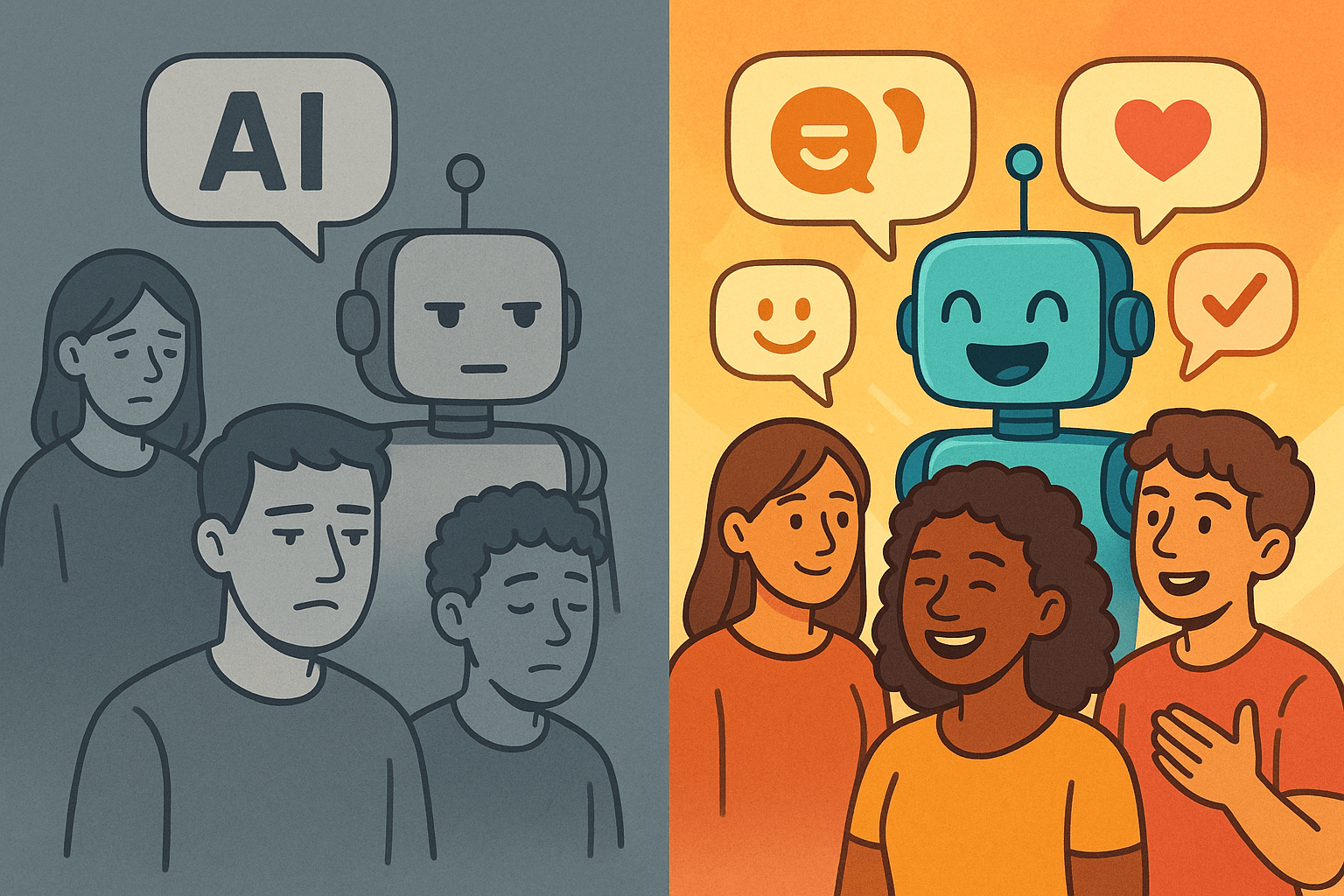
Ask a language model to produce marketing copy with a single prompt, and you’ll often get a result more bland than that pasta salad your one co-worker brings to every holiday function. The problem goes deeper than lazy writing, it’s rooted in the very way most models are built. By design, generative AI scours oceans of historical data to predict the most statistically likely next word or phrase. This means output is often a regurgitation of common themes, clichés, or the dreaded same “best practices” that everyone else has already written about.
IBM researchers note that these models are fantastic mimics but poor creators when it comes to emotional nuance or context-specific insight2. Their lack of emotional intelligence means they’re rarely able to inject authentic brand voice, humor, or the kind of empathetic storytelling that sparks genuine connection.
Coursera educators echo these concerns. They point out that most AI runs on pre-existing training sets, and that without the right prompts, fine-tuning, and human oversight, you get what amounts to a “template soup.” Serviceable, perhaps, if you don’t mind seeing a large portion of your mailing list unsubscribe3.
On the other hand, companies investing in human-AI collaboration to enrich AI-generated copy with editorial review or customer-specific tweaks are seeing substantial lifts in response metrics and sales. So if your AI content seems as lively as a legal disclaimer, the challenge isn’t just technical, it’s about blending human creativity with scalable AI automation to overcome the inherent limitations of LLMs.
The Importance of Authentic Content in Modern Marketing
Authentic content isn’t a buzzword, it’s a requirement for reasonable engagement. But what does it actually mean in practice? Peer-reviewed research published in the Journal of Marketing defines it as messaging that’s transparent, honest, and rooted in real brand values. It’s about emotional resonance, and the sense that there are real people, and genuine intentions behind every word4.
Sprout Social’s analytics highlight that authenticity is more than just a nice-to-have. Their consumer engagement data shows that genuine storytelling drives clickthroughs, fosters loyalty, and amplifies organic shares1. For instance, an apparel brand that shifted from generic seasonal slogans to customer-led narrative campaigns saw a marked uptake in meaningful interactions and conversions, to the envy of their more formulaic competitors.
The Institute for Public Relations similarly notes that brands demonstrating consistency and transparency with their messaging see measurable trust increases, especially as audiences become more discerning about AI-generated media5. Marketing experts widely agree, the magic ingredient is a narrative that goes beyond utility to connect emotionally, revealing the brand’s true story and values. So if you’re going to leverage AI for personalization, make sure to do so in a way that doesn’t lack the necessary human touch.
Core AI Technologies Empowering Hyper-Personalization in 2025
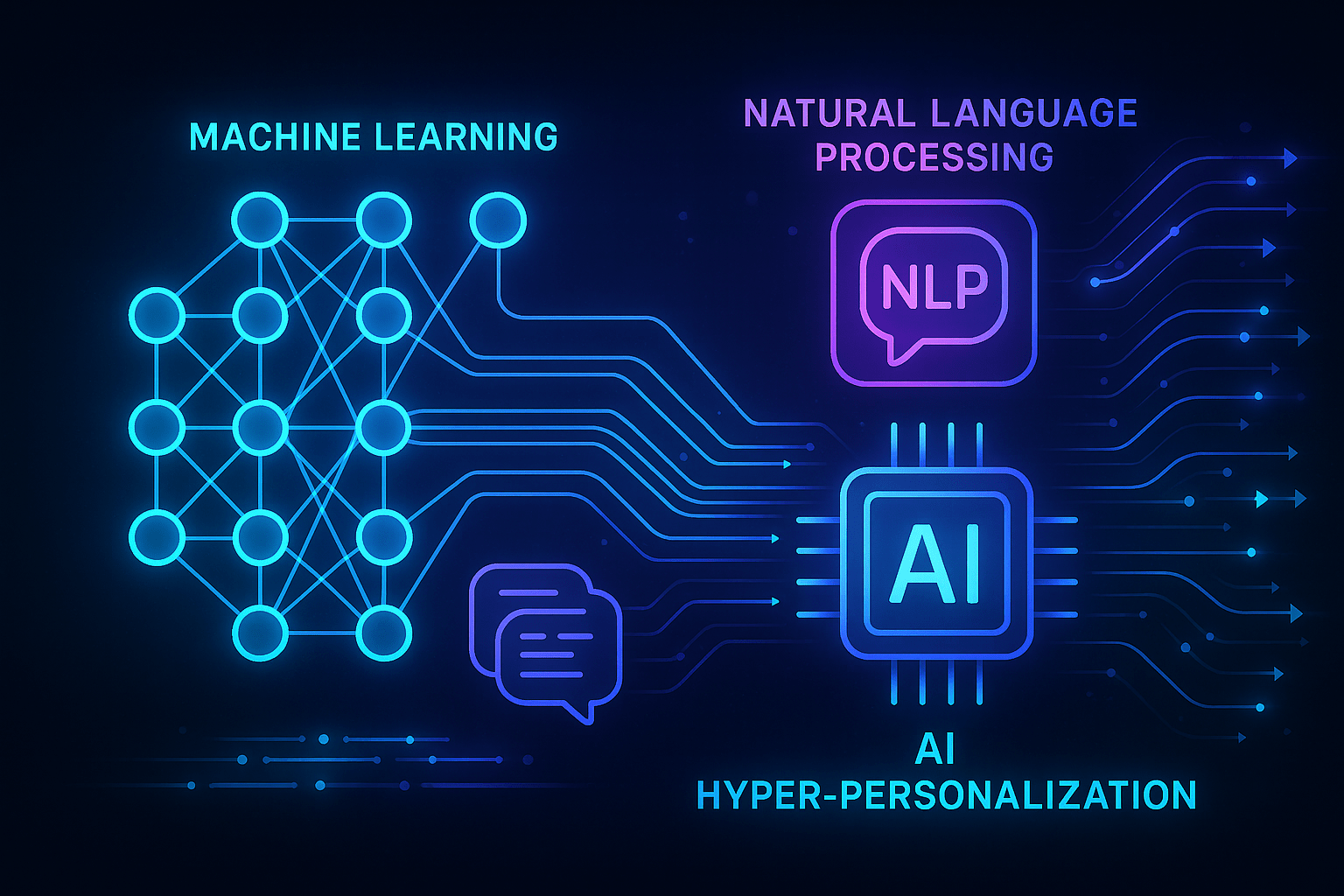
Luckily, AI-generated content is evolving, and it’s thanks to a new generation of technologies designed not just to automate, but to adapt, learn, and connect with customers at a personal level. In 2025, the secret to hyper-personalization is a harmonious blend of machine learning, NLP, and real-time data analytics; each supercharging the others for scalable, genuinely tailored experiences.
Industry heavyweights like IBM and OpenAI lead the charge here, offering robust foundational models and personalization toolkits2, 6. Industry analysts such as Gartner emphasize that the future of marketing lies in sophisticated AI-driven strategies where every touchpoint can be fine-tuned for individual relevancy, thanks to these underlying technologies7.
AI platform providers, from martech innovators to established enterprise vendors, are developing increasingly nuanced algorithms capable of synthesizing customer data (both structured and unstructured), enabling marketers to automate, test, and iterate at unprecedented speed and depth.
ML and NLP: The Heart of AI Personalization
At the core of AI-powered personalization are two technological pillars: machine learning and natural language processing. Machine learning algorithms analyze swathes of behavioral data (clickstreams, purchase history, location, demographic data, etc.) to predict what a specific individual is likely to find engaging or valuable6. And NLP allows AI systems to interpret and generate human language in context, making their output not just functional, but conversational and tailored for tone, sentiment, and even humor.
In ecommerce, real-world implementations are already delivering impressive results. Retailers deploying advanced personalization engines powered by ML and NLP have reported engagement lifts between 10–30%, along with significant gains in average order value8. These systems can differentiate between a bargain-hunting “window shopper” and a loyalist ready for an upsell, dynamically serving content and recommendations that suit each personality.
Real-Time Data and Adaptive Algorithms for Dynamic Personalization
What really sets 2025’s most advanced AI personalization apart is its ability to harness real-time data at every customer interaction touchpoint. Adaptive algorithms continually learn from user actions (e.g. what they click, linger on, purchase, or abandon), enabling the marketing engine to serve up content tailored for the “here and now.”
McKinsey reports forecast explosive growth in AI-driven personalization, with leading brands expected to outperform competitors by up to 40% in revenue, chiefly due to their mastery of real-time, predictive customization9. These dynamic systems can seamlessly stitch together a data picture from multiple channels (web, mobile, in-store, email, and social), adapting content and offers on the fly. For example, a streaming platform might promote shows based on what a user just finished watching, their reviews, and even trending topics in their region, adapting in milliseconds.
Predictive personalization has become a powerful tool for increasing both conversion and retention. A Gartner analysis recently commended marketers using predictive AI to anticipate customer churn and deploy personalized win-back campaigns, reducing attrition costs and protecting long-term revenue7.
Balancing AI Efficiency with Authenticity and Ethical Transparency
As AI flexes its efficiency muscles, it’s all too easy to build messaging that’s fast and scalable, but also utterly soulless if you’re not careful. The key competitive differentiator for 2025? Brands that marry technological advancement with ethical authenticity and a transparent approach to AI-generated content.
In recent years, the Information Technology Industry (ITI) council and similar bodies have worked tirelessly to set out AI content authentication policies and best practices. Their guidelines aren’t just a legal shield, they’re a roadmap for building trust by being upfront with consumers about AI’s involvement in content creation10.
AI ethics experts urge brands not to hide behind the algorithmic curtain, but to pull it back Wizard of Oz style, and show consumers exactly how their data is used and how content is produced. Peer-reviewed research consistently finds that transparency combined with demonstrable authenticity is a powerful foundation for long-term customer trust4. And with generative AI evolving rapidly, keeping that trust is both a challenge and a necessity.
Techniques for Ensuring Authentic AI-Generated Content
How can marketers ensure their AI-driven output doesn’t slip from authentic to artificial? The answer lies in a blend of technology, transparency, and good old-fashioned human instinct.
The ITI’s AI Content Authentication Policy recommends that businesses adopt transparent labeling of AI-generated materials, employ watermarking technologies, and implement robust human-in-the-loop verification frameworks10. This ensures not only regulatory compliance, but also signals to consumers that content is above board and responsibly managed.
AdRoll’s digital marketing insights highlight how brands like major ecommerce platforms are leveraging content verification tools that detect anomalies or “robotic” phrasings, prompting editorial review before publication11. Transparency disclosures, such as “this offer was personalized by our AI engine,” are fast becoming table stakes, helping preempt consumer skepticism.
Importantly, human-AI collaboration remains vital. The best-performing brands don’t hand over the keys entirely to AI. Instead, they blend algorithmic efficiency with human editorial oversight, enabling the brand’s unique personality to shine through even in automated messaging.
Ethical Considerations and Maintaining Customer Trust
The rush to embrace AI in marketing also comes fraught with ethical risks. Issues around algorithmic bias, privacy, opaque personalization logic, and data misuse can quickly erode trust if left unchecked.
Academic papers and AI ethics experts emphasize the importance of proactive bias mitigation. This involves regular auditing of algorithms for discriminatory outputs, and ensuring that datasets are balanced and representative. Otherwise, what’s meant to be personalized could veer into the territory of alienating, or even outright offending certain customer groups.
Transparency is non-negotiable. Leading startups and Fortune 500s alike are increasingly publishing transparency reports to explain how AI tools make decisions, how data is protected, and how consumers can opt out or control the degree of AI-driven personalization they experience.
Case studies abound of brands regaining consumer trust after missteps, often by being honest about how they’re addressing AI’s shortcomings. One global retailer earned positive press and regained loyalty when it paused an AI campaign over accuracy concerns, invited outside experts to audit, and then publicly reported on the improvements made.
Ultimately, the brands winning in 2025 are those who pursue personalization with a strong ethical spine and a clear, open dialogue about how technology helps to shape their messaging.
Practical AI-Powered Personalization Strategies for Marketing Success
Enough theory, how do marketers implement scalable, authentic AI personalization that actually moves the needle? Effective strategies blend visionary technology adoption with operational pragmatism, all while tracking meaningful business metrics. Here’s your playbook for deploying AI-driven personalization that’s both measurable and manageable.
Accenture’s strategic roadmaps recommend starting with clearly defined objectives and performance indicators (such as increased engagement rates, conversion lifts, or reduced churn), as well as implementing AI in pilots before scaling broadly12. Jasper.ai case studies illustrate that even small teams can leverage machine learning to dynamically segment campaigns, refine messaging in real time, and create content variations tailored for different audience behaviors13.
Best-in-class marketing platform providers emphasize the importance of seamlessly integrating AI tools with your existing CRM, analytics suites, and creative workflows. The goal is to design processes that empower, not overwhelm human marketers; and to make AI an extension of authentic storytelling.
Starting and Scaling AI Personalization Initiatives
Launching an AI personalization initiative doesn’t require an army of engineers, just a smart plan and a willingness to experiment. Experts recommend starting small. Begin by piloting a limited campaign or content series, using machine learning-driven insights to make things like personalized landing pages or segmented email sequences13.
Successful enterprises often follow a phased approach. First, they invest in team training to demystify AI capabilities and align expectations. Then, they integrate AI platforms in areas where impact is easily measured (think high-volume content like product recommendations or homepage banners).
Marketing strategists underline the importance of cross-functional alignment. Personalization is not just a marketing thing, it demands buy-in from IT, data, creative, and even customer service teams. The most persistent challenge? Ensuring that everyone, from designers to data analysts, understands not just how AI functions, but how it should reflect the brand’s authentic voice.
An often-overlooked factor is establishing a human-in-the-loop checkpoint, where AI suggestions are reviewed for tone and relevance before publication. This not only mitigates risk, but also becomes a training ground for both the humans and the machines.
Measuring and Optimizing Personalization Impact with AI
AI-powered personalization is only as valuable as the impact it delivers. The right performance measurements allow for iterative improvement and enable you to justify further investment.
McKinsey and Accenture agree, key metrics for AI personalization include engagement lifts (such as clicks, scroll depth, and social shares), conversion rate improvements, lowered customer churn, and increases in average order value9, 12. More advanced teams track lifetime value, incremental revenue from personalized segments, and satisfaction or Net Promoter Scores for hyper-personalized experiences.
Analytics tools seamlessly integrated with your CRM or email platform make it easy to A/B test and monitor the performance of new AI-driven personalization features. Advanced dashboards can highlight trends, diagnose under-performing segments, and suggest new opportunities for improvement.
In summary, the path to personalization prosperity lies in a cycle of test, measure, learn, and optimize, with both AI and human judgment steering the way.
Future Trends and Business Impact of AI-Driven Personalization by 2025
As we speed toward the second half of the decade, the AI personalization landscape is growing more sophisticated, and more critical to bottom-line business impact. The fusion of emerging technologies, predictive algorithms, and next-level interactivity is rewriting the rules of engagement for marketers.
ON24, McKinsey, and Gartner are nearly unanimous in predicting that brands who successfully leverage advanced AI personalization will grab (and keep) the lion’s share of future market growth, customer loyalty, and revenue7, 9, 14.
Predicted AI Personalization Technologies and Innovations
Throughout 2025, expect to see omnichannel hyper-personalization become the norm, not the exception. Next-gen AI will enable marketers to craft individual journeys across web, mobile, in-store, and emerging channels like AR and VR, creating experiences that are as unique as a customer’s fingerprint.
McKinsey predicts that personalization leaders (those who invest early and deeply in AI-driven customer experiences) can generate 40% more revenue than their peers lagging behind9. ON24’s forecasts emphasize the role of instant feedback loops, real-time content adaptation, and cross-channel orchestration powered by adaptive algorithms that contextually “know” the customer14.
HighLevel and other marketing platform trailblazers are also pioneering AI tools that plug seamlessly into immersive platforms, enabling everything from personalized product “try-ons” in virtual worlds, to customer service avatars who remember nuance and context from previous interactions.
Forward-looking innovations that are currently in the works include predictive analytics that can surface buying intent before it’s explicit, as well as AI capable of crafting not just text and custom images, but also videos and interactive elements; all tailored to specific customer segments and deployed with an astonishing level of sophistication.
Business Benefits and Strategic Opportunities
The ROI of AI personalization is no longer theoretical. Brands embracing these technologies are already reporting not just higher engagement, but improvements across every major business KPI.
Accenture case studies show companies using advanced personalization strategies see up to 91% increased customer preference for their offerings, with customers far more likely to stick with brands serving them relevant recommendations12. Gartner and McKinsey both note significant productivity and efficiency gains. Smarter segmentation, reduced waste, and higher campaign precision mean marketing dollars are more likely to strike true7, 9.
Operationally, hyper-personalization delivers important strategic advantages. More loyal customers, more word-of-mouth referrals, and a culture of innovation within the business. The ability to meet users where they are, without sacrificing authenticity or trustworthiness, creates competitive “moats” that are difficult for late adopters to cross.
For businesses eyeing the next big leap, integrating AI personalization isn’t just about today’s engagement numbers. It’s a long-term play. Build loyalty now, lock in repeat revenue, and future-proof your brand’s place in an AI-driven marketplace.
Conclusion
The evolution from generic to genuine is more than a marketing trend. It’s a game changer, reshaping not just how content is produced, but how relationships are built. Scalable, data-driven, and ethically authentic, well executed AI-enabled personalization stands as the key to unlocking truly impactful engagement in 2025 and beyond.
The brands who win tomorrow will do so by blending technological prowess with a relentless focus on trust, transparency, and genuine storytelling. Whether you’re piloting your first tailored campaign or already scaling AI personalization across multiple channels, the roadmap is clear. Combine cutting-edge tools with a commitment to ethical engagement, measure what matters, and refine relentlessly, and your messaging will stand out for all of the right reasons.
References
- Sprout Social. (2024). The Power of Authenticity in Modern Marketing: Consumer Engagement Report. Sprout Social. Retrieved from https://sproutsocial.com/insights/data/consumer-engagement-authenticity/
- IBM. (2023). The Limits of Generative AI in Content Creation. IBM Insights. Retrieved from https://www.ibm.com/think/insights/ai-generated-content
- Coursera AI Educators. (2023). Generative AI Applications: Challenges and Opportunities. Coursera. Retrieved from https://www.coursera.org/articles/generative-ai-applications
- Journal of Marketing. (2022). Authenticity’s Impact on Brand Trust and Engagement: Empirical Findings. Journal of Marketing, 86(4), 45–62. Retrieved from https://journals.sagepub.com/doi/10.1177/authenticity-marketing
- Institute for Public Relations. (2023). Authenticity and Trust Study. Institute for Public Relations. Retrieved from https://instituteforpr.org/authenticity-trust-marketing/
- OpenAI. (2024). Personalization Tools and Use Cases for Marketers. OpenAI Research. Retrieved from https://openai.com/research/ai-personalization
- Gartner. (2024). AI-Driven Marketing Strategies and Industry Analysis. Gartner Research. Retrieved from https://www.gartner.com/en/insights/artificial-intelligence/marketing
- Content Marketing Institute. (2023). Personalization and Engagement Metrics Across Industries. Content Marketing Institute. Retrieved from https://contentmarketinginstitute.com/research/personalization-engagement
- McKinsey & Company. (2024). Unlocking the Value of Personalization at Scale. McKinsey & Company. Retrieved from https://www.mckinsey.com/business-functions/growth-marketing-and-sales/our-insights/the-value-of-personalization-at-scale
- Information Technology Industry Council. (2023). ITI AI Content Authentication Policy. ITI. Retrieved from https://www.itic.org/policy/ITI_AIContentAuthorizationPolicy_122123.pdf
- AdRoll. (2023). Ensuring AI Authenticity and Transparency in Digital Marketing. AdRoll Insights. Retrieved from https://www.adroll.com/blog/ai-generated-content-pros-and-cons
- Accenture. (2024). Consumer Behavior and Personalization Statistics. Accenture. Retrieved from https://www.accenture.com/us-en/insights/interactive/personalization
- Jasper.ai. (2024). Strategic Approaches to AI Content Personalization. Jasper.ai Blog. Retrieved from https://www.jasper.ai/blog/ai-content-strategy
- ON24. (2024). Top AI Marketing Predictions for 2025 & Trends. ON24 Blog. Retrieved from https://www.on24.com/blog/ai-marketing-predictions-for-2025-emerging-trends-shaping-the-future/
