

In the fast-paced world of B2B content marketing, change is the only constant—and it isn’t taking a coffee break any time soon. The landscape is transforming faster than you can say “AI-powered personalization,” driven by relentless advances in technology, rapidly shifting buyer expectations, the competitive arms race for people’s limited time and attention, and new LLMs that seem to come out every 8 minutes.
Marketers know the challenges all too well. Measuring ROI can feel like preparing a Rube Goldberg machine, consistently engaging business audiences is trickier than figuring out what happened to all of the doughnuts Janet brought in this morning, and keeping pace with AI-generated, video, and interactive content is almost a full-time job. As 2026 approaches, the stakes are higher, the toolkits are richer, and the winners will be those who not only anticipate disruption, but harness it for strategic advantage.
In this definitive guide, you’ll discover how to future-proof your B2B content marketing by expertly integrating AI innovations, next-gen content formats, and data-driven personalization. Along the way, we’ll reveal cutting-edge frameworks, discuss actionable solutions to common pitfalls, and review real-world case studies—arming you with the knowledge you need to overcome tomorrow’s challenges effectively, and lead your team confidently into the future of B2B marketing.
Ready to out-prepare, outsmart, and outperform the competition? Let’s dive in!
Table of Contents
- Understanding B2B Content Marketing: Foundation and Future Outlook
- Emerging Technologies and Next-Gen Content Formats Revolutionizing B2B Marketing
- Key Challenges in B2B Content Marketing and How to Overcome Them
- Strategic Frameworks for Scalable and Future-Proof B2B Content Marketing
- Real-World Case Studies: Success Stories Leveraging AI and Innovative Content
- Conclusion
- References
Understanding B2B Content Marketing: Foundation and Future Outlook
What is B2B Content Marketing and How Does It Differ from B2C?
At its core, B2B content marketing is the strategic creation and distribution of valuable, relevant content to attract, engage, and nurture business audiences—ultimately driving desirable outcomes such as lead generation, relationship development, and building brand authority. Unlike B2C marketing, which often courts immediate, emotion-driven purchases, B2B marketing must navigate complex decision-making unit (DMU) mazes, longer sales cycles, and a clarion call for trust, expertise, and informative assets.
The Content Marketing Institute defines B2B marketing as a process focused on building relationships and trust over extended timelines, rather than quick, transactional results[1]. Successful B2B efforts prioritize in-depth information, logical value propositions, and content tailored for multiple stakeholders, rather than the impulse purchases or entertainment-driven experiences more common in B2C.
But the distinctions don’t stop there. As the Forbes Communications Council notes, the B2B buying process involves greater scrutiny and risk aversion, necessitating content that situates your company as a trusted advisor and partner, not just a vendor. This means research reports, expert guides, and interactive tools tend to take center stage[2].
Of course, even in buttoned-up boardrooms, a dash of wit and humanity doesn’t hurt. “B2B buyers may wear suits, but they still want engaging, authentic content—they just want it to help grow their business, not entertain their kids,” as one marketing executive quipped. The growing convergence of creative storytelling and data-driven insight is narrowing the gap between the B2B and B2C worlds in some aspects, and it’s important to keep this in mind as your content strategy evolves; while still recognizing the key, static differences.
For those seeking a B2B masterclass in digital transformation, AI Competencies in B2B Marketing is an excellent resource for foundational technology context and emerging best practices.
Current Landscape and Why Future Trends Matter
B2B content marketing isn’t just growing—it’s on a rocket trajectory. Recent data from the Content Marketing Institute reveals a trend index of 279.68, indicating surging interest and increased adoption, powered by technology, changing buyer behaviors, and measurable real-world results[1]. Video content alone has recently seen a 148%+ trend spike[3]!
What’s driving this jet-fueled revolution? That’s a complicated question, but the answer mostly boils down to…
- The utilization of generative AI for content creation and workflow automation
- AI-powered personalization initiatives for deeper engagement
- The rise of interactive content—think calculators, quizzes, and tailored assessments—delivering engagement rates up to 2x higher than static content[4]
Bill Rice, President of the Web Marketing Association, sums it up perfectly: The future will be defined by brands who aren’t afraid to leverage AI, who can find a way to do so while staying authentic, and who understand the buyer’s journey (and how interactive experiences can help guide them through it)[5].
The message here is clear. Businesses that adapt and harness these emerging trends—adopting nimble strategies and investing in AI-driven content/automation—will gain sustainable competitive advantages in the years ahead. If your idea of adapting is swapping out last year’s explainer video for this year’s, well, it’s time to stop clinging to out-dated tactics and start embracing more modern ideas. Otherwise, you’re no different than your uncle who brags about still having a flip phone.
For those scouting ahead, the Forbes Communications Council’s authoritative 2025 outlook affirms that the increased integration of artificial intelligence for hyper-personalization and predictive analytics will allow companies to tailor content, recommendations, and outreach strategies to individual clients with unprecedented accuracy[2]. You need to prepare to leave guesswork behind—and start letting data and AI do more of the heavy lifting.
Emerging Technologies and Next-Gen Content Formats Revolutionizing B2B Marketing
AI-Powered Content Creation and Personalization: Transforming the Workflow
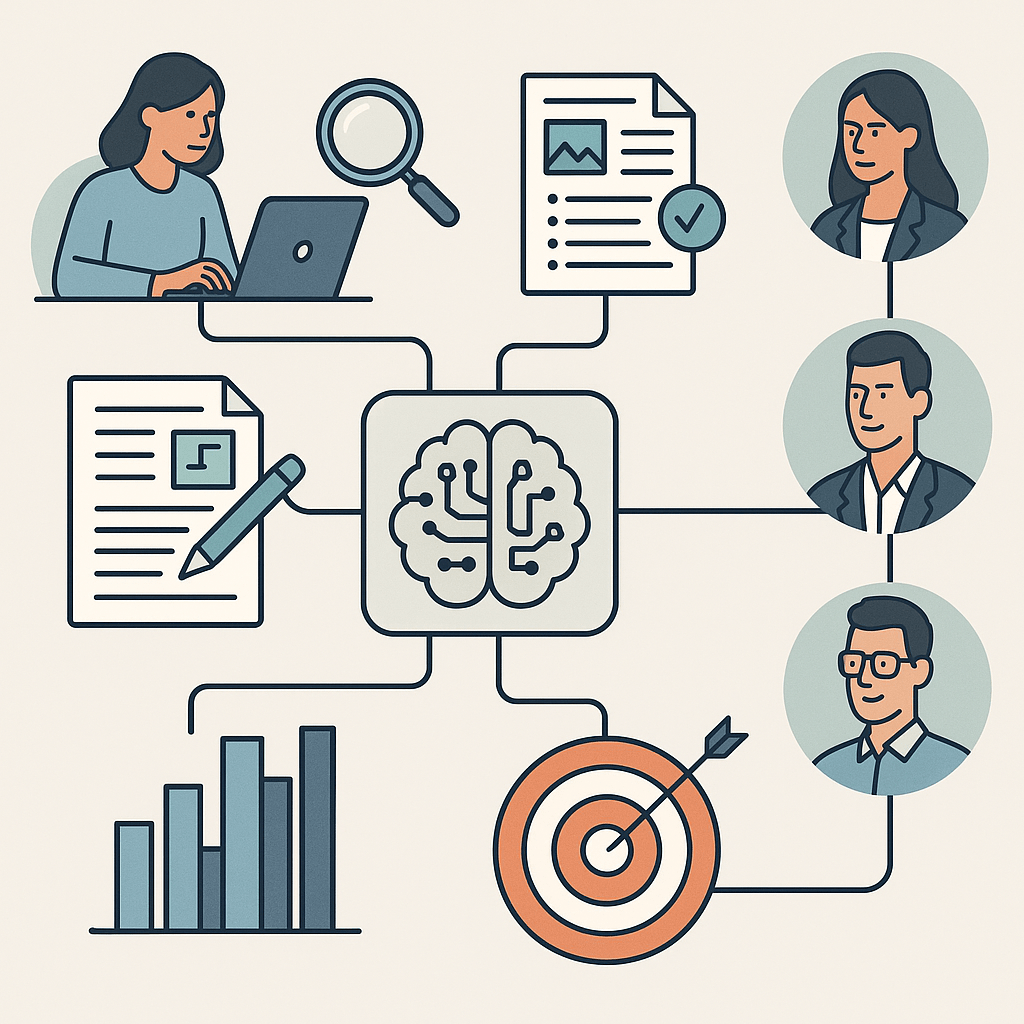
The AI era isn’t waiting for your next quarterly planning session. From generative content tools to dynamic personalization engines, AI is fast transforming every stage of the B2B content workflow.
Generative AI platforms can now automate everything from research, to drafting, and even editing, enabling marketing teams to produce more content at scale—without burning out like those dance trends everybody used to post on TikTok (2020 was a weird year). But the real superpower lies in AI’s capacity for hyper-personalization. According to Forrester’s guide on generative AI, companies are leveraging it not just to create more content, but to engineer content journeys fine-tuned to each buyer’s pain points, behaviors, and buying stage[6].
But as Bill Rice emphasizes, there is a bit of a balancing act to be played here. The future of B2B marketing will not be about letting AI do all the work, but rather using AI as a powerful tool for insight and personalization, while retaining authenticity, and preserving the “human touch” that turns engagement into trust[5]. In other words, let AI make you smarter, not more robotic.
On the practical front, AI can…
- Analyze vast datasets in real time, uncovering buyer trends lightning-fast[2]
- Power predictive analytics, letting marketers anticipate client needs before clients even know they need them
- Dynamically adapt email and website experiences, guiding each visitor down the most relevant path
The Dealfront/LinkedIn Marketing Solutions analysis encourages a measured approach. Start by auditing your marketing workflow, identify repetitive or data-rich touchpoints, and pilot AI tools with clear feedback loops. Don’t neglect the human element—review, refine, and keep your voice authentic[7].
This is more than hype. Adopters are seeing meaningful lifts in efficiency and engagement, although navigating data privacy, content oversight, and organizational buy-in remain lively boardroom debates.
For a detailed look at cutting-edge AI use cases in B2B content marketing, check out AI in B2B Marketing Strategies.
Innovative Content Formats: Video, Podcasts, and Interactive Tools

The battle for B2B engagement has gone multimedia—and for good reason. Christopher Field, a global B2B SaaS marketing leader, highlights that interactive content generates twice the engagement compared to static content; and companies using quizzes, calculators, and assessments see conversion rates increase by up to 40%[4]. That’s right, your next big win could come from a calculator, not that tired old white paper you’ve been promoting since 2014.
Video has become the go-to format for storytelling, education, and social amplification. From short, snackable explainers, to long-form demos and customer testimonial reels, video marketing is seeing notable traction, with 78% of marketers planning to increase video content to improve engagement[8].
Podcasts and webinars offer an authoritative yet approachable channel for sharing expertise and real-world stories. These formats build credibility, drive long-form engagement, and—let’s face it—let executives multitask during workouts or commutes.
Interactive tools such as quizzes, assessments, and ROI calculators do double duty: they both inform and capture valuable first-party data for future nurturing. According to Ossisto and LinkedIn Marketing Solutions, interactive content assets contribute significantly to lead nurturing and pipeline acceleration, allowing marketers to gather buyer signals and adapt outreach accordingly[9].
Whether you’re doubling down on dynamic webinars, crafting binge-worthy podcasts, or launching “choose-your-own-adventure” content journeys, innovative formats are the keys to breaking through digital fatigue and building high-value connections.
Key Challenges in B2B Content Marketing and How to Overcome Them
Measuring and Attributing ROI in B2B Content Marketing
Content marketing works, but proving it can be harder than explaining thought leadership to that one board member who refuses to retire (“How can thoughts be leaders? Whaddidya watch that on the YouTube?”). It’s no wonder that 56% of B2B marketers admit to struggling with ROI attribution[10].
The challenge stems from multi-touch buying journeys, and the gap between early-stage content and closed sales. Attribution isn’t impossible, it just takes smarter measurement frameworks. Benchmark studies from the Content Marketing Institute and Cognism recommend the following steps…
- Start with clear KPIs linked directly to business goals (think SQLs, pipeline velocity, and closed-won deals)
- Deploy integrated analytics platforms to track content influence across the buyer’s journey—not just last-click conversions
- Regularly audit and refine your attribution model to account for cross-channel and multi-stakeholder engagement
Ruler Analytics echoes these findings, noting that data integration across platforms is essential for full-funnel attribution. “Don’t let the unknown sabotage your budget planning—align metrics to each content type and sales stage, and use lead scoring to attribute value[11].”
For a deeper dive into this conundrum (and a wry look at where ROI often falls short), see Challenges of ROI Measurement in B2B Marketing.
Boosting Engagement and Creating Authentic Connections
If your content engagement graph resembles a flat line, you’re not alone. The digital universe is overcrowded, and discerning B2B buyers have a short attention span (12 tabs open, anyone?). The key is creating authentic, memorable connections—sometimes as straightforward as dropping the corporate jargon and starting a conversation.
Reports from GWI and Content Whale reveal that marketers see engagement increases of up to 40% when they move beyond static blog posts and embrace interactive content and live experiences[8][12]. Mario Peshev, a recognized content marketing thought leader, emphasizes the importance of authenticity and interaction, noting that connection comes from relevance, dialogue, and value, not salesy messaging.
Forrester and LinkedIn agree. Personalization is no longer optional, AI-driven segmentation and adaptive content delivery are minimum requirements for high engagement. The brands that emotionally resonate, educate, and adapt in real time will command the business audience’s attention[6][13].
Overcoming Lead Generation and Internal Alignment Obstacles
While technology gets the limelight, foundational challenges like budget constraints, lead quality, and internal silos can quietly sink the best-laid content plans. Nearly 25% of B2B marketers cite limited budget as their greatest hurdle, while 57% waste time and resources on poorly targeted initiatives (if Ned Stark was still alive the last time you updated your account based marketing list, it’s probably time to make some changes)[14]. Throw in workflow bottlenecks and siloed teams, and you’ve got the marketing equivalent of digital pinball.
What’s the fix? It takes both tactical frameworks and organizational resolve. Pipedrive and Ascend recommend…
- Conducting regular alignment sessions between sales and marketing with shared dashboards
- Defining an ideal lead profile collaboratively to improve targeting and qualification
- Investing in cross-team analytics (beyond gut intuition) to improve campaign focus and accountability
Case study data shows that teams implementing regular reviews, dedicated “content councils,” and automated nurture workflows consistently report improvements in lead quality and pipeline velocity. Not sexy on a slide deck—but it turns heads in board meetings.
Strategic Frameworks for Scalable and Future-Proof B2B Content Marketing
Building Scalable Content Production Models with AI and Technology

The days of treating every blog post like a bespoke painting are over (unless you’re Michelangelo, in which case, how are you still alive, and why are you reading a marketing blog?). Scalable content production is the secret weapon for resource-strapped B2B teams striving to maintain quality and consistency.
The Content Marketing Institute reports that less than one-third of B2B marketers have achieved truly scalable content models—citing resource limitations and workflow hurdles as primary obstacles[1]. But with the dawn of AI-powered writing assistants, automations that batch and schedule cross-platform content, and collaborative tools, the scalability ceiling is rising fast.
Industry narratives from Dealfront and LinkedIn Marketing Solutions highlight three pillars for scaling success…
- Automate repetitive tasks using AI, from keyword research and analytics to content repurposing
- Establish a central content repository and modular asset library for quick adaptation across formats and campaigns
- Develop editorial governance and centralized workflows, so that every piece of content meets both brand and buyer expectations
Survey data indicates that marketers embracing these models rate their strategies as “very or extremely effective” nearly 30% of the time, compared to 10% for less-optimized teams. In an era where “do more with less” is the recurring fiscal mantra, scaling with smarts beats scaling with caffeine (I say as I sip my fourth cup of coffee today).
Aligning Content Marketing Goals with Business Objectives
The single biggest reason content marketing underperforms? It’s not aligned with what the business really cares about. Enter Outcome-Based Marketing (OBM) and Agile frameworks—methodologies designed to sync your content machine with strategic KPIs and evolving market feedback loops.
Recent survey data by Walker Sands underscores that marketers integrating OBM into their content planning enjoy stronger executive buy-in and higher budget approval rates. OBM works by defining clear business outcomes (think customer acquisition cost, deal acceleration, etc.), then mapping content performance to these outcomes via trackable metrics.
Forbes Communications Council points out that adapting quickly, measuring what matters, and aligning KPIs to business objectives is how leading B2B companies stay ahead. Agile marketing practices and continuous feedback loops allow real-time adaptation to market shifts—critical in an AI-driven future[2].
In practice, this might look like quarterly sprints, rapid A/B creative testing, and iterative content adjustments. Remember, in B2B as in comedy, timing is everything (yes, my Ned Stark reference is still relevant).
Positioning and Thought Leadership for Sustained Competitive Advantage
If everyone’s shouting about AI and “future-proofing,” how do you stand out, build trust, and win lasting attention? The answer: niche expertise, authentic thought leadership, and robust content positioning.
Marketing strategist Philip Wallage suggests that strong content positioning means owning your unique expertise and delivering consistent, differentiated value—becoming the go-to authority, not just another voice in the crowd[15]. MarTech echoes this, noting that brands rising above the noise integrate thought leadership and customer-centric content into every touchpoint, building trust and preference over long cycles[16].
Real-world examples from Apple, Tesla, and Amazon show that memorable brand positioning—often crystallized in campaign taglines or flagship educational content—drives both emotional connection and competitive differentiation.
What does this mean for you? You need to identify your “content moat” (i.e. the expertise, data, or perspective you deliver that competitors can’t easily replicate), foster in-house experts, use executive voices to drive thought leadership on emerging topics, and consistently refresh/align your brand narrative with evolving audience and market needs.
For hands-on frameworks and further inspiration, see Uphance’s comprehensive guide to positioning strategies.
Real-World Case Studies: Success Stories Leveraging AI and Innovative Content

Theories are useful, but nothing proves the impact of AI and innovative content like battle-tested case studies. LinkedIn Marketing Solutions documented a Software-as-a-Service firm that transitioned to an agile, AI-powered content hub; integrating interactive tools, personalized materials, and modular asset reuse. The result? They doubled lead engagement rates within three quarters, and reduced average time-to-lead qualification from 30 days to 18[17].
Similarly, Ossisto highlights mid-sized B2B companies achieving a 40% increase in conversion rates simply by deploying interactive content elements on landing pages—particularly calculators and diagnostic quizzes that offered tailored recommendations to users. These companies also reported a noticeable rise in sales alignment, as real-time behavioral data from interactive content gave sales teams warmer, more qualified leads[9].
Christopher Field’s research further affirms that companies using interactive content, video storytelling, and AI-based lead scoring not only nurture leads more effectively, but also shorten the sales cycle and create revenue uplift[4]. The numbers don’t lie, a blend of strategic frameworks and cutting-edge tech pays undeniable, practical, measurable dividends.
Conclusion
The future of B2B content marketing belongs to those who embrace innovation without sacrificing strategy—or sanity. As AI and next-generation content formats remake the marketing playbook, success depends on integrating automation, personalization, and engaging formats with disciplined measurement and adaptive frameworks.
To recap—leverage AI to streamline operations and personalize at scale, experiment boldly with video/podcasts/interactive content to boost engagement, address perennial challenges head-on with data-driven frameworks, and never forget that true differentiation comes from authentic expertise and trust-building (not trend-chasing).
Marketing transformation isn’t waiting for anyone, it’s happening whether you’re ready or not. Adopt these strategies now, explore the authoritative resources linked throughout this guide, and above all, keep learning and adapting. The future is bright for B2B content marketers who dare to lead (and who aren’t afraid of AI agents taking over the world).
If this sounds like a lot to take in, that’s because it is. Luckily, you don’t have to put all of this into practice by yourself, we’re here to help!
Looking to increase your lead gen ROI/ROAS?
Knowledge Hub Media is an industry leader in the B2B lead generation space, serving some of the biggest names in tech since 2009. Contact us to learn more about how we can tailor a lead gen campaign to your specific needs.
Struggling with poor targeting or outdated ABM list data?
Knowledge Hub Media has a wealth of expertise in defining actionable target audiences and building effective ABM lists. Discover how we can optimize your targeting criteria and modernize your account based marketing strategy.
Need help creating easily consumable videos, studio-quality audio, interactive content, or aesthetic white papers?
Knowledge Hub Media’s expert content team has you covered. We have years of experience in producing top quality assets of all kinds, for all B2B audiences. Reach out now for more information on custom content creation.
Want to leverage AI for personalization but don’t know where to start?
Knowledge Hub Media stands at the forefront of AI innovation. Let’s discuss how we can help you automate lead research and personalized lead outreach.
References
- Content Marketing Institute. (N.D.). What is Content Marketing? Content Marketing Institute. Retrieved from https://contentmarketinginstitute.com/
- Forbes Communications Council. (2024, December 17). 17 Emerging B2B Marketing Trends To Watch For In 2025. Forbes. Retrieved from https://www.forbes.com/councils/forbescommunicationscouncil/2024/12/17/17-emerging-b2b-marketing-trends-to-watch-for-in-2025/
- Content Marketing Institute. (N.D.). B2B Content Marketing Trends Research. Content Marketing Institute. Retrieved from https://contentmarketinginstitute.com/b2b-research/b2b-content-marketing-trends-research
- Field, C. (2023). The Future of Content Marketing in B2B: Trends Shaping Engagement & Lead Nurturing. LinkedIn. Retrieved from https://www.linkedin.com/pulse/future-content-marketing-b2b-trends-shaping-engagement-field-vxktc
- Rice, B. (2023). The Future of B2B Marketing: Personalization, AI, and Authenticity. LinkedIn. Retrieved from https://www.linkedin.com/pulse/future-b2b-marketing-personalization-ai-authenticity-bill-rice-daj5e
- Forrester Staff. (2023). Seven Ways To Use GenAI For B2B Personalization. Forrester. Retrieved from https://www.forrester.com/blogs/7-ways-to-use-genai-for-b2b-personalization/
- Dealfront Staff. (2024). AI in B2B Marketing: Automate & Personalize Smarter. Dealfront. Retrieved from https://www.dealfront.com/blog/ai-b2b-marketing
- GWI. (2023). Content Marketing. GWI Blog. Retrieved from https://www.gwi.com/blog/content-marketing
- Ossisto Blog Staff. (2024). B2B Content Marketing Trends. Ossisto. Retrieved from https://ossisto.com/blog/b2b-content-marketing-trends/
- Content Marketing Institute. (N.D.). B2B Content Marketing: Benchmarks, Budgets, and Trends. Content Marketing Institute. Retrieved from https://contentmarketinginstitute.com/b2b-research/b2b-content-marketing-trends-research
- Ruler Analytics. (2023). Measuring B2B Content Marketing ROI. Ruler Analytics. Retrieved from https://www.ruleranalytics.com/blog/measuring-b2b-content-marketing-roi/
- Content Whale Staff. (2023). 12 Ways To Improve Content Engagement. Content Whale. Retrieved from https://content-whale.com/blog/12-ways-to-improve-content-engagement/
- LinkedIn Marketing Solutions. (2023). The Ultimate Guide to Improve Your B2B Content Marketing Strategy. LinkedIn. Retrieved from https://www.linkedin.com/business/marketing/blog/content-marketing/the-ultimate-guide-to-improve-your-b2b-content-marketing-strategy
- WPromote & Ascend. (2023). State of B2B Lead Generation. WPromote. Retrieved from https://www.wpromote.com/blog/state-of-b2b-lead-generation
- Wallage, P. (2023). Positioning Strategies for Content Creators. Philip Wallage. Retrieved from https://www.philipwallage.com/article/positioning-strategies-for-content-creators
- MarTech Staff. (2023). Future-Proof Your Content Strategy. MarTech. Retrieved from https://martech.org/future-proof-your-content-strategy/
- LinkedIn Marketing Solutions. (2024). B2B SaaS Content Marketing Success Story. LinkedIn. Retrieved from https://www.linkedin.com/business/marketing/blog/content-marketing
- Uphance. (2023). Positioning Strategies: A Comprehensive Guide To Success In 2023. Uphance. Retrieved from https://www.uphance.com/blog/positioning-strategies-a-comprehensive-guide-to-success-in-2023/
