

When today’s “cutting edge” can be tomorrow’s retro, future-proofing your tech stack is no longer a luxury reserved for Fortune 500 giants—it’s an essential survival tactic for organizations of any size. Between disruptive technological leaps (how long until the AI overlords take over?), evolving regulatory demands, and a growing talent gap, technology leaders and investors alike are wrestling with perplexing challenges. How do you outmaneuver obsolescence, scale up without melting down, and invest smartly in tech choices that won’t look embarrassingly dated come 2030?
If you resonate with these concerns, you’re in the right place. This definitive guide distills hard-won insights, proven frameworks, and research-backed strategies to help you effectively future-proof your tech stack. We’ll walk you through core architectural decisions, modernization tactics, and investment criteria—and will do our best to keep the journey as painless possible. By the end, you’ll know how to spot and solve legacy roadblocks, mitigate integration and scalability headaches, and make your next technology investment (or twelve) with confidence. Ready to give your company’s tech backbone the upgrade it deserves? Let’s get started!
Table of Contents
- Understanding Your Tech Stack: Foundations for Future-Proofing
- The Pillars of Future-Proofing: Strategies to Safeguard Your Technology Investments
- Identifying and Overcoming Common Technology Challenges: Outdated Tech, Scalability, and Integration
- Investing Today for 2030: Scalable, Flexible, and Sustainable Technology Choices
- Modernizing Your Tech Stack: Practical Roadmaps and Phased Implementation
- Conclusion
- References
Understanding Your Tech Stack: Foundations for Future-Proofing
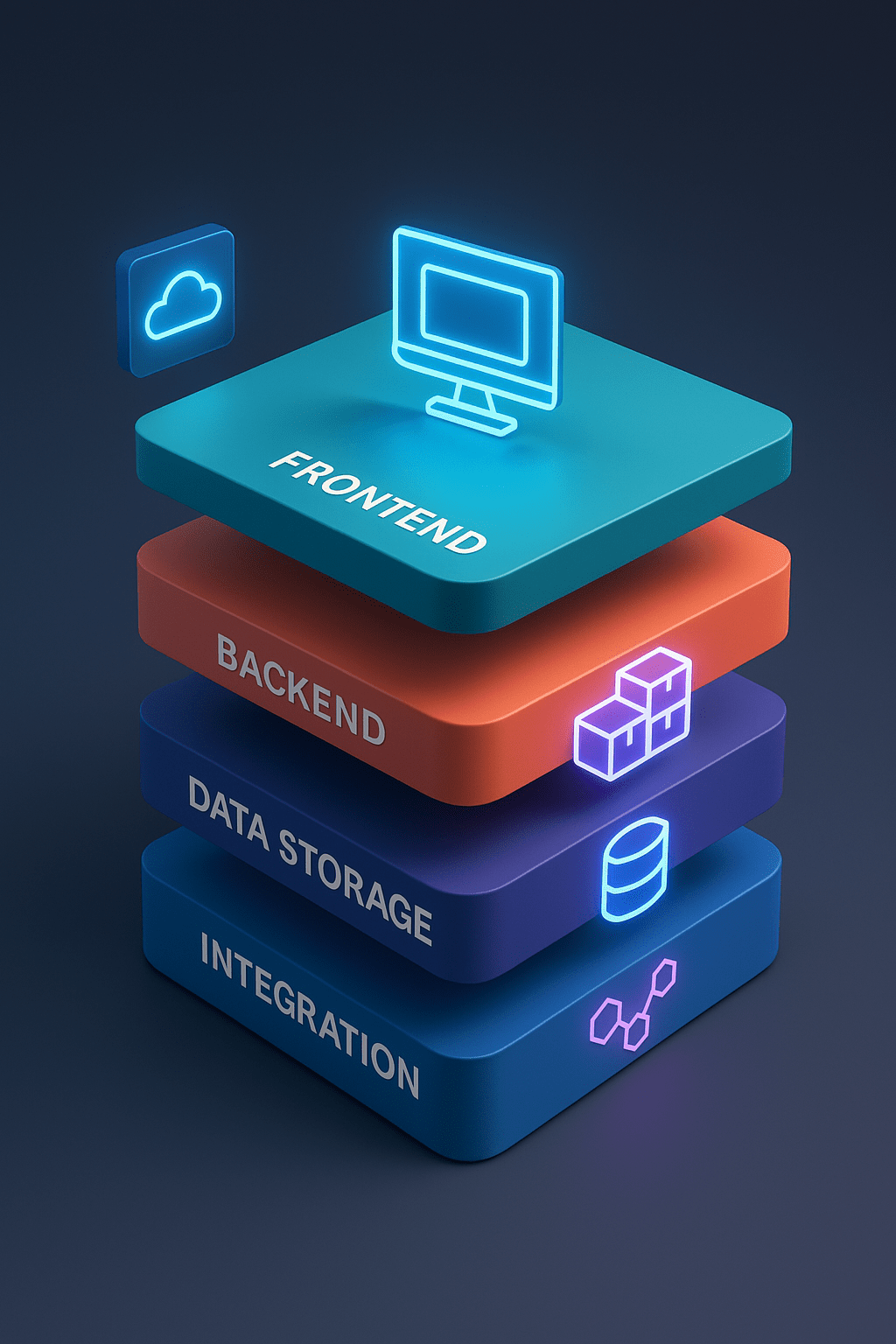
What exactly is a tech stack, and why does it matter? A stack is the full suite of technologies—think programming languages, frameworks, databases, services, tools, and infrastructure—that supports and powers your entire organization. More than a shopping list, your tech stack mirrors your company’s ability to deliver innovative products, pivot with market changes, and maintain operational efficiency amid relentless digital transformation.
Industry leaders like Martin Fowler advocate that modular architectures and microservices-driven stacks enable smoother scaling and adaptability. While a monolith system may be simple at first, increasing modularity through patterns like microservices make the system more maintainable and scalable in the long run[1]. The Linux Foundation’s work on open source cloud-native technologies has been integral in democratizing these best practices, making modern, future-proof architectures accessible across sectors[2].
As 2025 and beyond unfold, trends like serverless computing, container orchestration (who came up with the word Kubernetes, and have they been fired yet?), and fully cloud-native designs are becoming table stakes—not novelties. Consider these as the building blocks companies are stacking up for success in the coming decade. For foundational guidance on secure, scalable architectures, this Cloud Security Technical Reference Architecture write-up offers best-in-class recommendations.
Components and Examples of Modern Tech Stacks
A modern tech stack typically comprises four main layers: frontend (user interface), backend (server-side logic), data storage (databases and data lakes), and integration tools (APIs, middleware, etc.). Each layer impacts your stack’s flexibility and the range of business problems it can address.
Stack Overflow Developer Reports—an industry favorite—highlight the most popular and emerging stacks in use worldwide. Old standbys like LAMP (Linux, Apache, MySQL, PHP/Python) and MEAN/MERN (MongoDB, Express, Angular/React, Node.js) are frequently lauded for their reliability and developer community support. Meanwhile, newer entrants such as JAMstack, and cloud-native platforms built around microservices architectures are making waves, especially as organizations seek flexibility and faster time-to-market[3].
The choice isn’t just about what’s trendy—it must fit your unique business context. For example, an e-commerce startup craving rapid iteration may lean into MERN, while a healthcare organization handling sensitive data might opt for multi-layered, compliance-driven solutions.
Impact of Tech Stack Choices on Scalability and Agility
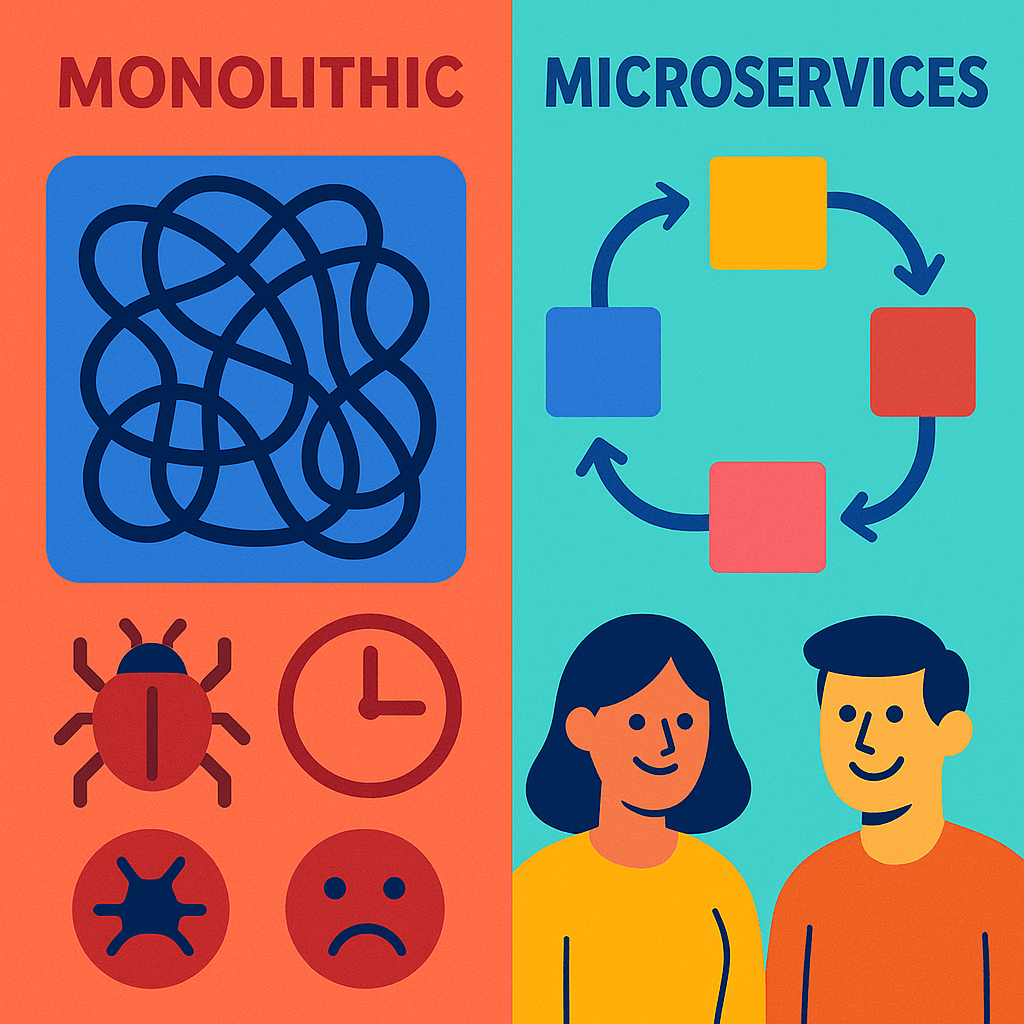
Here’s the rub. The wrong architectural choice today can mean massive technical debt—and regret—tomorrow. Monolithic architectures can be easier to launch, but notoriously difficult to scale or update without triggering chain reactions of bugs or “unexpected feature enhancements.” Microservices and modular stacks, on the other hand, promote decentralized development and agility. As Fowler explains, the granularity offered by microservices enables organizations to deploy, scale, or refactor components independently, avoiding business-crippling downtime[1].
Engineering leaders from the Forbes Technology Council further warn that businesses sticking to rigid, monolithic designs risk agility bottlenecks as customer expectations—and data volumes—inevitably continue to grow[4]. Microsoft Research quantifies the risks: legacy systems can saddle organizations with up to 21 hours of lost productivity per user, per year, simply due to maintenance struggles[5]. Transitioning to cloud-native, serverless, or containerized ecosystems mitigates these impacts, and supports continuous improvement.
For an accessible breakdown of architectural hurdles and integrations at scale, see the overview on Integration and Scalability Challenges in IT Systems.
The Pillars of Future-Proofing: Strategies to Safeguard Your Technology Investments
What does it mean to future-proof? Practically, it’s about equipping your tech foundation to adapt—without breaking a sweat (or the bank)—as new innovations, threats, and demands emerge. It’s prevention, not just cure.
Why is future-proofing critical? In a recent digital transformation roundtable, CTOs emphasized that proactive modernization pays off enormously in risk reduction and cost savings. As one CTO noted (paraphrasing multiple real-world experiences), organizations that invested early in modularity and automation were those picking up steam, while their slow-to-the-take competitors were stuck patching holes[6]. Industry authorities like Gartner and Forrester have underscored the necessity of IT lifecycle management in their whitepapers, pointing to measurable long-term returns for organizations who take a structured, forward-looking approach[7][8].
Case studies from software consultancy Evermethod, Inc. reveal organizations that adopted robust modernization policies and governance frameworks have consistently outpaced their peers in adaptability and cost efficiency, while those that neglected future-proofing ended up grappling with security nightmares and costly re-platforming[9].
Step-by-Step Framework for Future-Proofing Your Tech Stack
So how do you future-proof a tech stack? It starts with a methodical, step-by-step approach…
- Inventory and Assessment: Create a comprehensive map of every technology asset, integration point, and dependency. This lays the groundwork for identifying high-risk legacy components and opportunities for consolidation or upgrade.
- Architectural Modernization: Move toward modular, microservices-based, or cloud-native architectures wherever practical. As Thompson et al. from the University of Richmond have advised, future-ready IT infrastructure combines centralized governance with decentralized flexibility, balancing cost and adaptability based on company strategy[10].
- Investment Alignment: Ensure each technology initiative is tied to business goals—whether boosting customer experience, expanding analytics, or facilitating compliance. As noted by experts from Whatfix, mapping technology spending to core company outcomes is critical to sustained relevance and risk mitigation[11].
- Integration Governance: Institute governance frameworks to formalize standards for integration and interoperability. A well-documented integration plan pays dividends in reduced downtime and easier onboarding of future components.
- Continuous Evaluation & Technical Debt Management: Regularly audit systems for technical debt—deferred maintenance, patchwork integrations, and processes that no longer scale. AI-driven automation can play a starring role in identifying and resolving bottlenecks before they become major problems.
For sustainability-focused asset management, the Sustainable Asset Management Guide helps ensure investments are actionable and resilient.
Common Pitfalls and How to Avoid Them
Even future-proofing aficionados aren’t immune to blunders. The biggest missteps include over-engineering (because the only thing worse than an outdated stack is one so complicated nobody remembers how it works), neglecting integration governance (leading to a spaghetti bowl of app connections), skipping scalability tests, and underestimating security and compliance risks.
CIOs often recount war stories about botched rollouts—where investing in the shiniest new tech without an integration roadmap led to productivity and morale taking a hit. Microsoft Research reports that organizations ignoring technical debt can face doubled security risks and spiraling maintenance costs if unresolved[5].
The best mitigation tactic is discipline. Keep it simple, document everything, and test for scalability at every stage. And above all, continuously train your teams—not just on how things work, but on how they will work next week, and why modernization and governance matter.
Identifying and Overcoming Common Technology Challenges: Outdated Tech, Scalability, and Integration
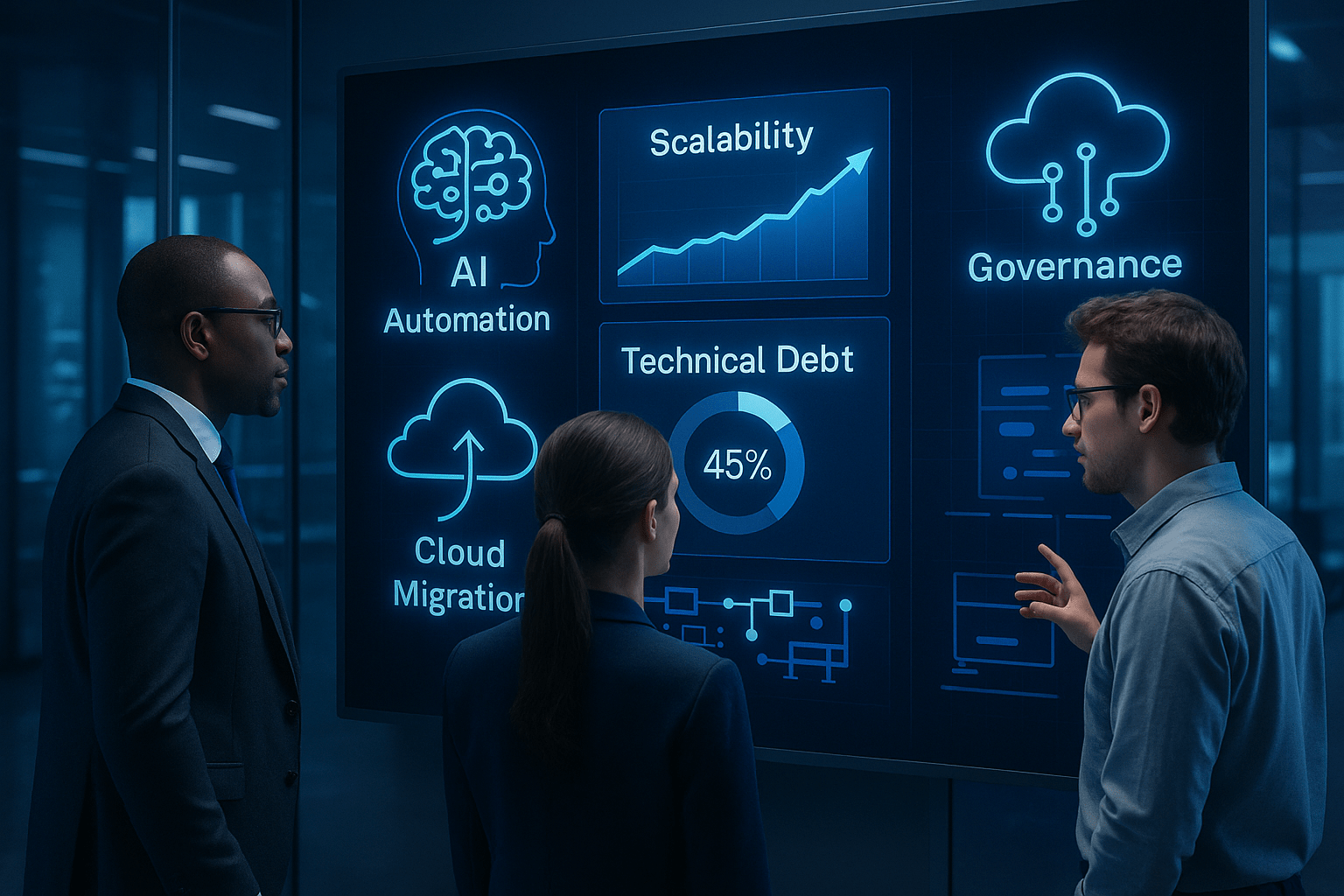
Every company, at some stage, inevitably collides with the perils of outdated technology, scalability stalls, and tangled integrations. These issues don’t just sap efficiency—they can pose existential risks, turning agile companies into bureaucratic cautionary tales.
Data from Microsoft Research and Engaging Data reveal stark realities: organizations saddled with obsolete systems and antiquated software lose over a full week of productivity per employee per year, while four-year-old computers alone may trigger almost 3 days of downtime annually[5][12]. Integration specialists at Foundry Co. and BetterCloud emphasize that the typical mid-sized business now manages between 40 and 200 SaaS applications, often spending nearly $1 million per annum just to keep them moderately connected[13].
Case studies from modernization consultancies show that companies investing in risk-based modernization outperformed those kicking the can down the road—both in cost savings and employee satisfaction[9].
Challenges of Outdated Technology and Their Business Impacts
Legacy systems are like that old fax machine no one dares to move. At best it’s useless, and at worst it gets in the way, but for some reason nobody ever gets rid of the damn thing. Incompatibility with modern tools, increasing security vulnerabilities, and resistance to change conspire to stifle innovation. Microsoft Research studies confirm that organizations relying on outdated tools waste tons of time just battling routine maintenance[5].
CIOs tackling modernization often cite the need for comprehensive change management—aligning IT, leadership, and staff on the urgency for renewal. Securing executive buy-in and running targeted training programs helped several organizations navigate employee push back, and turned skeptics into modernization champions.
For specific frameworks and change management advice, check out this Modernization of Legacy IT Systems article.
Addressing Scalability Bottlenecks with Modern Architectural Approaches
Scalability bottlenecks often rear their heads in the form of slow response times, increased downtime, and the sensation that—even with the best coffee—your engineering team is in a perpetual game of whack-a-mole. Monitoring tools such as Prometheus and Grafana have become industry gold standards for tracking system health and capacity.
AI-driven automation—especially for tasks like image transformation or predictive analysis—bolsters scalability. Forbes Technology Council contributors stress that architectural choices, including thoughtful component isolation and dynamic resource allocation, are the bedrock of resilient scaling[4].
Medium engineering experts have documented real-world scalability triumphs, highlighting phased capacity planning, stress testing, and modular componentization (another ridiculous word, almost as bad as Kubernetes!) as keys to growth-ready stacks.
Improving Integration Success Through Governance and Best Practices
Integration woes typically arise when tools speak in different languages, data quality is poor, or infrastructure is an awkward jigsaw puzzle of mismatched components. Integration specialists at Foundry Co. and BetterCloud underscore that clear governance frameworks—think explicit API standards, version control, and comprehensive documentation—are essential for successful and sustainable integrations[13].
Whitepapers on data governance best practices explain that investing early in integration planning reduces project overruns and increases ROI. Martech integration case studies consistently show that phased, criteria-based tool selection—coupled with ongoing change management—can sidestep most major pitfalls.
Investing Today for 2030: Scalable, Flexible, and Sustainable Technology Choices
So, what investments will put you on the fast track to 2030, rather than leave stuck waiting in the tech equivalent of airport security? Tech leaders and investors are focusing on AI, advanced cloud computing (including edge expansion), quantum technology, robust cybersecurity, and sustainability.
Forbes and VanEck analysts report a 20% uptick in venture capital deployment toward innovative technologies in 2024, forecasting the cloud computing market alone will cruise past the $1 trillion mark by the end 2025[14][15]. With cybercrime costs projected by Statista to hit $24 trillion globally by 2027, security investments are no longer optional—they’re non-negotiable[16]. The National Science Foundation’s 2024 report highlights heavy investments in democratizing AI, quantum research, and cross-sector infrastructure—all signaling where tomorrow’s returns may be hottest[17].
In the public sector, the US Technology Modernization Fund (TMF) is financing large-scale transitions to cloud-native, zero-trust architectures at agencies like the Department of Homeland Security, providing practical blueprints for future-proofed, government-grade IT modernization[18].
Top Technology Sectors and Trends to Watch for 2030
Let’s peer into the (not so foggy) crystal ball. Here’s what’s shaping the next decade…
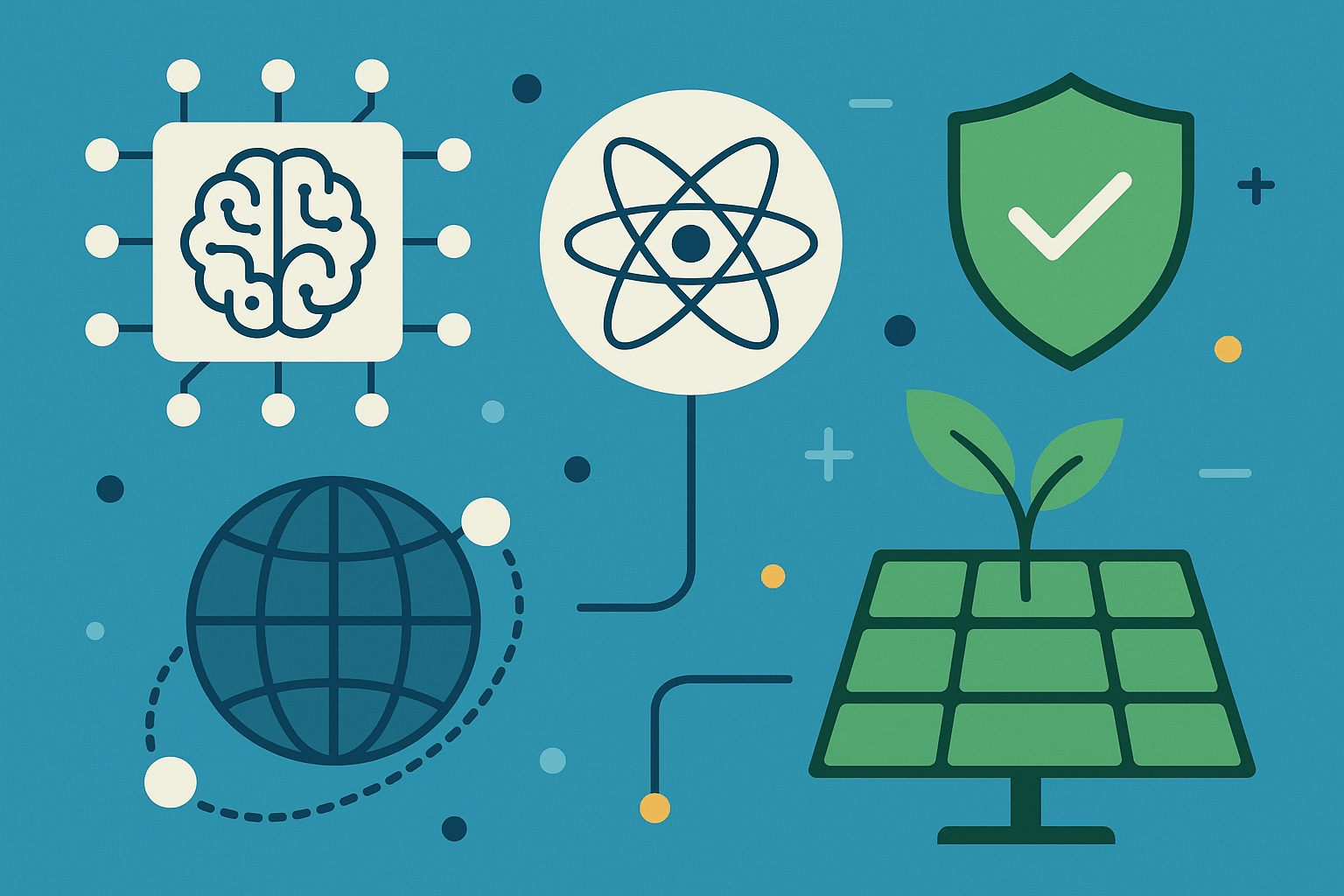
AI and Automation: AI won’t just be an add-on, it will drive everything from workflows to predictive analytics and customer service. Power demands could reach 20% of global consumption for AI processing by 2028[16].
Quantum Computing: NSF and PwC highlight it as the wild card capable of rendering today’s encryption obsolete, and revolutionizing optimization problems[17].
Cloud-Edge Expansion: 6G and edge computing will enable millisecond-latency and hyper-connected ecosystems, supporting everything from smart factories to real-time environmental monitoring.
Cybersecurity: Global cybercrime costs are expected to skyrocket over the next few years, making proactive cybersecurity investments mission critical[16].
Green Technology: Sustainability is moving from a “nice to have” to a dealbreaker, as organizations increasingly factor ESG into almost every technology and vendor decision.
For detailed projections and priorities, NSF’s Investing in the Nation’s Scientific and Competitive Future is a must-read.
Assessing Scalability and Flexibility in Technology Investments
Investing in scalable technology isn’t about chasing the next fad—it’s about resilience. Forbes and VanEck analysts recommend rigorous criteria: ease of modular scaling, proven support community, sustainability of vendor models, and data architecture independence[14][15]. Flexible solutions not only facilitate rapid business pivots, but also reduce total cost of ownership when market conditions shift (as they love to do).
Workplace technology consultants at OpenGeeksLab and UCToday affirm that flexible tech significantly enhances workforce productivity, enabling organizations to optimize for remote, hybrid, or on-site operations quickly and cost-effectively[19][20]. Better still, sustainability benefits flow from tech that can right-size automatically, shrinking your carbon footprint along the way.
Sustainability and Governance: The Future of Responsible Tech Investing
Today’s technology investments are as much about environmental and social governance (ESG) as they are about performance. Research from University of Richmond’s Thompson and co-authors underlines the importance of IT governance alignment—ensuring every dollar spent is directed by both short-term operational needs and long-term sustainability goals[10].
TMF-backed projects are raising the bar with large-scale, cloud-native migrations that prime public infrastructure for unpredictable spikes in demand, all while upgrading security and optimizing for carbon efficiency[18]. For businesses seeking a blueprint, this dual emphasis on sustainability and governance is the hallmark of next-generation technology leadership.
Modernizing Your Tech Stack: Practical Roadmaps and Phased Implementation
Modernization sounds glamorous—until you’re knee-deep in legacy databases held together by gentle prayers and sticky notes. The reality is this. Successful tech modernization is less about chasing the latest wave, and more about mapping a pragmatic, phased journey.
CIO and CISO insights published by the Forbes Tech Council and Evanta/Gartner spotlight three winning moves: start with clear audit and assessment, use phased implementation to reduce business disruption, and prioritize agile, secure migration to cloud or modular platforms[21][22].
Case studies, such as Delta Airlines’ migration of 90% of its IT assets to the cloud, showcase the measurable boosts in efficiency, cost savings, and customer satisfaction achievable through well-planned modernization (and, presumably, improved in-flight Wi-Fi)[23].
Assessing Your Current Tech Stack for Modernization Readiness
The best first step in modernization? Audit everything. Leading frameworks recommend evaluating the age, maintenance status, and dependency map of every critical asset and integration. Technical debt—unpatched systems, incomplete documentation, deferred upgrades—should all be quantified in terms of business risk, not just IT inconvenience.
Microsoft Research reveals organizations that aggressively tackle technical debt early see reduced long-term maintenance costs and lower security incident rates[5]. Technology advisory firms offer structured audit templates, helping decision-makers prioritize risks, and allocate modernization budgets smartly.
Phased Modernization Strategies and Best Practices

Ripping out and replacing your entire stack overnight is rarely an option (unless you’re a sociopath). Instead, phased migration—transitioning first to modular and hybrid cloud setups—enables teams to mitigate risks while delivering incremental value.
Findings from Evanta/Gartner stress that security and compliance must be baked into every phase, not tacked on as an afterthought[22]. And change management is equally critical. Involve business units early, communicate upcoming benefits, and provide targeted training wherever necessary (hint, everywhere is necessary).
Delta Airlines’ cloud migration illustrates the impact. Phased moves, guided by clear business priorities and robust automation, made for a smooth transition and measurable HQ cheer[23].
Leveraging Flexible Technologies to Enhance Agility and Security
Modernizing your tech stack isn’t only about infrastructure—it’s about people and processes. Workplace technology consultants at UCToday and FlexTecs demonstrate that flexible, scalable platforms (such as dynamic collaboration suites or adaptive workspace management tools) significantly reduce employee burnout and operating costs, while increasing both productivity and retention[20][24].
Case studies make it clear, companies that embrace flexible architectures not only respond more deftly to market shifts, but also gain sustainability advantages by right-sizing resource consumption as operations fluctuate.
Operationalizing (if Kubernetes is a 9.5 on the awful-sounding word scale, this has to be at least an 8) this approach can start with sustainable asset management principles, as outlined in Implementing Sustainable Asset Management: A Guide for Investment Recovery Professionals.
Conclusion
In a technology landscape where “permanent” often means about six months, proactive future-proofing is your insurance policy for relevance, resilience, and growth. Strategic investments in modular, scalable architectures, continuous modernization, disciplined integration governance, and sustainability-focused operations ensure your tech stack stands strong in the face of rapid change. This guide pulls together industry expertise, authoritative research, and actionable tactics so you can confidently navigate the chaos—turning today’s uncertainty into tomorrow’s competitive edge.
With that said, now’s the time to get started! Audit your current infrastructure, apply these proven frameworks, and tap the wellspring of expert resources we’ve compiled for you. The future belongs to those who build it, stack by stack—preferably with as few “critical system failures” as possible along the way.
References
- Fowler, Martin. (N.D.). Microservices and Modularity: Thought Leadership in Software Architecture. Retrieved from https://martinfowler.com/, referencing widely cited talks and articles on microservices and modular architecture.
- The Linux Foundation. (2024). Open Source Cloud-Native Technologies. The Linux Foundation Publications. Retrieved from https://linuxfoundation.org/resources/publications/.
- Stack Overflow. (2024). Developer Survey Results: Popular and Emerging Tech Stacks. Stack Overflow Developer Reports. Retrieved from https://insights.stackoverflow.com/survey/.
- Forbes Technology Council. (2025). Scalability Best Practices: Engineering Leadership Insights. Forbes. Retrieved from https://www.forbes.com/sites/forbestechcouncil/.
- Microsoft Research. (2024). Legacy System Impacts on Productivity and Security. Microsoft Research Studies. Retrieved from https://www.microsoft.com/en-us/research/.
- Evermethod, Inc. (2025). Long-term Tech Stack Viability – Lessons from Modernization. Evermethod, Inc. Expert Case Studies. Retrieved from https://evermethod.com/.
- Gartner, Inc. (2025). IT Lifecycle Management and Technology Strategy. Gartner Whitepapers. Retrieved from https://www.gartner.com/en/documents/.
- Forrester Research. (2025). Technology Investment Forecasts and Strategic Guidance. Forrester Whitepapers. Retrieved from https://go.forrester.com/research/.
- Whatfix. (2024). Technology Lifecycle Management Strategies. Whatfix Guides and Frameworks. Retrieved from https://whatfix.com/.
- Thompson, S.M., Ekman, P., Selby, D., & Whitaker, J.W. (2018). A Model to Support IT Infrastructure Planning and the Allocation of IT Governance Authority. University of Richmond, Robins School of Business, Management Faculty Publications. Retrieved from https://scholarship.richmond.edu/cgi/viewcontent.cgi?article=1026&context=management-faculty-publications.
- Whatfix Editorial Team. (2024). Implementing New Technology in Organizations. Whatfix. Retrieved from https://whatfix.com/blog/implement-new-technology/.
- Engaging Data. (2023). The Impact of Outdated Technology on Modern Businesses. Engaging Data. Retrieved from https://engagingdata.co.uk/the-impact-of-outdated-technology-on-modern-businesses/.
- Foundry Co. (2024). Martech Integration Governance: Challenges and Solutions. Foundry Co. Integration Consulting. Retrieved from https://foundryco.com/.
- Forbes. (2024). Technology Investment Market Analysis. Forbes. Retrieved from https://www.forbes.com/sites/emilsayegh/2024/12/27/tech-investment-predictions-for-2025-transformation-and-realignment/.
- VanEck. (2024). Thematic Investing Research: Scalability in Tech. VanEck Publications. Retrieved from https://www.vaneck.com/us/en/blogs/thematic-investing/2025-tech-investing-predictions/.
- Statista. (2024). Global Cybercrime Cost Projections 2024–2027. Statista. Retrieved from https://www.statista.com/statistics/325401/global-cost-of-cybercrime/.
- National Science Foundation. (2024). NSF 2024: Investing in the nation’s scientific and competitive future. Retrieved from https://www.nsf.gov/science-matters/nsf-2024-investing-nations-scientific-competitive-future.
- Technology Modernization Fund. (2025). U.S. Federal Government Technology Modernization Initiatives. TMF. Retrieved from https://tmf.cio.gov/investments/.
- OpenGeeksLab. (2025). Flexible, Scalable Software Development in the Modern Workplace. OpenGeeksLab. Retrieved from https://opengeekslab.com/blog/flexible-scalable-solutions/.
- UCToday. (2025). Collaboration Technology and Flexible Workspaces: Productivity Insights. UCToday. Retrieved from https://www.uctoday.com/collaboration/7-reasons-to-invest-in-flexible-work-tech-for-your-business/.
- Forbes Tech Council. (2025). Modernization Strategy Experts: Enterprise Technology Overhaul. Forbes. Retrieved from https://www.forbes.com/councils/forbestechcouncil/2025/04/14/modernize-your-tech-stack-to-reduce-complexity-and-costs/.
- Evanta/Gartner C-level Communities. (2025). Executive Insights on Tech Modernization Initiatives. Evanta/Gartner. Retrieved from https://www.evanta.com/.
- Baufest. (2025). The Realistic Path to Technology Modernization in 7 Steps – Delta Airlines Case Study. Baufest. Retrieved from https://baufest.com/en/the-realistic-path-to-technology-modernization-in-7-steps/.
- FlexTecs. (2025). Technology-Enabled Recovery Audits and Workplace Wellness. FlexTecs Consulting. Retrieved from https://www.flextecs.com/.
