 Healthcare organizations generate enormous amounts of data every day. Clinical research datasets, patient monitoring systems, electronic medical records, and operational analytics platforms all contribute to a rapidly expanding data environment.
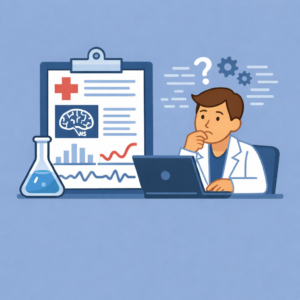
Yet across many of the healthcare professionals we recently spoke with, a common theme emerged. The challenge is no longer simply collecting or storing information. Instead, many teams are struggling with something more fundamental: turning complex clinical data into insights that are actually useful.
While healthcare has always been data driven, the scale and complexity of modern datasets are making interpretation more difficult. As analytics tools and digital platforms expand, healthcare teams are finding that extracting meaningful insights from these systems often requires more time, expertise, and infrastructure than expected.
Clinical Data Is Growing Faster Than Teams Can Interpret It
Healthcare environments generate a unique type of data. Unlike many other industries, datasets often include combinations of structured information, diagnostic results, imaging data, research outputs, and patient outcomes.
Several professionals noted that the difficulty is not necessarily the volume of data itself, but the effort required to translate it into conclusions that can support real decisions. Teams may have access to detailed datasets, but identifying patterns or summarizing findings for leadership, clinicians, or research partners can still require significant manual work.
This gap between available data and actionable insight is becoming one of the most significant operational challenges inside healthcare organizations.
Complex Research Data Requires Specialized Interpretation
In research and clinical environments, datasets often contain highly specialized information. Neurological research, recovery monitoring, clinical trials, and behavioral studies all generate detailed metrics that are difficult to summarize quickly.
Several professionals mentioned the need to translate technical datasets into clear explanations that non-specialists can understand. Whether presenting findings to internal leadership or collaborating with external partners, many teams must regularly convert complex analysis into reports that communicate results in plain language.
Without the right tools or workflows, this process can slow down research cycles and make it harder for organizations to act on their own data.
AI and Automation Are Emerging as Potential Solutions
Because of these challenges, many healthcare teams are exploring ways to automate parts of the data interpretation process. Artificial intelligence and generative AI tools are increasingly being evaluated as ways to summarize datasets, generate insights, and explain complex results more quickly.
Several professionals expressed interest in technologies that could help translate large datasets into readable summaries or assist in identifying patterns that might otherwise be overlooked. The goal is not necessarily to replace human expertise, but to reduce the time required to interpret data and produce usable outputs.
As healthcare datasets continue to grow, tools that support faster interpretation and reporting are becoming an important area of interest across the industry.
The Insight Gap Is Becoming a Strategic Challenge
The conversations we reviewed suggest that healthcare organizations are entering a new phase of digital maturity. Many institutions have successfully implemented systems that collect and store large volumes of information. The next challenge is making that information easier to interpret and apply.
For healthcare leaders, the ability to translate complex clinical data into actionable insight is becoming just as important as collecting the data itself. Organizations that can shorten the path from data to decision may gain a significant advantage in research, operational efficiency, and patient outcomes.
As healthcare technology continues to evolve, solving the insight gap may become one of the most important priorities for teams working with clinical and research data.
