Social listening is the practice of monitoring digital conversations across social media platforms, forums, blogs, and review sites to understand what people are saying about a brand, an industry, or a topic. When powered by artificial intelligence, social listening evolves from a passive tracking exercise into an active intelligence engine. AI-driven social listening uses natural language processing, machine learning, and predictive analytics to sift through millions of online mentions in real time, identifying sentiment shifts, emerging themes, and behavioral patterns that signal what audiences care about, and what they’re about to care about next. At its most advanced, this technology doesn’t just tell you what happened today, it forecasts the viral trends of tomorrow.
In this article, we’ll discuss how AI is transforming the way brands, marketers, and entrepreneurs approach social listening, shifting the discipline from reactive monitoring to predictive foresight. We’ll explore the core technologies behind AI-powered trend prediction, walk through real-world examples of brands that have turned social data into measurable results, examine the leading tools available today, and address the ethical considerations that come with algorithmic culture-watching. Whether you’re a seasoned digital strategist or just beginning to explore what social intelligence can do for your business, this guide will give you a clear picture of where the field stands in 2026, and where it’s headed moving forward.
TL;DR Snapshot
AI-powered social listening combines real-time monitoring of online conversations with predictive analytics to help brands anticipate viral trends before they peak. By analyzing engagement velocity, sentiment shifts, cross-platform signals, and even visual and audio content, modern AI tools can forecast which topics are about to explode, giving marketers a critical window to craft timely, relevant content. The global social listening market is projected to nearly double from $9.6 billion in 2025 to over $18 billion by 2030, reflecting just how central this capability has become to modern marketing strategy.
Key takeaways include…
- AI has shifted social listening from descriptive (“what are people saying?”) to predictive (“what will people talk about next?”), with some systems achieving over 89% accuracy in forecasting engagement patterns, and nearly 91% precision in predicting how content spreads across networks.
- Brands like Crayola, Neuro, and Zara have used AI-driven social listening to process content up to 80% faster, identify unexpected audience segments, and forecast product demand, turning social data into revenue and competitive advantage.
- The best results come from combining AI’s data-crunching power with human judgment. Algorithms set the tempo by surfacing signals, but human strategists interpret context, assess brand fit, and decide which trends to act on, avoiding the pitfall of cultural homogenization.
Who should read this: Digital Marketers, Brand Strategists, Entrepreneurs, Social Media Managers, and AI Enthusiasts.
From Keyword Tracking to Cultural Foresight: The Evolution of Social Listening
Social listening started as a relatively simple exercise. Set up keyword alerts for your brand name and a handful of competitors, then check a dashboard once a week for mention counts and basic sentiment scores. For years, this approach was adequate. But as the volume of online conversation exploded across TikTok, Reddit, Discord, podcasts, YouTube comments, and dozens of niche forums, manual keyword monitoring became like trying to drink from a fire hose.
The introduction of AI changed the equation fundamentally. Modern social listening platforms use natural language processing to understand not just what words are being used, but the intent and emotion behind them. Earlier sentiment analysis tools would flag a sarcastic comment like “Great, my order is late again” as positive because of the word “great.” Today’s AI models parse sarcasm, emoji context, cultural slang, and even the emotional tone of video and audio content. Platforms like Brandwatch now offer emotion clustering that can distinguish between general negativity and highly specific frustrations, such as dissatisfaction with shipping times versus disappointment with product quality.
The real leap, however, has been from descriptive analytics to predictive intelligence. Instead of merely telling you what people said last week, AI systems now analyze engagement velocity, cross-platform diffusion patterns, and historical trend data to forecast which topics are gaining momentum. Research from 2025 found that adding sentiment analysis and early diffusion pattern recognition to predictive models improved their accuracy by roughly 43% compared to keyword-only approaches. The result is a discipline that looks less like traditional market research and more like cultural forecasting.
How AI Actually Predicts What Will Go Viral
Predicting virality might sound like fortune-telling, but the underlying mechanics are grounded in data science. AI prediction systems operate by simultaneously processing signals across multiple dimensions like content features, audience behavior, network structure, and timing.
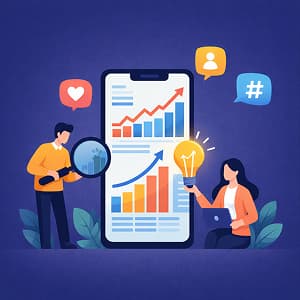
At the content level, algorithms analyze text, imagery, audio, and video to identify elements historically associated with high engagement. Posts that trigger strong emotional responses, whether awe, humor, inspiration, or even outrage, consistently outperform neutral content. AI systems evaluate comment sentiment, detect excited or emotionally charged language, and in some cases interpret facial expressions and vocal tone in video content to estimate a post’s emotional resonance before it reaches critical mass.
At the network level, AI maps how content travels between users and communities. Every like, share, comment, and view duration is tracked, along with the rate at which engagement accelerates. Platforms like TikTok and Instagram already use similar algorithmic logic internally to decide which posts to amplify. Third-party AI tools apply comparable analysis to help brands understand which of their own posts (or their competitors’ posts) are positioned to break out.
Timing plays a critical role as well. Predictive AI systems perform broad social listening across cultural moments, global conversations, and trending hashtags to identify when a topic is about to tip over into mainstream awareness. The most sophisticated platforms update their trend forecasts as frequently as every fifteen minutes, giving marketers a narrow but valuable window to produce and publish content that rides an emerging wave at exactly the right moment.
Current benchmarks suggest these systems can achieve approximately 89.8% accuracy in predicting user conversion patterns and around 91% precision in forecasting how content propagates through a network. These numbers are impressive, though they vary with data quality, platform, and the specific type of prediction being made. The takeaway is that virality isn’t entirely about luck. It’s increasingly a process that can be measured, modeled, and optimized.
Real-World Results: Brands Turning Social Intelligence into Action
The most compelling case for AI-powered social listening comes from the brands already using it to drive measurable outcomes. Crayola provides a standout example. The company’s social media team found that their previous workflow made it difficult to keep pace with fast-moving online conversations. After implementing an AI-powered social listening solution from Emplifi, Crayola was able to process content 80% faster, and detect emerging trends 90% more quickly. They put this capability to work during a 2025 campaign celebrating the return of eight retired crayon colors, each given its own distinct personality. By monitoring brand mentions in real time and responding with personalized, character-driven content, Crayola turned a nostalgic product launch into a sustained social conversation.
Neuro, a functional gum and mint brand, used Meltwater’s social listening tools to uncover an audience segment that traditional research had missed entirely. By analyzing conversations around the energy nutrition category, Neuro’s AI-driven analysis revealed that online gamers represented a significant and under-served target market. The insight led to a partnership with 100 Thieves, an esports and lifestyle brand, that generated 4.6 million impressions across just 30 social media posts. This likely wouldn’t have materialized without AI surfacing a connection.
In retail, Zara has long been recognized for its use of predictive analytics in inventory management. By analyzing customer data and social signals, Zara forecasts which styles are likely to gain popularity and stocks accordingly. This approach reduces excess inventory and ensures that trending products are available when demand peaks, a direct competitive advantage in an industry where timing can make or break a product line.
Amazon offers another instructive case. They monitored a growing volume of conversations around sugar-free and zero-calorie products across forums and reviews. When mentions of phrases like “wish this came in sugar-free” began to spike, Amazon’s category teams worked with partner brands to introduce new sugar-free options across multiple product categories. The data-backed decision boosted category conversions by nearly 12% and reinforced positive sentiment around the brand.
These examples share a common thread. AI didn’t replace human decision-making, it accelerated and enriched it by surfacing patterns that would have been invisible to manual analysis.
The Tools Powering Predictive Social Listening in 2026
The landscape of AI social listening tools has matured significantly, with platforms now offering capabilities that were the exclusive domain of enterprise data science teams just a few years ago.
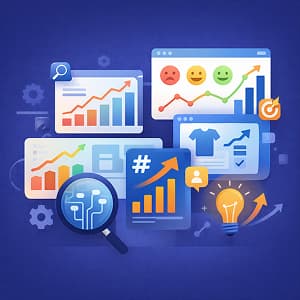
Hootsuite, through its integration with Talkwalker, offers AI-powered social listening baked into its management dashboard on every plan tier. Users can track trending hashtags, brands, and events globally, with predictive analytics that forecast topic volumes and emerging risks. Brandwatch provides enterprise-grade emotion analysis that goes beyond basic positive-or-negative scoring to identify specific emotional clusters (e.g. frustration with a particular feature, excitement about a new launch), giving teams granular insight into the why behind sentiment shifts.
Sprinklr Insights uses deep learning to predict which hashtags and themes will gain traction and offers visual listening capabilities that detect brand logos and product appearances in images and videos. The platform processes over ten billion predictions per day with stated accuracy above 80%. Trendscope, developed by Black Swan Data, specializes in identifying emerging consumer trends from social data using AI, while Sprout Social combines publishing, engagement, and analytics with trend identification features that have become increasingly sophisticated.
For smaller teams and solo marketers, tools like SparkToro analyze audience behavior and interests to reveal which topics and content formats resonate most with specific follower bases. FeedHive offers AI-powered content scheduling with built-in performance predictions, and Dash Social’s Vision AI attempts to predict content performance before a post is even published. The democratization of these tools means that trend prediction is no longer limited to organizations with six-figure analytics budgets.
What unites the best platforms is their shift from purely retrospective reporting to forward-looking intelligence. The most useful tools don’t just show you a spike in mentions; they tell you what caused the spike and predict whether the underlying conversation is likely to grow or fade.
The Human Element: Why AI Alone Isn’t Enough
For all its power, AI-driven social listening carries meaningful limitations that brands need to acknowledge. The most pressing is the risk of cultural homogenization. When every brand subscribes to the same predictive trend intelligence, they risk jumping on identical micro-trends simultaneously, creating a landscape of algorithmic echo where campaigns feel interchangeable. If five competing skincare brands all detect the same “retro tranquility” aesthetic emerging on Reels, and launch corresponding campaigns within the same week, the trend loses its novelty and the audience loses interest.
Leading strategists advocate for what some have called an “AI-limited creativity” model. AI sets the tempo by surfacing data and flagging opportunities, but human curators apply strategic and moral judgment to decide which signals to act on. A sustainability-focused brand, for example, should assign a low priority to a luxury maximalism trend even if AI flags it as highly viral, because long-term brand equity matters more than a short-lived engagement spike.
Consumer sentiment reinforces this point. Surveys consistently find that a significant share of audiences are uncomfortable with overtly AI-generated content, and are less likely to trust brands that rely on it without transparency. An overwhelming majority of marketing leaders now say AI literacy is essential, but the brands winning in 2026 are those using AI as a creative collaborator and workflow optimizer while keeping humans at the center of storytelling. The most effective model blends AI’s pattern recognition at scale with the contextual understanding, creative instinct, and ethical judgment that only people can provide.
Duolingo offers a widely cited example of this balance. The brand’s social media team relies on human analysts who continuously monitor online conversations to identify emerging cultural narratives, memes, and celebrity references. When the right moment surfaces, the team acts quickly with creative responses that feel authentic rather than algorithmic. AI helps them spot signals faster, but the wit, timing, and brand voice come from people.
Frequently Asked Questions
Social listening is the process of monitoring conversations across social media platforms, forums, blogs, news sites, and review platforms to understand what people are saying about a brand, product, industry, or topic. It goes beyond simple mention tracking by analyzing sentiment, identifying themes, and extracting actionable insights from public online discussions.
Predictive analytics uses statistical techniques, data mining, machine learning, and AI to analyze current and historical data in order to forecast future outcomes. In the context of social listening, it means using patterns in online conversation data to predict which topics, trends, or sentiments are likely to grow, decline, or go viral. Read our AI marketing analytics guide for more info.
Hootsuite is a widely used social media management platform that allows teams to schedule posts, manage multiple accounts, and analyze performance across channels. Talkwalker is a social listening and analytics company that Hootsuite integrated into its platform to provide AI-powered trend prediction, sentiment analysis, and brand monitoring capabilities.
Brandwatch is an enterprise-level social listening and consumer intelligence platform. It uses AI to analyze large volumes of online conversation, offering features like emotion clustering, competitive benchmarking, and visual content analysis. It is commonly used by large organizations for brand monitoring, market research, and crisis detection.
Sprinklr is a unified customer experience management platform that includes social listening, content management, advertising, and customer care. Its Insights product uses deep learning for predictive trend forecasting, anomaly detection, and sentiment analysis at enterprise scale.
Natural language processing is a branch of artificial intelligence focused on enabling computers to understand, interpret, and generate human language. In social listening, NLP powers sentiment analysis, sarcasm detection, topic clustering, and the ability to extract meaning from unstructured text, emojis, and slang across multiple languages and cultural contexts.
Traditional social monitoring typically tracks predefined keywords and reports on mention volume and basic sentiment. AI-powered social listening goes further by understanding context, detecting nuanced emotions, analyzing visual and audio content, identifying emerging themes through topic clustering, and using predictive models to forecast which conversations are likely to grow. The key difference is the shift from reactive reporting to proactive, forward-looking intelligence.
Engagement velocity refers to the rate at which a piece of content accumulates interactions (e.g. likes, shares, comments, views) over a given time period. AI systems track engagement velocity as a leading indicator of virality. Content that’s gaining interactions at an accelerating rate is more likely to break out and reach a much larger audience than content with steady but slow engagement.
