
Audience segmentation is the process of dividing your potential customers into distinct groups based on shared characteristics like demographics, behaviors, interests, and purchase intent, so you can serve each group more relevant ads. Traditionally, this has been a manual, time-intensive process where marketers define segments based on assumptions and static data points like “women aged 25-34 who purchased in the last 30 days.” AI-powered audience segmentation flips this approach by using machine learning to analyze hundreds of behavioral signals simultaneously, identify patterns humans would miss, and dynamically adjust segments as new data flows in.
In this article, we’ll discuss why manual audience segmentation is holding back your paid campaign performance, how AI-driven segmentation actually works across platforms like Meta and Google, and how to put it into practice without handing over all control to the algorithm. We’ll walk through the shift from static demographic targeting to real-time behavioral segmentation, explore the specific AI tools built into today’s major ad platforms, and cover the practical steps for feeding AI the right data so it can find your best customers faster and cheaper.
TL;DR Snapshot
The days of manually stacking interest categories and hoping your audience definition holds up are fading fast. AI-powered segmentation tools now process behavioral signals, purchase patterns, and engagement data in real time to build audience segments that are more precise, more adaptive, and more cost-effective than anything a human team can assemble by hand. The key is knowing how to work with AI rather than against it.
Key takeaways include…
- AI segmentation analyzes hundreds of variables at once (including browsing behavior, engagement patterns, purchase history, device usage, and more) to find high-conversion audience clusters that manual targeting would never uncover.
- The major ad platforms have already built AI segmentation into their core products. Meta’s Advantage+ Audience, Google’s Performance Max, and similar tools are designed to replace manual interest stacking and static lookalike audiences with dynamic, algorithm-driven targeting.
- AI segmentation doesn’t mean giving up control. The best results come from a hybrid approach where you feed the algorithm high-quality first-party data and set strategic guardrails, then let machine learning handle the pattern recognition and real-time optimization.
Who should read this: Paid media managers, performance marketers, small business owners running ads, and marketing leaders looking to get more from their ad spend.
Why Manual Segmentation Can’t Keep Up
For years, the standard playbook for paid campaigns looked something like this: define your audience by layering demographics, interests, and behaviors in the ad platform’s targeting interface, launch a handful of ad sets, and monitor which combinations performed best. It worked well enough when the digital landscape was simpler. But today’s customer journeys are fragmented across devices, channels, and touchpoints in ways that make static audience definitions increasingly unreliable.
Think about it this way. You might define an audience as “small business owners interested in marketing software.” That sounds reasonable in a planning document. But within that group, there are people who just started researching, people who are actively comparing tools, people who tried a competitor and churned, and people who aren’t actually in-market at all. A single static segment treats them all the same, which means your ad creative, your offer, and your landing page can only resonate with a fraction of the group.
Privacy changes have compounded the problem. With iOS restrictions limiting pixel-based tracking and third-party cookies continuing to erode, the behavioral signals that manual segmentation depends on are less complete than they used to be. The result, as many paid media teams have experienced, is that carefully constructed audience segments stop performing the way they once did, and the troubleshooting process becomes a guessing game.
Meanwhile, the cost of getting it wrong keeps climbing. According to 2026 Meta Ads benchmark data from AdAmigo.ai, cost per lead jumped by 20.94% year-over-year, while cost per acquisition rose 8.5%. In an environment where impressions are getting more expensive, wasting them on the wrong audience segments isn’t just inefficient, it’s a direct hit to your bottom line.
How AI Segmentation Actually Works
AI-powered audience segmentation takes a fundamentally different approach from manual targeting. Instead of you defining who should see your ads based on a handful of criteria, machine learning algorithms analyze massive amounts of behavioral data to identify which people are statistically most likely to take the action you care about.
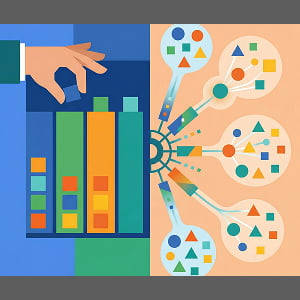
Here’s what’s happening under the hood. The AI ingests signals from multiple sources: on-platform behavior (what people watch, click, save, and share), conversion data from your pixel or server-side tracking, first-party data from your CRM or email lists, and cross-platform behavioral patterns. It then identifies clusters of users who share conversion-correlated behaviors, many of which wouldn’t be obvious to a human analyst. Maybe people who watch 75% of a specific type of video and then visit a pricing page within 48 hours convert at 3x the rate of your manually defined audience. The AI finds these patterns and targets accordingly.
The major platforms have baked this directly into their products. Meta reports that its Advantage+ Audience feature delivers a 14.8% lower cost per result for awareness campaigns, a 9.7% reduction for traffic and lead campaigns, and a 7.2% improvement for sales campaigns compared to manual targeting. Google’s Performance Max campaigns use a similar approach, letting AI allocate budget across Search, Display, YouTube, and Discovery based on real-time conversion signals.
What makes this particularly powerful is that AI segments aren’t static. They update continuously as new data comes in. If a segment of users who were converting well last week starts to drop off, the algorithm adjusts in real time rather than waiting for you to notice the dip in a weekly report. As LiveRamp explains in their overview of AI segmentation, this real-time adaptability ensures that targeting strategies stay current without waiting for periodic analytics updates and manual data pulls.
Here’s a particularly telling data point for you. According to a 2026 AI marketing statistics report from Loopex Digital, AI-driven ads report 41% higher conversion rates overall, with machine learning algorithms identifying high-conversion audiences that human analysis typically misses.
Feeding the Algorithm: Your Data Is the Differentiator
Here’s something that often gets lost in the excitement around AI targeting, the algorithm is only as smart as the data you give it. Two businesses in the same industry, using the same platform, can get wildly different results from AI segmentation based solely on the quality of their data inputs.
That means your first-party data is your biggest competitive advantage. Customer lists, purchase history, website behavior tracked through your pixel and Conversions API, email engagement data, and CRM records all serve as the “seed” that teaches AI what your best customers look like. According to industry summaries of Meta’s guidance cited by M1-Project, pairing the Conversions API with the pixel is associated with an average 13% improvement in cost per result, because server-side tracking captures more accurate conversion signals than browser-based tracking alone.
The practical takeaway is that before you invest in any new AI segmentation tool, you’ll want to invest in your data infrastructure first. Make sure your pixel and server-side tracking are firing correctly. Clean up your CRM data (if you followed the earlier post in this series on using AI to clean CRM data, you’re already ahead). Upload high-quality customer lists as seed audiences. The sharper your starting data, the faster the AI learns and the better your segments perform.
A real-world example illustrates this well. As reported by digital strategist Giovanni Perilli, an Italian e-commerce fashion brand segmented its Facebook audience into three data-driven groups (new visitors, product page viewers who didn’t purchase, and returning customers), and served each group tailored creative. The results were a 35% increase in CTR on warm audiences, a 27% reduction in average CPA, and a 48% increase in conversions compared to their previous generic campaigns.
The Hybrid Approach: AI Targeting With Human Guardrails
One of the biggest mistakes marketers make with AI segmentation is treating it as an all-or-nothing decision. You either go fully broad and “let the algorithm figure it out,” or you override the AI with tight manual controls. The best results consistently come from a middle path.
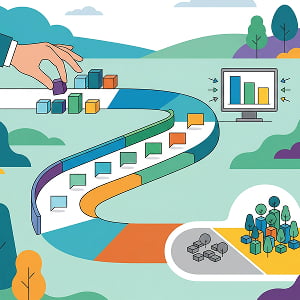
Start by giving AI a strategic foundation. Use audience suggestions (not hard restrictions) to point the algorithm in the right direction. Set clear exclusions so you’re not wasting budget showing acquisition ads to people who just purchased. Segment your creative so that different messages speak to different stages of the buyer journey, even if the AI is handling the audience targeting. As one practitioner guide on Advantage+ targeting put it, in the AI-driven model, you’re better off creating different creatives that speak to different segments rather than creating different ad sets for different audiences, then letting the algorithm figure out which creative resonates with which user.
Next, be sure to monitor the audience breakdown reports that your platform provides. Meta’s Audience Segments feature, for example, shows you how much of your budget is going to existing customers versus engaged prospects versus entirely new users. If your goal is customer acquisition but 60% of your spend is going to existing customers, that’s a signal to adjust your exclusions, not to abandon AI targeting altogether.
Finally, validate with incrementality testing. AI segmentation can dramatically improve your efficiency metrics (CTR, CPC, CPA), but those improvements only matter if they translate to real business outcomes. Run holdout tests periodically to confirm that the AI-driven segments are actually generating incremental results, not just capturing demand that would have converted anyway. According to an EMARKETER/TransUnion survey from July 2025, 52% of US brand and agency marketers now use incrementality testing to validate their campaign performance, and it’s an essential complement to AI-powered targeting.
Getting Started: A Practical Roadmap
You don’t need to overhaul your entire paid media operation at once. Here’s a practical sequence for integrating AI segmentation into your workflow…
- Audit your tracking and data: Confirm your pixel, Conversions API, and any relevant SDKs are firing correctly. Upload your best customer lists as seed data. The AI needs clean, complete conversion signals to learn from.
- Run a head-to-head test: Take one campaign and duplicate it. Run one version with your usual manual targeting and one with AI-driven targeting (Advantage+ Audience on Meta, Performance Max on Google). Give both versions enough budget to clear the learning phase (typically 50 conversions in the first week) and compare results over 2-4 weeks.
- Shift your creative strategy: Instead of building separate ad sets for each audience, create a diverse set of creatives that speak to different buyer motivations and lifecycle stages. Let the AI match creative to audience. This is where your understanding of your customer still matters enormously.
- Review and refine: Check audience segment breakdowns weekly. Look at where the AI is spending your money and whether it aligns with your business goals. Adjust exclusions and audience suggestions as needed, but resist the urge to micromanage the targeting itself.
- Scale what works: Once you’ve seen consistent results from AI segmentation in one campaign, expand to others. Over time, your data compounds. The more conversions the AI sees, the smarter its targeting becomes, creating a virtuous cycle of improving performance.
Frequently Asked Questions
Audience segmentation is the practice of dividing a broad market of potential customers into smaller, more defined groups based on shared characteristics. These characteristics can include demographics (age, income, location), behaviors (purchase history, website activity), psychographics (values, interests, lifestyle), or technographics (devices and platforms used). The goal is to tailor your marketing messages so they resonate more effectively with each group.
Advantage+ Audience is Meta’s AI-driven targeting feature for Facebook and Instagram ads. Instead of requiring advertisers to manually select interests, demographics, and behaviors, Advantage+ uses machine learning to analyze conversion data, platform behavior, and first-party signals to automatically find the people most likely to take your desired action. You can still provide audience suggestions to guide the AI, but the system is designed to optimize targeting dynamically.
Performance Max is Google’s AI-powered campaign type that runs ads across all Google inventory (Search, Display, YouTube, Gmail, Discover, and Maps) from a single campaign. It uses machine learning to optimize audience targeting, bidding, and creative combinations in real time based on your conversion goals and the signals you provide.
The Conversions API is a server-side tracking tool offered by Meta (and similar versions by other platforms) that sends conversion data directly from your server to the ad platform, rather than relying solely on browser-based pixel tracking. This captures more complete and accurate data, especially given privacy restrictions like iOS tracking limitations and ad blockers.
First-party data is information you collect directly from your customers and website visitors through your own channels. This includes email addresses, purchase history, website behavior, app usage, CRM records, and survey responses. It’s considered the most valuable and reliable type of marketing data because you collected it directly and with consent.
Incrementality testing is an experimental method used to determine whether a campaign caused results that wouldn’t have happened without it. It typically involves comparing a group that saw your ads against a control group that didn’t, then measuring the “lift,” or incremental difference in conversions between the two groups.
Not necessarily, but AI targeting does require enough conversion data to learn from. Most platforms recommend generating at least 50 conversions within the first week of a new campaign for the learning phase to complete effectively. If your cost per acquisition is high, that means you’ll need a larger initial budget. For smaller budgets, starting with one or two campaigns on AI targeting and scaling from there is a practical approach.
Other AI Training Modules You May Be Interested In
Using AI to Build Marketing Attribution Models That Actually Work
Using AI to Clean and Unify Messy CRM Data
The Right Way to Use AI Chatbots in Customer Service
How to Fact-Check and Edit AI-Generated Marketing Content Before It Goes Live
