
 Why the B2B Buyer Journey Is No Longer Linear
One of the biggest mistakes in B2B marketing is assuming buyers move neatly from awareness to consideration to decision in a straight line.
That is rarely how it works in practice.
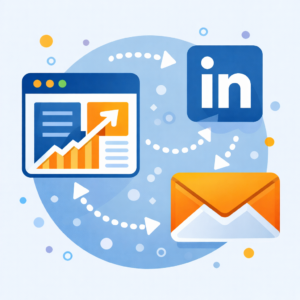
Today’s buyers bounce between content, social platforms, search engines, brand websites, and direct channels depending on what they need in that moment. They may read a blog post, check a company’s LinkedIn presence, revisit the website days later, open an email weeks after that, and only then decide whether the brand feels credible enough to engage.
The path is not only non-linear. It is cross-channel by default.
Buyers Use Different Channels for Different Jobs
Not every channel plays the same role in the buying process.
Some channels are better for discovery. Others are better for validation. Others help convert existing interest into action.
That matters because a buyer’s behavior changes depending on the platform they are using. Different platforms attract different expectations, different mindsets, and different types of engagement.
In other words, buyers do not just consume different content. They behave differently depending on where they encounter it.
Social Often Builds the First Layer of Trust
Social media is often where buyers first get a feel for a brand. It may not always drive the strongest direct conversion, but it plays an important role in visibility, familiarity, and trust-building.
A buyer might see a brand mentioned in their feed, notice a post being shared by peers, or check whether the company appears active and credible on LinkedIn. That interaction may not result in an immediate lead, but it can shape whether the buyer comes back later.
Social also serves a different purpose depending on the platform. Some platforms are used to browse, some to discuss, and some to evaluate brands through a more professional lens. That means marketers should not think of social as one single channel with one single function.
Email and Direct Channels Capture Higher-Intent Action
While social helps keep brands visible, email tends to drive more direct and measurable engagement. It reaches people who already know the brand, have shown interest, or have entered the funnel in some way.
That makes email especially important in B2B, where longer buying cycles require repeated, relevant follow-up.
Email works well because it gives marketers more control over timing, targeting, and message sequencing. It also reaches buyers in a more focused environment than social, where content competes heavily for attention.
That does not mean email replaces social. It means each channel does a different job.
Content, Social, Search, and Email Work Together
A blog post may create awareness. A LinkedIn page may reinforce credibility. A follow-up email may reintroduce the brand. A return visit through search may signal deeper intent.
None of those touchpoints necessarily tells the full story on its own.
That is why single-channel attribution often misses how B2B buying decisions actually happen. A lead may convert through email, but social helped build familiarity. A buyer may arrive through search, but only after seeing the brand multiple times elsewhere.
The real journey is layered.
What This Means for B2B Marketers
If buyers are moving across channels, marketing strategy has to do the same.
That means:
- Creating content that can travel across channels
- Maintaining a visible and credible social presence
- Using email to nurture known interest
- Making sure messaging stays consistent across touchpoints
- Thinking in terms of momentum, not isolated clicks
It also means measuring success differently. The goal is not just to identify the final click. It is to understand how channels support each other over time.
The Bigger Insight: Buyers Don’t Stay in One Lane
The modern B2B buyer journey is shaped by repetition, reinforcement, and convenience.
Buyers move fluidly between channels because that is how they research, validate, and make decisions. They do not separate content, social, and direct outreach into neat categories. They simply use whatever channel helps them move forward.
For marketers, that means the question is no longer which single channel performs best.
It is how each channel contributes to the larger buying journey.
