
Quick Definition
Agentic AI refers to systems where multiple AI agents collaborate to plan, reason, and execute tasks, rather than relying on a single model for a single output.
AI Summary
AI is rapidly shifting from simple, single-model applications to complex systems of multiple agents working together. While this unlocks more advanced capabilities, it also introduces significant infrastructure challenges, including increased compute demand, more frequent inference calls, complex memory and state management, and the need for orchestration layers like LangGraph. As a result, many existing AI stacks are struggling to scale efficiently, forcing organizations to rethink how their infrastructure is designed to support real-time, multi-step AI workflows.
Key Takeaways
- AI is shifting from single-model applications to multi-agent ecosystems
- Agent workflows significantly increase inference activity and system complexity
- Memory and state management are becoming critical challenges
Who Should Read This
This article is designed for professionals who are actively building, scaling, or supporting AI systems and are starting to feel the strain of more complex workloads.
 Artificial intelligence is no longer operating in isolation
What began as single-model applications handling defined tasks has rapidly evolved into something far more complex: interconnected systems of AI agents working together to plan, reason, and execute outcomes. This shift toward agentic AI is unlocking new capabilities, but it is also exposing a major problem. Most infrastructure simply wasn’t designed for it.
The Shift to Agent Ecosystems
Until recently, enterprise AI followed a straightforward model. A user input would trigger a single model, which would then generate an output. The process was linear, predictable, and relatively easy to scale. That model is quickly becoming outdated.
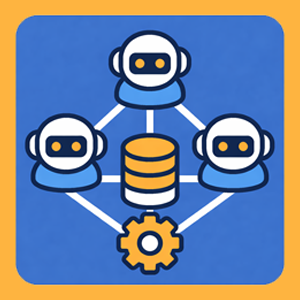
Today’s AI systems are increasingly built around multiple agents, each responsible for a specific role within a broader workflow. One agent may handle planning, another reasoning, and others executing tasks or retrieving information. These agents operate in sequence or in parallel, often sharing context and building on each other’s outputs. Instead of a single request-response cycle, organizations are now managing chains of decisions and actions that can expand dynamically based on the task.
Why This Is Creating Infrastructure Pressure
The move to agent-based systems is not just a change in application design. It is fundamentally changing how infrastructure is used and stressed.
Increased Inference Activity
In a traditional setup, one task typically meant one model call. In an agent-driven workflow, that same task may involve multiple calls across different models and steps.
This leads to a sharp increase in:
- Compute demand
- GPU utilization
- Overall system load
As these workflows scale, infrastructure must handle a much higher volume of activity per user interaction, often in unpredictable bursts.
Growing Complexity in Memory and State
Agent systems rely heavily on memory to function effectively. They need to retain context, share information across steps, and reference previous interactions.
This introduces new challenges around:
- Persistent memory storage
- Real-time retrieval
- State consistency across agents
Without a well-structured approach to memory, systems can become inefficient, redundant, or unreliable.
The Rise of Orchestration as a Core Layer
As agent ecosystems grow more complex, orchestration has become a central requirement rather than an optional enhancement. Tools like LangGraph are designed to manage how agents interact, ensuring that tasks are executed in the correct order and that systems can handle errors, retries, and dynamic decision paths. This orchestration layer is quickly becoming one of the most critical components of modern AI architecture.
The Need for Real-Time Processing
Agent-based systems operate in dynamic environments. They make decisions based on evolving inputs and often require immediate responses.
This creates demand for:
- Real-time data pipelines
- Low-latency processing
- Event-driven architectures
Infrastructure that was built for batch processing or static workloads is not equipped to support this level of responsiveness.
Where Systems Start to Break Down
As organizations adopt agentic AI, several common failure points are beginning to emerge. Compute resources are often the first to be strained, as systems struggle to support multiple simultaneous model calls. Latency becomes a growing concern, especially when tasks depend on sequential processing across agents.
Memory inefficiencies also surface quickly, particularly when context is not managed effectively or when redundant data is processed multiple times. Finally, gaps in orchestration can lead to inconsistent outputs, failed workflows, or systems that are difficult to scale reliably. These issues are not isolated. They tend to compound as workloads increase.
Rethinking the AI Infrastructure Stack
To support agent ecosystems, organizations need to rethink how their AI infrastructure is designed. This starts with recognizing that orchestration is no longer secondary. It must be treated as a foundational layer that governs how systems operate. At the same time, infrastructure must be optimized for high-frequency inference, ensuring that performance remains stable even as workloads grow more complex.
Memory systems also need to evolve. This often involves combining vector databases, caching mechanisms, and structured storage to support both speed and accuracy. In addition, event-driven architectures are becoming essential for enabling real-time decision-making and responsiveness. Finally, visibility into AI workflows is critical. Organizations need to monitor not just system performance, but also how agents behave, interact, and produce outcomes.
Final Thoughts
Agentic AI is accelerating quickly, and it is reshaping how applications are built and deployed. However, the infrastructure supporting these systems is still catching up. What worked for single-model applications is no longer sufficient for multi-agent environments.
As more organizations move toward agent-based workflows, the gap between AI capability and infrastructure readiness will become increasingly clear. The challenge is not just adopting agents. It is building the foundation that allows them to operate at scale without breaking the systems around them.
Frequently Asked Questions
What are AI agents in enterprise systems?
AI agents are specialized components within a system that handle specific tasks such as planning, reasoning, or execution, working together to complete complex workflows.
Why does agentic AI increase infrastructure demands?
Because tasks are broken into multiple steps, each requiring separate model calls and data processing, leading to higher compute and coordination requirements.
What should companies prioritize when adapting infrastructure for AI agents?
Organizations should focus on orchestration, efficient inference scaling, robust memory systems, and real-time processing capabilities.
