Evaluate your Organizational Readiness for Digital Transformation

Did you know?

86% of organizations say they have 2 years to make inroads with digital transformation
55% say they have a year or less, before they begin to suffer financially or from competitive threats
59% are worried they may be too late

To help you evaluate your organizational readiness for digital transformation, we put together a package to help you measure your current capabilities—from a technology and organizational perspective—as well as some information to help you plan ahead.

The Digital Transformation Kit contains:

  • CMS Evaluation Guide: Learn about CMS capabilities that can enhance the customer experience
  • Digital Marketing Maturity Guide: Rate your usage of digital marketing technology
  • Data-Driven Marketing e-Book: Learn how to use the power of your data to drive growth

Request Free!

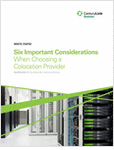
Data Center Knowledge’s ‘Executive Guide to Data Center Migration’

Today’s modern IT environment is rapidly expanding beyond the means of their existing infrastructure. In this guide, Data Center Knowledge examines what it means to move to a flexible, customizable data center provider – and how to avoid making the “cookie-cutter” migration mistake.

  • Define your data center needs in terms of resources, user and application requirements and focusing on end goals – today and into the future
  • Consider the impact of meeting power requirements in terms of testing, maintenance and costs
  • How to avoid migrating to “cookie-cutter” data center providers that do not provide requirements specifically meeting your needs

Plan out your infrastructure not just for the immediate term but also for longer-term growth by applying insights from this guide.

Request Free!

Why Enterprises Should Standardize on a Single PDF Provider

Enterprises have many different types of users. They have power users and novice users. Users that employ multiple devices and users that prefer only one. Those that use desktop computers and those that use mobile devices. Some users utilize cloud or virtualization services like SharePoint and Citrix and some don’t. Some users need access to PDFs with rights-managed confidential information, some don’t. These different user types form “pockets of utilization” across the enterprise.

What’s more, users may use different computing platforms and software applications to create documents than those who receive them, which can mean trouble with opening and displaying documents.

Request Free!