Quick Definition
A Voice-of-Customer (VoC) engine is a structured system that collects, organizes, and analyzes qualitative feedback from customers across multiple touchpoints, such as calls, surveys, and support tickets, to generate actionable insights that inform marketing, sales, and product decisions.
AI Summary
This article outlines how B2B marketers can move beyond ad hoc customer research by building an AI-powered VoC engine. It covers which data sources to centralize, how to structure and tag insights without a data science team, and how to apply that intelligence to messaging, content strategy, and campaign segmentation. The article ties operational sustainability and closed-loop measurement into the framework, positioning Knowledge Hub Media's content programs as a downstream application of insight-driven strategy.
Key Takeaways
- Collecting customer feedback isn't enough. B2B marketers need a centralized, tagged, and queryable system to make VoC data operationally useful across messaging, content, and campaigns.
- Tools like Notion AI, Airtable, and vector databases make it possible to build a searchable insight engine without a data science team, as long as you standardize ingestion and tagging from the start.
- A VoC engine compounds in value over time only if it's treated as a living system with clear ownership, regular data ingestion, and performance feedback loops built in.
Most companies collect customer insights. Very few operationalize them.
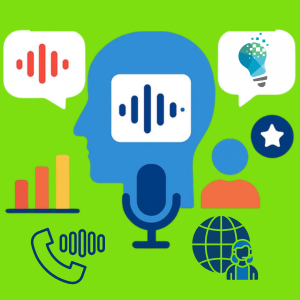 Here’s a scenario that should feel familiar: your sales team has hundreds of Gong call recordings. Your customer success team logs support tickets daily. Your marketing team ran a customer survey last quarter. And somewhere in your CRM, there are three years worth of deal notes written by reps in 14 different styles. You have a goldmine of customer intelligence, and almost none of it is informing your messaging strategy.
That’s not a data problem. It’s a systems problem. The companies pulling ahead right now aren’t the ones collecting the most customer feedback. They’re the ones who’ve built an infrastructure to turn raw, unstructured customer language into a living, searchable insight engine that feeds directly into go-to-market decisions. Here’s how to build one.
Why Your VoC Data is Sitting Idle
Most B2B marketing teams treat Voice-of-Customer as a research activity rather than an operational capability. A researcher pulls quotes for a campaign, writes a persona, and calls it done. Six months later, the insight is stale and disconnected from what your sales team is actually hearing on calls.
The gap isn’t effort, it’s architecture. Without a centralized system that continuously ingests, tags, and surfaces customer language, your VoC data decays the moment it’s collected. AI changes this entirely. The technology now exists to aggregate every qualitative signal across your business, surface patterns at scale, and connect those patterns directly to the content and campaigns your team is building.
What Goes Into the Engine?
The first step is deciding what data sources feed your system. For most B2B companies, this means combining five key inputs: customer interview transcripts, Gong or Chorus call recordings, NPS and survey responses, support ticket logs, and CRM deal notes including win/loss commentary.
Each of these sources captures a different layer of customer truth. Interviews give you articulated strategy. Call recordings give you unfiltered language under pressure. Support tickets tell you where your product or messaging creates confusion. CRM notes reveal the objections your sales team encounters but rarely escalates to marketing. Together, they paint a far richer picture than any single source can.
How to Centralize It Without a Data Science Team
You don’t need a custom ML pipeline to make this work. Tools like Notion AI, Airtable with AI extensions, or a lightweight vector database like Pinecone can serve as a structured repository that’s query-able in plain English. The key is standardizing how data enters the system.
Create a tagging taxonomy before you start ingesting data. At minimum, tag each insight by customer segment, buying stage, pain category, and source type. When a Gong transcript gets summarized and tagged correctly, a marketer can query “what objections do mid-market CFOs raise in late-stage deals” and get a usable answer in seconds instead of hours. That’s the operational leverage that transforms VoC from a research exercise into a strategic asset.
Turning Insights Into Messaging and Content
Once your engine is running, the downstream applications multiply quickly. For messaging, you can pull the exact language customers use to describe their problems and map it against your current homepage, email nurtures, and ad copy. The delta between what customers say and what you’re saying is usually where messaging goes flat.
For content strategy, query your insight engine by topic cluster and identify where customer questions aren’t being answered by your existing library. If five enterprise buyers in the last 90 days have raised concerns about integration complexity, and you don’t have a single piece of content addressing it, that’s a gap your competitors may already be filling. At Knowledge Hub Media, this is exactly the kind of intelligence that shapes the content programs we run for B2B clients. When content is built from real buyer language rather than assumed pain points, it performs differently at every stage of the funnel.
Using VoC Data for Campaign Strategy
The same insight engine that sharpens your messaging can also drive campaign segmentation. When you can identify which pain categories resonate with which audience segments, you stop running the same nurture sequence to your entire database and start building relevance at scale.
For example, if your data shows that SMB buyers consistently reference “time to value” while enterprise buyers prioritize “security and compliance,” those aren’t just messaging differences, they’re campaign triggers. Your lead scoring, content gating, and ad targeting should all reflect that distinction. A well-built VoC engine makes this kind of segmentation feel less like guesswork and more like a system.
What Makes This Sustainable Long-Term
The mistake most teams make after building something like this is treating it as a project with an end date. An AI-powered VoC engine only compounds in value if it’s maintained as a living system. That means assigning clear ownership, establishing a regular cadence for ingesting new data, and reviewing your tagging taxonomy quarterly as your ICP and product evolve.
It also means closing the loop. When a content piece or campaign is built from an insight, track its performance and feed that back into the system. Over time, you build an evidence base for what resonates with which segments, which makes every future decision faster and better informed.
The Strategic Advantage Is Operational, Not Technological
Every B2B marketing team has access to roughly the same AI tools right now. The companies that will pull ahead aren’t the ones who use the most tools, they’re the ones who build better systems around them. An AI-powered VoC engine is one of the highest-leverage systems a B2B marketing team can build, because it makes every other function smarter, from product marketing to demand generation to sales enablement.
If you’re a marketer who already understands the basics, the next level isn’t learning more tactics. It’s building the infrastructure that makes your tactics more precise.
Frequently Asked Questions
What's the difference between a VoC program and a VoC engine?
A VoC program is typically a periodic research activity, like a survey or a batch of customer interviews. A VoC engine is an always-on system that continuously ingests customer signals, tags them consistently, and makes them queryable so any team member can surface relevant insights on demand. The distinction is operational.
Do I need a data science team to build this?
No. Modern AI tools and no-code or low-code platforms make it possible to build a functional VoC engine with a small marketing operations team. The most important investment isn't technical, it's the upfront work of defining your tagging taxonomy and establishing clear data ingestion workflows.
How does a VoC engine improve content performance specifically?
When content is built from the actual language your buyers use to describe their problems, it tends to rank better, convert better, and generate more qualified leads. A VoC engine lets you identify content gaps by querying what questions buyers are asking that your existing library doesn't answer, which is a more precise way to prioritize your content calendar than keyword research alone.
How does Knowledge Hub Media use VoC data in its content programs?
Knowledge Hub Media builds content strategies around the real pain points and language patterns of each client's target audience. By aligning content topics, formats, and messaging to what buyers actually say, the programs we run generate higher-quality leads at better conversion rates. If you're looking to connect your customer insights to a scalable content and lead generation program, we'd be glad to show you how we do it.
