
The Oracle AI Data Platform for US Federal Government is a newly announced, purpose-built cloud offering that combines Oracle Cloud Infrastructure (OCI), Oracle Autonomous AI Database, and OCI Enterprise AI into a single integrated stack designed for civilian and defense agencies. Unveiled at the Oracle Federal Forum in Washington on March 31, 2026, the platform aims to help federal agencies consolidate fragmented data, deploy generative AI models, and build agentic applications; all within secure, compliance-ready cloud environments authorized at the highest federal security levels.
In this article, we’ll discuss what the Oracle AI Data Platform is, why Oracle built it specifically for federal use cases, the core technologies that power it, and how it fits into the broader landscape of government cloud modernization. We’ll also look at how recent federal contracts and compliance milestones positioned Oracle to make this move, and what the platform could mean for the future of AI adoption across the public sector.
TL;DR Snapshot
Federal agencies face a persistent challenge: mission-critical data is spread across silos, making it difficult to harness for AI-driven insights and decision-making. Oracle’s new AI Data Platform bundles its cloud infrastructure, autonomous database, analytics tools, and enterprise AI service into one unified offering. This gives agencies a streamlined path to make their data AI-ready while still meeting the strictest federal security and sovereignty requirements.
Key takeaways include…
- Oracle’s AI Data Platform unifies four major Oracle services (OCI, Autonomous AI Database, Oracle Analytics, and OCI Enterprise AI) into one federally authorized stack designed to eliminate data silos and accelerate AI adoption across civilian and defense agencies.
- The platform operates within FedRAMP High-authorized cloud environments with DISA Impact Level 4 and 5 support, and offers air-gapped National Security Regions and on-premises Exadata Cloud@Customer for agencies with the strictest sovereignty requirements.
- The announcement comes on the heels of an $88 million Air Force Cloud One contract and a landmark GSA agreement offering agencies 75% discounts on Oracle technology, signaling a broader push by Oracle to become a dominant cloud and AI provider for the federal government.
Who should read this: Government IT leaders, federal procurement professionals, defense technology analysts, and cloud infrastructure enthusiasts.
What the Platform Actually Includes
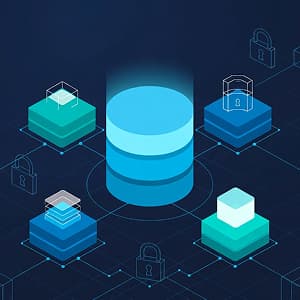
At its core, the Oracle AI Data Platform for Federal Government is not a single new product, it’s a curated bundle of existing Oracle services, integrated and optimized for the unique demands of government work. The four pillars are Oracle Autonomous AI Database, Oracle Analytics, OCI Enterprise AI, and OCI Object Storage.
That said, Oracle Autonomous AI Database is undoubtedly the centerpiece here. It’s a self-managing, self-securing database built for mission-critical workloads, and it now includes AI Vector Search for running semantic analysis across documents, images, and intelligence data. It also features Select AI, which lets analysts query databases using natural language instead of writing SQL. This represents a significant accessibility improvement for non-technical users who need fast answers from complex datasets.
Oracle Analytics sits on top of the stack, providing a layer of AI-powered assistants, automated insight generation, and natural language interaction with mission data. The idea is to surface trends and anomalies directly to decision-makers without requiring them to have deep technical expertise. OCI Enterprise AI, meanwhile, gives agencies access to leading large language models in a fully managed, FedRAMP-authorized environment, with sovereign hosting options for agencies that need to control exactly where their data lives and is processed. Finally, OCI Object Storage provides the lakehouse foundation, a scalable layer for structured and unstructured data in open formats, with real-time streaming and event-driven analytics for situational awareness.
Why Federal Agencies Need a Dedicated AI Platform
The federal government’s relationship with data has long been defined by fragmentation. Agencies collect enormous volumes of information across disparate systems, classification levels, and organizational boundaries. The result is that valuable intelligence often sits trapped in silos, inaccessible to the teams and AI tools that could put it to use.
Kim Lynch, Oracle’s Executive Vice President for Government, Defense & Intelligence, framed the challenge in terms of urgency at the announcement, noting that federal agencies face mounting pressure to turn data into a secure mission advantage at speed and scale. The platform is Oracle’s answer to that pressure. Rather than asking agencies to stitch together individual cloud services, database tools, and AI models on their own, it provides a pre-integrated foundation that’s already authorized for the environments where federal data lives.
This matters because federal AI adoption has historically been slowed not just by technical complexity, but by the compliance burden. Every service an agency uses in the cloud must meet specific authorization standards like FedRAMP, FISMA, NIST frameworks, and DISA Impact Levels for defense workloads. By bundling these services into a single, pre-authorized platform, Oracle is reducing the procurement and compliance friction that often delays government modernization projects by months or even years.
Building on Federal Momentum: Cloud One and the GSA Deal
Oracle didn’t arrive at this announcement in a vacuum. The AI Data Platform launch sits atop a growing collection of federal wins that have expanded Oracle’s government footprint considerably over the past year.
In February 2026, the US Department of the Air Force awarded Oracle an $88 million firm-fixed-price task order to provide OCI services for the Cloud One program; a multi-cloud, multi-vendor platform that serves as the Department of Defense’s primary vehicle for commercial cloud adoption. That contract runs through December 2028 and gives DoD users access to Oracle’s infrastructure across multiple classification levels, including Top Secret/SCI and Special Access Program environments.
The Cloud One deal is notable because it positions Oracle alongside other major cloud providers like AWS (which secured a much larger $581 million Cloud One contract in January 2026) in the competitive federal cloud market. Oracle’s inclusion signals that the DoD views OCI as a credible option for classified workloads, not just a database vendor with cloud ambitions.
Meanwhile, a landmark agreement between Oracle and the General Services Administration (GSA) announced in mid-2025 gave federal agencies a 75% discount on Oracle’s license-based technology, eliminated data egress fees, and provided pricing parity with commercial offerings. That deal, along with white-glove migration services, has been actively lowering the financial barriers for agencies considering a move to OCI, making the new AI Data Platform a natural next step for organizations already migrating to Oracle’s cloud.
Security, Compliance, and Sovereignty
If there’s one area where the Oracle AI Data Platform aims to differentiate itself, it’s security posture and data sovereignty. The platform operates within OCI’s FedRAMP High-authorized Government Cloud with DISA Impact Level 4 and 5 support, covering sensitive and controlled unclassified information (CUI). It includes always-on encryption, granular access controls, and comprehensive audit logging aligned with NIST and FISMA frameworks.

For agencies with even stricter requirements, Oracle offers several additional protection layers. Dedicated, isolated cloud regions (including Oracle National Security Regions) provide air-gapped environments for classified workloads. And Oracle Exadata Cloud@Customer allows agencies to run cloud-managed infrastructure entirely within their own facilities, giving them the operational benefits of cloud without surrendering physical control of their data.
This tiered approach to sovereignty is significant in a federal market where data residency and control are non-negotiable. It also reflects Oracle’s recent expansion of FedRAMP High and DISA IL5 authorizations to additional services, including OCI Generative AI, Exadata Cloud@Customer, MySQL HeatWave, and several others; authorizations that were formalized in early 2026 and now underpin the platform’s capabilities.
The platform also supports open-source frameworks including Python and Spark, as well as existing agency tools, which means agencies aren’t locked into a proprietary development ecosystem. This interoperability is an important selling point for government IT teams that need to integrate new AI capabilities with legacy systems and workflows that aren’t going away anytime soon.
What This Means for the Future of Federal AI
Oracle’s AI Data Platform for Federal Government is part of a larger trend. Major cloud providers are increasingly packaging their AI and data services into integrated, compliance-ready offerings tailored specifically for government buyers. The federal AI market is maturing beyond pilot projects and proof-of-concept experiments, and agencies are now looking for production-grade platforms that can handle real workloads at scale, and do so securely.
For Oracle, the platform represents a strategic bet that the federal market will reward vendors who can offer a unified experience rather than forcing agencies to assemble their own AI stacks from disparate components. The combination of the GSA pricing agreement, the Cloud One contract, and now this integrated platform suggests Oracle is playing a long game in the federal cloud space, positioning OCI not just as an alternative to AWS and Azure, but as a purpose-built choice for government AI workloads.
Whether the platform gains significant traction will depend on execution, particularly on how well Oracle supports agencies through the migration and adoption process, and whether the integrated tools deliver on their promise of reducing cost per query, improving inference performance, and increasing throughput compared to competitors. But the building blocks are now in place, and the federal AI race has a new entrant making a serious bid.
Frequently Asked Questions
Oracle Corporation is a multinational technology company headquartered in Austin, Texas, that specializes in cloud computing, database software, and enterprise applications. It is one of the largest software companies in the world by revenue.
OCI is Oracle’s cloud computing platform, offering services such as compute, storage, networking, database management, and AI tools. It competes with platforms like Amazon Web Services (AWS), Microsoft Azure, and Google Cloud.
FedRAMP (Federal Risk and Authorization Management Program) is the US government program that standardizes how cloud products and services are assessed, authorized, and monitored for security. FedRAMP High authorization indicates that a cloud service has been approved for use with the government’s most sensitive unclassified data. Companies like SentinelOne and Oracle have
The Defense Information Systems Agency (DISA) defines Impact Levels (IL2 through IL6) that classify the sensitivity of data that can be stored and processed in a cloud environment. IL4 and IL5 cover controlled unclassified information and national security data, while IL6 covers classified information up to the Secret level.
Cloud One is a multi-cloud, multi-vendor platform managed by the US Air Force and available to the broader Department of Defense. It serves as a centralized marketplace for DoD agencies to access commercial cloud services, and includes contracts with multiple providers including Oracle, AWS, and others.
Agentic AI refers to AI systems that can autonomously perform tasks, make decisions, and take actions on behalf of a user, going beyond simple question-and-answer interactions. In the federal context, this could mean AI agents that automatically process intelligence data, route workflows, or generate reports without requiring constant human direction.
A data lakehouse is a modern data architecture that combines the flexibility of a data lake (which stores raw, unstructured data) with the management and querying capabilities of a data warehouse (which stores structured, processed data). This allows organizations to run analytics and AI workloads on all their data from a single platform.
The General Services Administration (GSA) is a US federal agency that provides centralized procurement and shared services for the government. It manages federal contracts, real estate, and technology services, and plays a key role in negotiating pricing agreements that other agencies can leverage.
Data sovereignty is the principle that digital data is subject to the laws and governance structures of the nation or region where it is collected, stored, or processed. It ensures that data remains under the jurisdiction of its origin, rather than the laws of the country where the technology provider is located. Check out the data sovereignty section of our SentinelOne AI-Security article for more info.
