
Quick Definition
Agentic AI refers to autonomous AI systems that can analyze data, make decisions, and take action without continuous human input, often operating as digital workers across enterprise environments.
AI Summary
AI agents are rapidly becoming embedded in enterprise workflows, especially in cybersecurity and IT operations. As these autonomous systems scale, they introduce continuous compute demands, increased data processing, and new infrastructure challenges. Organizations must balance AI adoption with efficient, secure, and scalable infrastructure to support long-term growth without excessive cost or risk.
Key Takeaways
- AI agents are shifting from assistive tools to active digital workforce members across enterprise systems.
- Always-on AI workloads are increasing pressure on cloud, data, and infrastructure environments.
- Efficient, secure infrastructure is now critical to scaling AI agents sustainably and safely.
Who Should Read This
IT leaders, cybersecurity professionals, infrastructure architects, and enterprise decision-makers evaluating AI adoption and scalability strategies.
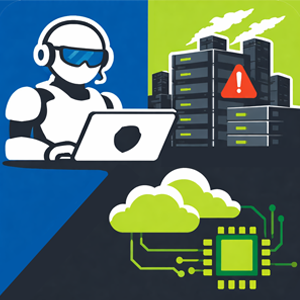 AI is no longer just a tool sitting in the background of enterprise operations. At RSAC 2026, one of the most talked about shifts was the rise of Agentic AI, where autonomous AI agents are actively performing tasks, making decisions, and operating across environments with minimal human input.
These systems are not just assisting teams. They are becoming part of the workforce. From security operations centers to cloud management and identity governance, AI agents are now investigating threats, triggering responses, and orchestrating workflows in real time. The question enterprises are now facing is not whether to adopt AI agents. It is whether their infrastructure is ready to support them.
The Rise of Agentic AI in Enterprise Security
A major theme across RSAC 2026 sessions and vendor showcases was the transition from AI-assisted tools to fully autonomous systems.
Agentic AI refers to systems that can act independently, often with the ability to:
- Analyze large volumes of data continuously
- Make decisions based on risk, behavior, or context
- Execute actions without requiring human approval
- Learn and adapt over time
In cybersecurity specifically, this means AI agents can now:
- Investigate alerts automatically
- Correlate signals across cloud, endpoint, and identity systems
- Initiate containment or remediation actions
- Reduce the need for manual intervention in security workflows
This shift is being driven by necessity. Security teams are overwhelmed, threat volumes are increasing, and traditional approaches cannot scale. AI agents are stepping in to fill that gap. But with this new capability comes a new challenge that is getting less attention than it should.
AI Agents Are Always On and Always Running
Unlike traditional software tools that operate on demand, AI agents are persistent. They are constantly ingesting data, analyzing activity, and making decisions in real time.
That means:
- Continuous compute usage
- Ongoing data processing across multiple systems
- Persistent connections to cloud, APIs, and identity layers
At a small scale, this is manageable. At enterprise scale, it becomes a serious infrastructure consideration. As organizations deploy more agents across security, IT operations, and business workflows, they are effectively adding a new layer of always-on digital workers. Each one consumes resources. Each one requires data access. Each one contributes to overall system load. This is where the conversation begins to shift from AI capability to operational reality.
The Hidden Infrastructure Challenge
The rise of AI agents is quietly transforming enterprise infrastructure requirements.
To support agentic AI at scale, organizations now need:
- High-performance compute environments capable of real-time processing
- Scalable data pipelines to feed continuous analysis
- Low-latency networks to support rapid decision-making
- Secure integration across hybrid and multi-cloud environments
In many cases, existing infrastructure was not designed for this level of continuous, autonomous activity. What used to be periodic workloads are becoming constant. What used to be human-driven processes are now machine-driven at scale.
This creates pressure in areas such as:
- Cloud cost management
- Data storage and movement
- System performance and latency
- Operational complexity
The result is a growing gap between what AI agents can do and what enterprise infrastructure can sustainably support.
Efficiency Is Becoming a Critical Requirement
One of the more subtle but important themes emerging from RSAC 2026 is that AI success is no longer just about capability. It is about efficiency.
AI agents that are not properly governed or optimized can:
- Duplicate work across systems
- Consume unnecessary compute resources
- Increase cloud spend significantly
- Introduce inefficiencies into data workflows
This is where infrastructure strategy becomes directly tied to long-term viability.
Organizations are beginning to realize that scaling AI agents without considering efficiency leads to diminishing returns. More automation does not always mean better outcomes if the underlying systems cannot support it effectively.
This is also where sustainability enters the conversation, even if it is not the primary focus. Efficient infrastructure is not just about cost control. It is about reducing waste, optimizing resource usage, and ensuring that AI systems can scale responsibly.
Security and Control Cannot Be an Afterthought
Another key takeaway from RSAC 2026 is that AI agents introduce new security challenges.
These systems often have:
- Broad access to sensitive data
- Permissions across multiple environments
- The ability to take action without human approval
Without proper controls, this creates risk.
Organizations are now prioritizing:
- Identity-based access for AI agents
- Just-in-time permissions and least privilege models
- Continuous monitoring of agent behavior
- Clear governance frameworks for autonomous systems
This ties directly back to infrastructure. Secure, well-architected environments are required to support these controls at scale.
In other words, infrastructure is no longer just a foundation for AI. It is a critical component of AI security and governance.
The Shift from Tools to Digital Workforce
What makes this moment different is the role AI is now playing inside organizations.
AI agents are no longer tools that assist employees. They are becoming digital counterparts that operate alongside them.
This changes how enterprises need to think about:
- Workforce scaling
- System design
- Resource allocation
- Operational oversight
Every new AI agent is effectively another “worker” that needs:
- Access to systems
- Compute resources
- Oversight and governance
- Integration into workflows
And just like human teams, there is a limit to how much the underlying infrastructure can support.
What Enterprises Need to Do Next
As AI agents continue to expand across the enterprise, organizations need to take a more strategic approach to deployment.
Key priorities should include:
- Evaluating infrastructure readiness before scaling AI agents
- Optimizing data pipelines to reduce unnecessary processing
- Implementing strong identity and access controls for all AI systems
- Monitoring resource usage and performance continuously
- Designing architectures that prioritize efficiency and scalability
The goal is not to slow down AI adoption. It is to ensure that adoption is sustainable, secure, and aligned with long-term operational goals.
Final Thoughts
RSAC 2026 made one thing clear. AI agents are not a future concept. They are already here and rapidly becoming embedded in enterprise operations.
They are increasing speed, reducing manual workloads, and transforming how organizations approach security and automation.
But they are also introducing a new layer of complexity that cannot be ignored.
The real challenge is not building AI agents. It is building the infrastructure that can support them.
As enterprises move forward, the organizations that succeed will not just be the ones that adopt AI the fastest. They will be the ones that build systems capable of handling it efficiently, securely, and at scale.
Frequently Asked Questions
What are AI agents in enterprise environments?
AI agents are autonomous systems that can analyze data, make decisions, and execute actions without constant human input. They are increasingly used in areas like cybersecurity, IT operations, and workflow automation.
Why are AI agents becoming so important?
They help organizations handle large volumes of data and tasks more efficiently by automating processes that would otherwise require significant human effort, especially in fast-moving environments like security operations.
What challenges do AI agents create for infrastructure?
AI agents run continuously and require real-time data processing, which increases demand on compute, storage, and network resources. Without proper optimization, this can lead to higher costs, performance issues, and scalability challenges.
