
Quick Definition
Illumio is a cybersecurity company focused on Zero Trust segmentation, helping organizations contain breaches by preventing attackers from moving laterally across systems.
AI Summary
At RSAC 2026, Illumio emphasized a major shift in cybersecurity strategy through its “Hard Truths in Cybersecurity” panel. The session highlighted that prevention alone is no longer effective and that organizations must assume breaches will happen. Illumio’s approach centers on Zero Trust segmentation, which limits lateral movement and contains threats before they escalate. Their presence at the conference reinforced a broader industry shift toward resilience, visibility, and breach containment rather than perimeter-based defense.
Key Takeaways
- Cybersecurity is shifting from prevention-first to containment and resilience strategies.
- Lateral movement remains one of the biggest risks, making segmentation a critical control.
- Complex security stacks are creating visibility gaps, increasing the need for simpler, more controlled environments.
Who Should Read This
CISOs, security leaders, IT decision-makers, and organizations evaluating Zero Trust strategies or looking to improve breach containment and overall cyber resilience.
 RSAC 2026 is already signaling a clear shift in how organizations need to think about security. The conversation is no longer centered on adding more tools or strengthening the perimeter. It is about confronting what is no longer working.
One of the standout sessions this year came from Illumio, who hosted the “Hard Truths in Cybersecurity” panel. Instead of focusing on innovation headlines or product features, the discussion centered on the uncomfortable realities security leaders are facing today.
The message was direct: modern cybersecurity strategies are falling behind the way attacks actually happen.
What Illumio Does
Illumio operates in the Zero Trust and breach containment space, with a specific focus on stopping attacks after they gain initial access. Rather than relying solely on prevention, Illumio’s platform is designed around the assumption that breaches will happen. The priority shifts from blocking entry to limiting impact.
At the core of their approach is Zero Trust Segmentation (ZTS). This allows organizations to isolate applications, workloads, and systems so that even if an attacker gets inside, they cannot move freely across the environment. In practical terms, this means critical systems are separated from one another, access is restricted based on strict policies, communication between workloads is tightly controlled, and lateral movement is significantly reduced or eliminated.
Illumio also integrates visibility and analytics through its platform, giving security teams a clearer view of how traffic flows across hybrid and multi-cloud environments. This visibility is critical because many attacks today go undetected not at the point of entry, but during internal movement. The result is a shift toward containment-based security, where the goal is not perfection, but control.
Illumio’s Role at RSAC 2026
Illumio’s presence at RSAC 2026 went beyond a standard vendor showcase. Their messaging, sessions, and demonstrations were all aligned around one core idea: security needs to evolve from prevention-first to resilience-first. Through sessions like “Hard Truths,” Illumio positioned itself as a company pushing for a more realistic approach to cybersecurity. Instead of promising complete prevention, they focused on reducing the impact of inevitable breaches.
At the conference, Illumio demonstrated how organizations can visualize traffic and dependencies across environments, identify high-risk communication paths, apply segmentation policies quickly, and contain threats in real time. These capabilities are designed to reduce dwell time and stop attackers before they can escalate.
Their focus on Zero Trust also stood out. While Zero Trust has been widely discussed for years, Illumio emphasized making it operational. Their approach centers on segmentation as a foundational control rather than treating Zero Trust as a high-level framework. This reflects a broader shift across the industry toward solutions that can be implemented and measured, not just planned.
The “Hard Truths in Cybersecurity” Panel
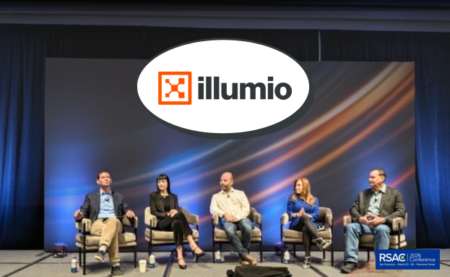 The “Hard Truths” panel was built around a simple idea: the industry needs to stop avoiding difficult conversations. Instead of focusing on best-case scenarios, the session addressed what is actually happening inside organizations today and why traditional approaches are struggling to keep up. Key themes from the panel included the reality that prevention alone is no longer effective. Organizations continue to invest heavily in tools designed to keep attackers out, yet breaches are still occurring at a consistent rate. Prevention is necessary, but it is no longer sufficient on its own.
Another major focus was lateral movement. Once attackers gain access, their ability to move across systems is what turns a small incident into a major breach. Many environments still lack the segmentation needed to stop this spread. The panel also addressed the growing complexity of security stacks. Organizations are managing dozens of tools, many of which overlap or create visibility gaps. This complexity often slows response times and makes it harder to identify real threats.
Visibility itself remains a challenge. Even with advanced tooling, many teams do not have a clear understanding of how applications and systems communicate internally. Without that visibility, containment becomes difficult. The overall takeaway was that incremental improvements are not enough. The industry needs a shift in strategy, not just better versions of the same controls.
Why This Matters Now
The conversations at RSAC 2026 reflect a turning point in cybersecurity strategy. Organizations are beginning to recognize that breaches are not rare events, they are expected. Attackers are increasingly targeting identity and internal systems, and speed of response is becoming just as important as detection.
There is also a growing understanding that complexity is working against security teams. Simpler, more visible environments are proving to be more effective than overloaded stacks of disconnected tools. This shift is changing how security investments are evaluated. Instead of asking how well a solution prevents attacks, organizations are asking how well it limits damage when prevention fails.
Frequently Asked Questions
What does Illumio specialize in?
Illumio specializes in Zero Trust segmentation, helping organizations prevent attackers from moving laterally within their environments after gaining access.
What was the main message of the “Hard Truths in Cybersecurity” panel?
The panel highlighted that current security strategies are not keeping up with modern threats and that organizations need to shift toward containment and resilience.
Why is segmentation important in modern cybersecurity?
Segmentation limits how attackers move within a network, reducing the likelihood that a single breach will escalate into a larger incident.
