

Algorithmic layoff selection is the practice of using artificial intelligence systems, productivity scores, and automated performance rankings to decide which employees a company will let go. It’s an alleged practice that just landed Meta in federal court. A group of 26 current and former Meta employees has sued the company, arguing that its AI-assisted layoff process disproportionately targeted people on medical, parental, or family leave. The case is being watched closely because it may be the first major legal test of whether AI can lawfully be used to build a layoff list.
In this article, we’ll discuss what the lawsuit against Meta actually claims, how the company has responded, which employment laws are at the center of the dispute, and why the outcome could reshape how businesses everywhere use AI in workforce decisions. Whether you follow tech news, work in HR, or simply want to understand your rights as an employee, this case touches on questions that affect nearly every modern workplace.
TL;DR Snapshot
26 anonymous Meta employees filed a lawsuit in federal court in Oakland, California, alleging that the company used a web of internal AI tools, including keystroke monitoring, activity tracking, AI token-usage dashboards, and algorithmic performance rankings, to select workers for the roughly 8,000 layoffs Meta announced in May 2026. The plaintiffs say these systems couldn’t account for legally protected absences, so employees on medical, parental, or family leave ended up with artificially low scores and were disproportionately placed on the termination list. The plaintiffs are asking a judge to pause their terminations, which are set to begin July 22, while their discrimination claims move forward.
Key takeaways include…
- The lawsuit argues that Meta’s AI scoring tools penalized workers on protected leave by design, since metrics like output and AI usage can’t be accumulated by someone who isn’t working, as reported by the Associated Press.
- Meta has firmly denied the allegations, telling reporters that all layoff decisions were made by humans and that the claims aren’t based on facts, according to CBS News.
- The case invokes major federal protections, including the FMLA and the ADA, and could set an early precedent for how companies can use AI in workforce management, per The HR Digest.
Who should read this: HR professionals, employment lawyers, tech workers, people managers, and AI ethics enthusiasts.
What the Lawsuit Alleges
The complaint was filed in federal court in Oakland, California, on behalf of 26 anonymous current and former Meta employees. According to the Associated Press, the plaintiffs are among the roughly 8,000 employees, about 10% of Meta’s workforce, that the company said it would lay off in May. The suit claims that Meta relied on internal AI systems, keystroke and activity-monitoring data, AI token-usage dashboards, and algorithmically assisted performance rankings to decide who would lose their jobs.
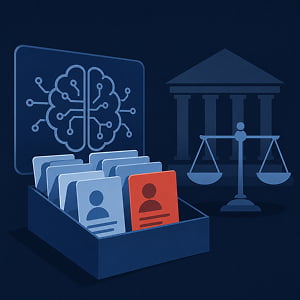
The core of the argument here is simple, many of these scores measure output, and someone on approved leave produces no output. CNBC’s coverage of the filing notes that the plaintiffs describe a “constellation of internal artificial-intelligence systems” whose inputs, such as productivity metrics and AI token consumption, simply can’t be accumulated by an employee who’s on protected medical or family leave, or whose output is reduced by a disability. The lawsuit further alleges that Meta didn’t adjust for protected absences or pause the process for the individualized review that leave and accommodation laws require.
Every one of the 26 plaintiffs took protected leave or requested or received a reasonable accommodation for a disability, according to the AP. About half took leave for caregiving or pregnancy-related reasons. One plaintiff disclosed a serious health condition that Meta’s own provider approved for leave, yet the suit says a manager discouraged him from taking it, warning that doing so would lead to his selection for the anticipated layoffs. Notably, all 26 plaintiffs remain employed for now, with separations scheduled to begin July 22.
How Meta Has Responded
Meta has pushed back hard on these allegations. In a statement reported by CBS News, the company said, “Workforce management and organizational decisions were and are made by people, not AI.” Meta also called the claims meritless and not based on facts.
That framing sets up the central factual dispute of the case. The plaintiffs aren’t necessarily claiming that a single algorithm autonomously fired people. Rather, they argue that AI-generated scores and rankings shaped the termination list that humans ultimately signed off on, and that those scores were biased against leave-takers from the start. Fox Business reports that the plaintiffs’ immediate goal is modest, they just want the court to preserve the status quo and keep them employed while their claims are resolved in arbitration, arguing that losing employer-subsidized health coverage during pregnancy, postpartum recovery, or active medical treatment is harm that money alone can’t undo.
The Laws at the Center of the Case

The lawsuit doesn’t argue that layoffs are illegal, or even that using software in HR is illegal. It argues that the way Meta’s systems allegedly worked violated long-standing worker protections. According to The HR Digest, the complaint invokes several state and federal laws, including the Family and Medical Leave Act (FMLA), the Americans with Disabilities Act (ADA), the Pregnancy Discrimination Act, and the Pregnant Workers Fairness Act.
These laws generally prohibit employers from retaliating against or disadvantaging workers because they took protected leave, are pregnant, or have a disability. The plaintiffs’ theory is that an AI system doesn’t need to be programmed with bad intent to produce an unlawful result. If a ranking model treats months of approved absence as months of poor performance, workers protected by these laws will predictably sink to the bottom of the list. The HR Digest also reports that potential remedies in the case could include reinstatement, back pay, lost equity, and benefits.
Why This Case Matters Beyond Meta
Whatever the outcome, this lawsuit arrives at a moment when AI is rapidly moving into HR departments everywhere, from resume screening to performance reviews. Coverage in Fortune and elsewhere has framed the case as a first-of-its-kind challenge to AI-assisted layoff selection at a major U.S. tech company, which means the ruling could influence how courts, regulators, and employers think about algorithmic decision-making for years.
For employers, the case is a warning that outsourcing judgment to a scoring system doesn’t outsource legal responsibility. If a tool’s inputs systematically disadvantage a protected group, the company using it may still be liable, even without discriminatory intent. For workers, it’s a reminder that protections like the FMLA and ADA still apply when the decision-maker is (or is influenced by) a machine. And for lawmakers, it may add momentum to the growing push for rules requiring bias audits and human review of automated employment decisions.
Frequently Asked Questions
26 anonymous current and former Meta employees filed the suit in federal court in Oakland, California. All of them took protected leave or requested or received a disability accommodation, and all were selected for the layoffs Meta announced in May 2026.
The complaint points to a mix of internal AI systems, keystroke and activity-monitoring data, AI token-usage dashboards, and algorithmically assisted performance rankings that allegedly fed into the layoff selection process.
Tokens are the units of text that AI models process, so token usage is a rough measure of how much someone uses AI tools. The lawsuit alleges Meta tracked employees’ AI token consumption as a performance signal, which would inherently disadvantage anyone on leave who wasn’t working.
Not yet. All 26 plaintiffs had been notified of their layoffs but remained employed when the suit was filed, with separations set to begin on July 22. The lawsuit asks the court to block those terminations while the plaintiffs pursue their claims in arbitration.
Meta denies them. The company has stated that its workforce decisions were and are made by people rather than AI, and that the lawsuit’s claims lack merit.
The Americans with Disabilities Act is a federal law that prohibits discrimination against people with disabilities in employment and requires employers to provide reasonable accommodations, such as modified schedules or medical leave.
The Family and Medical Leave Act is a U.S. federal law that gives eligible employees the right to take unpaid, job-protected leave for qualifying medical and family reasons, such as a serious health condition or the birth of a child. Employers can’t retaliate against workers for using it.
Other Enterprise AI Articles You May Be Interested In
Nvidia Bets Big on Japan: Inside the New Robotics and Physical AI Partnerships
Microsoft Becomes First Hyperscaler to Adopt 3M EBO Technology
What Is Grok 4.5? Everything to Know About xAI’s Latest AI Model
Meta Enters the AI Image Race: Everything You Need to Know About Muse Image
GPT-5.6 Is Finally Public: Why the Government Delayed OpenAI’s Most Powerful AI Models
