
Quantum AI models are a new category of artificial intelligence tools purpose-built to solve the unique challenges of quantum computing, such as processor calibration and error correction. On April 14, 2026, also known as World Quantum Day, NVIDIA announced Ising, the world’s first family of open source AI models designed specifically for quantum computing workloads. Named after the Ising model from statistical mechanics, the release represents a major milestone in the convergence of two of the most transformative technologies of our time: artificial intelligence and quantum computing.
In this article, we’ll discuss what NVIDIA Ising is, how it works, and why it matters. We’ll break down the two primary models in the Ising family, explore the real-world problems they’re designed to solve, look at who’s already adopting the technology, and examine what this release signals about the future of quantum computing at scale.
TL;DR Snapshot
NVIDIA Ising is an open source family of AI models that tackles two of the biggest bottlenecks in quantum computing, calibrating quantum processors and correcting the errors that qubits inevitably produce. Released on World Quantum Day 2026, the models are freely available on GitHub, Hugging Face, and NVIDIA’s own platform, and they’re already being adopted by leading research labs and quantum hardware companies around the world.
Key takeaways include…
- NVIDIA Ising includes two model families, Ising Calibration and Ising Decoding, which automate quantum processor tuning and accelerate quantum error correction, respectively.
- Ising Decoding delivers up to 2.5x faster performance and 3x higher accuracy compared to current industry standards for error correction decoding.
- The models are fully open source with permissive licensing and are already in use at institutions including Harvard, Cornell University, IonQ, IQM Quantum Computers, and Sandia National Laboratories.
Who should read this: Quantum computing researchers, AI engineers, enterprise technology leaders, and tech-forward investors tracking the quantum ecosystem.
Why Quantum Computing Needs AI Right Now
Quantum computers hold extraordinary promise for solving problems that are intractable for classical machines, from drug discovery to cryptography to materials science. But there’s a catch, today’s quantum processors are extremely fragile. Qubits, the fundamental units of quantum information, are highly susceptible to noise and environmental interference. This makes two tasks absolutely critical for any practical quantum system: calibration (keeping the processor tuned and operational), and error correction (detecting and fixing the mistakes qubits inevitably make).
Traditionally, both of these tasks have required significant human intervention and manual effort. Calibrating a quantum processor can take days, and error correction demands processing terabytes of measurement data thousands of times per second. These bottlenecks have been a significant barrier to scaling quantum systems to the point where they can do useful work. That’s the gap NVIDIA Ising is designed to fill, bringing the speed and pattern-recognition power of AI directly into the quantum computing workflow.
As NVIDIA CEO Jensen Huang put it in the company’s official press release, AI is becoming “the control plane” of quantum machines, transforming fragile qubits into scalable and reliable quantum-GPU systems.
Inside the Ising Model Family: Calibration and Decoding
The NVIDIA Ising family consists of two distinct model groups, each targeting a different quantum computing challenge.
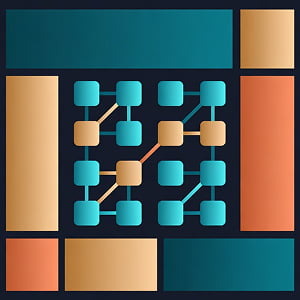
Ising Calibration is a 35-billion-parameter Vision Language Model (VLM) that’s been fine-tuned to interpret and react to measurement data from quantum processors. Think of it as giving a quantum computer the ability to “see” its own diagnostic readouts and automatically determine what adjustments need to be made. According to NVIDIA’s Ising product page, it outperforms all other approaches across a suite of six calibration performance tests. Where manual calibration might take days, Ising Calibration paired with an AI agent can reduce that timeline to hours.
Ising Decoding consists of two variants of a 3D convolutional neural network (CNN), one optimized for speed and the other for accuracy. These models handle the computationally demanding task of “pre-decoding” for quantum error correction. As Silicon Republic reported, Ising Decoding can perform real-time decoding for quantum error correction, delivering significant improvements in both throughput and precision. The models ship with support for surface codes of any distance and include a training framework built on PyTorch and CUDA-Q, so developers can retrain them for their own specific hardware and noise models.
Both model families are released under permissive open source licenses, with full documentation of training methods, datasets, and fine-tuning tools. This is a deliberate strategy by NVIDIA to put powerful, purpose-built AI into the hands of the entire quantum ecosystem.
Who’s Already Using Ising, and Why It Matters
The list of early adopters reads like a who’s who of the quantum computing world. As covered by Investing.com, Ising Calibration is already being used by Atom Computing, IonQ, IQM Quantum Computers, and Fermi National Accelerator Laboratory, among others. Ising Decoding has been adopted by Cornell University, Sandia National Laboratories, the University of Chicago, and UC Santa Barbara. Silicon Republic also noted that Harvard’s School of Engineering and Applied Sciences, Lawrence Berkeley National Laboratory, and the UK National Physical Laboratory are among the institutions using Ising.
This broad adoption matters for a few reasons. First, it validates the approach: if top-tier research institutions and quantum hardware companies are embracing these models, it’s a strong signal that AI-driven calibration and error correction are viable and valuable. Second, it demonstrates the flexibility of the open source strategy. Different organizations are using different quantum hardware architectures, yet Ising’s models, along with their retraining tools, can be adapted to fit a variety of setups.
The market clearly took notice as well. On the day of the announcement, Investing.com reported that quantum computing stocks surged, with D-Wave rising 10.3%, IonQ gaining 13.3%, and Rigetti climbing 8.9%.
The Bigger Picture: NVIDIA’s Quantum-GPU Supercomputing Vision
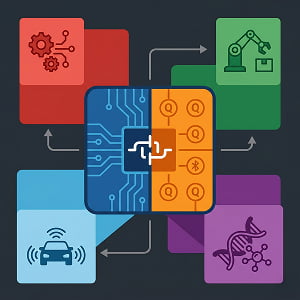
Ising doesn’t exist in a vacuum. It’s the latest piece in a broader NVIDIA strategy to build a full-stack platform for what the company calls “quantum-GPU supercomputing.” According to NVIDIA’s Ising page, the models complement the existing CUDA-Q software platform for hybrid quantum-classical computing, as well as the NVQLink hardware interconnect that bridges GPU computing with quantum processors. NVIDIA is also providing NIM microservices for instant model deployment, and a cookbook of quantum computing workflows.
This mirrors the playbook NVIDIA has used across other domains. The Ising models join an expanding portfolio of open source AI that includes Nemotron for agentic AI systems, Cosmos for physical AI, BioNeMo for biomedical research, and Alpamayo for autonomous vehicles. In each case, the strategy is the same: release powerful, open models that pull developers deeper into the NVIDIA ecosystem of hardware, software, and services.
The quantum computing market itself is poised for significant growth. According to Investing.com, analyst firm Resonance projects that the quantum computing market will surpass $11 billion by 2030. By positioning itself at the intersection of AI and quantum computing right now, NVIDIA is making a bet that the company that provides the “operating system” for quantum machines will capture outsized value as the market matures.
Frequently Asked Questions
NVIDIA is a multinational technology company headquartered in Santa Clara, California, best known for designing graphics processing units (GPUs). In recent years, it has become a dominant force in artificial intelligence, data center computing, and accelerated computing platforms.
Quantum computing is a type of computation that uses quantum mechanical phenomena, such as superposition and entanglement, to process information. Unlike classical computers that use bits (0s and 1s), quantum computers use qubits, which can represent multiple states simultaneously. This gives quantum computers the potential to solve certain complex problems much faster than traditional machines.
Quantum error correction (QEC) is a set of techniques used to protect quantum information from errors caused by noise and interference. Because qubits are inherently unstable, QEC is essential for building reliable, large-scale quantum computers. It works by encoding information across multiple physical qubits and using algorithms to detect and correct errors in real time.
CUDA-Q is NVIDIA’s open source software platform for hybrid quantum-classical computing. It provides programming tools and libraries that allow developers to write code that runs across both GPUs and quantum processing units (QPUs), making it easier to build and optimize quantum applications.
NVQLink is NVIDIA’s hardware interconnect technology that physically connects GPU computing systems with quantum processors. It enables tight integration between classical and quantum hardware, which is critical for running the hybrid workloads that modern quantum computing demands.
Open source means the models, their training data, documentation, and fine-tuning tools are freely available for anyone to download, use, modify, and redistribute under a permissive license. In the case of Ising, the models are available on GitHub, Hugging Face, and NVIDIA’s developer platform.
A Vision Language Model is a type of AI model that can process and interpret both visual inputs (like images or charts) and natural language text. In the case of Ising Calibration, the VLM interprets measurement plots and diagnostic data from quantum processors to determine what calibration actions need to be taken.
World Quantum Day is celebrated annually on April 14 (4.14, a reference to Planck’s constant, a fundamental value in quantum physics). It’s an initiative to promote public awareness and understanding of quantum science and technology worldwide.
Other Enterprise AI Articles You May Be Interested In
Apple’s AI Glasses Are Coming to Take on Meta Ray-Bans: What You Need to Know
Amazon Trainium Chips for Sale? Jassy Hints at Third-Party Sales as Demand Soars
Google and Intel’s New AI Chip Deal: Why CPUs Are Making a Comeback
Anthropic Launches Project Glasswing: AI That Found a 27-Year-Old Security Flaw
Why Intel Is Joining Elon Musk’s Terafab to Build the World’s Largest AI Chip Factory
