

AI security for on-premise and airgapped environments refers to the deployment of artificial intelligence-powered cybersecurity tools directly within an organization’s own infrastructure, rather than through the cloud, so that all threat detection, data processing, and incident response occur without any data ever leaving the customer’s physical control. This approach is critical for organizations operating in highly regulated sectors such as national defense, financial services, healthcare, and critical infrastructure, where strict data sovereignty, privacy mandates, and compliance frameworks demand that sensitive information remain entirely within secure, self-hosted boundaries. As AI adoption accelerates across every industry, bridging the gap between cutting-edge AI-driven protection and the rigid data-control requirements of these environments has become one of the most pressing challenges in modern cybersecurity.
In this article, we’ll discuss SentinelOne’s landmark announcement expanding its AI-powered security portfolio to serve on-premise, self-hosted, sovereign, and fully airgapped environments. We’ll break down what the new offerings include, from autonomous endpoint and server protection, to the on-premise deployment of Prompt Security for AI governance and a purpose-built AI Data Pipeline. We’ll also examine the broader market forces driving demand for data-sovereign security, how SentinelOne’s approach eliminates the traditional trade-off between AI speed and total data control, and what it all means for the future of enterprise cybersecurity.
TL;DR Snapshot
SentinelOne has announced a major expansion of its cybersecurity platform to deliver fully autonomous, AI-powered protection to on-premise, sovereign, self-hosted, and airgapped environments. Building on its existing FedRAMP and GovRAMP authorized endpoint security capabilities (already deployed across millions of endpoints), the company is now extending that same level of protection to servers, private clouds, data pipelines, and AI applications, all without requiring any cloud connectivity or external data transfer. The announcement positions SentinelOne as the only next-generation cybersecurity vendor to offer modern, AI-driven defense with zero cloud dependency.
Key takeaways include…
- Total data sovereignty without compromise: SentinelOne’s expanded on-premise portfolio ensures that all security data is processed strictly within the customer’s own environment, eliminating the traditional trade-off between AI-powered protection and complete data control for regulated and airgapped organizations.
- On-premise AI governance with Prompt Security: The self-hosted Prompt Security On-Premise solution discovers shadow AI usage, blocks prompt injection attacks, and redacts sensitive data in real time across thousands of applications, all within fully disconnected environments.
- Purpose-built AI Data Pipeline: A new on-premises data pipeline uses intelligent filtering to reduce alert fatigue, lower infrastructure costs, enrich telemetry, and monitor data stream health, giving security teams better visibility without any data leaving the secure perimeter.
Who should read this: CISOs, Security Architects, IT Leaders in Government and Defense, Compliance Officers, and Enterprise Cybersecurity Professionals.
The Growing Demand for Data-Sovereign Security
The cybersecurity landscape is undergoing a fundamental shift. Governments, defense agencies, financial institutions, and healthcare organizations are no longer satisfied with cloud-based security solutions that require their data to leave the premises, even temporarily. Rising geopolitical tensions, an evolving regulatory environment including frameworks like the EU AI Act and NIST AI Risk Management standards, and a sharp increase in nation-state cyber activity have all converged to make data sovereignty a non-negotiable requirement for many of the world’s most critical organizations.
At the same time, the rapid rise of AI across enterprise workflows has introduced an entirely new category of risk (which companies like Dataminr and Crisis24 are trying to manage). AI systems are increasingly embedded in data processing, cloud infrastructure, and production environments, expanding the attack surface in ways traditional security tools were never designed to handle. Organizations need AI-powered defenses to keep pace with AI-powered threats, but until now, accessing that level of protection often required sending sensitive telemetry and operational data to an external cloud, something many regulated entities simply cannot do.
This tension between the speed and intelligence of AI security and the absolute need for data control is what SentinelOne’s latest announcement directly addresses. As Ana Pinczuk, President of Product and Technology at SentinelOne, put it, the company is focused on giving organizations the freedom to innovate securely by delivering its most advanced autonomous engines and AI protections directly into the customer’s own hardware environment.
What SentinelOne’s Expanded On-Premise Portfolio Includes
SentinelOne’s announcement is not a single product launch, it’s a comprehensive expansion of its Singularity platform, designed to bring the full power of its cloud-grade security to environments that are partially or completely disconnected from the internet. The portfolio builds on a foundation that already protects millions of on-premises endpoints under FedRAMP and GovRAMP authorization.

The expanded capabilities now extend to servers, private clouds, and data storage systems. Using a single, lightweight agent, organizations like national security agencies, financial institutions, and healthcare providers can standardize their security across any infrastructure. The deployments allow customers to keep all their data in-house, streaming telemetry directly into their own systems for threat hunting and investigations without ever sending information to a cloud service. Multiple detection engines operate on-device without requiring a persistent internet connection, and the solution integrates with local storage systems from vendors like NetApp and Dell to automatically scan and quarantine malware at the point of entry.
Critically, this means that all threat detection and remediation remains local. Sensitive data never leaves the organization’s secure boundary during the inspection process, and no off-premise connectivity is required at any point. For organizations running critical infrastructure in sectors like manufacturing, energy, and oil/gas (where airgapped networks are standard practice), this is a transformative development.
Prompt Security On-Premise: AI Governance Without Connectivity
One of the most significant components of the announcement is the on-premise deployment of Prompt Security, the AI security platform that SentinelOne acquired in August 2025 for approximately $250 million. Prompt Security was originally built to address a rapidly growing blind spot in enterprise security: the uncontrolled proliferation of generative AI tools across the workplace. Employees using tools like ChatGPT, Claude, Gemini, Grok, and Cursor, and other LLM-based assistants can inadvertently expose sensitive corporate data, intellectual property, or regulated information through their prompts.
Prompt Security On-Premise brings these protections into fully disconnected environments. The self-hosted solution discovers shadow AI usage (instances where employees are using AI tools outside of official IT approval), and redacts sensitive information in real time across thousands of applications. It acts as a specialized firewall for both internal and external AI tools, blocking threats such as prompt injection attacks, jailbreak attempts, and data leaks, while ensuring that organizations maintain complete sovereignty over every AI interaction. No external connection is required at any stage.
For regulated industries and government agencies, this capability is groundbreaking! It means that organizations can embrace the productivity benefits of generative AI while maintaining the strict data control and compliance posture that their regulatory frameworks demand. Security teams gain searchable logs of every AI interaction for audit purposes, granular policy-driven rules to redact or block high-risk prompts, and inline coaching that helps users adopt safe AI practices without sacrificing productivity.
The AI Data Pipeline: Smarter Local Data Processing
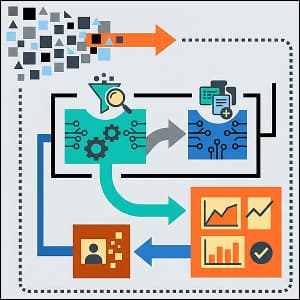
Beyond endpoint and AI governance, SentinelOne is also introducing a new AI Data Pipeline designed specifically for on-premises environments. This pipeline addresses a persistent pain point for security teams working in airgapped or self-hosted setups – the challenge of managing massive volumes of security telemetry without the elastic compute and storage resources that cloud environments provide.
The AI Data Pipeline uses intelligent filtering to ensure that security teams process only the data that matters most, reducing alert fatigue and cutting down on infrastructure costs. It enriches telemetry with contextual information, monitors the health of the entire data stream, and enables organizations to move data between different sources and endpoints (including generative AI models) without any of that data leaving the premises or requiring cloud processing.
This is a meaningful evolution in how on-premises security operations can function. Rather than forcing security teams to choose between comprehensive visibility and manageable data volumes, the AI Data Pipeline brings the kind of intelligent data management typically associated with cloud-native platforms into the local environment. The result is better visibility, more reliable insights, and lower operational overhead, all within the secure boundary.
What This Means for the Future of Enterprise Cybersecurity
SentinelOne’s move to bring its full AI security stack to on-premise and airgapped environments signals a broader shift in the cybersecurity industry. For years, the market narrative has been that the cloud is the future of security. And for many organizations, it is! But for a significant and growing segment of the market, cloud-only solutions are not an option. Governments with strict in-country data residency requirements, defense agencies handling classified information, critical infrastructure operators managing airgapped industrial networks, and financial institutions bound by stringent regulatory frameworks all need security that meets them where their data lives.
SentinelOne’s announcement positions the company as the only next-generation cybersecurity vendor to deliver modern, AI-driven defense with zero cloud dependency. The expanded offerings can be deployed anywhere, allowing customers to meet in-country data residency and regulatory requirements, while achieving true sovereignty without sacrificing platform capability. The company already protects nearly one-fifth of the Fortune 500 and hundreds of Global 2000 enterprises, and this expansion opens the door to a much larger addressable market among the world’s most security-conscious organizations.
As AI continues to reshape both the threat landscape and the tools defenders use, the ability to deploy AI-powered security without any external dependency will only become more valuable. SentinelOne’s latest move suggests that the future of enterprise cybersecurity is not cloud-or-nothing, it’s about meeting every organization’s unique requirements for control, sovereignty, and protection.
Frequently Asked Questions
SentinelOne is an AI-powered cybersecurity company headquartered in Mountain View, California. It provides autonomous endpoint protection, cloud security, identity security, and AI-driven security operations through its Singularity platform. The company protects nearly one-fifth of the Fortune 500 and hundreds of Global 2000 enterprises worldwide.
Prompt Security is an AI security platform that SentinelOne acquired in August 2025 for approximately $250 million. Originally founded in Tel Aviv in 2023, Prompt Security protects organizations against prompt injection, data leakage, and shadow AI by monitoring all interactions with generative AI tools and homegrown LLM applications in real time. It is now integrated into the SentinelOne Singularity platform.
An airgapped environment is a computer network or system that is physically isolated from the internet and other unsecured networks. These environments are commonly used by defense agencies, critical infrastructure operators (such as energy and manufacturing companies), and organizations handling classified or highly sensitive data. The physical isolation makes them more secure against remote cyberattacks, but also makes it more difficult to deploy modern, cloud-dependent security tools.
Shadow AI refers to the use of artificial intelligence tools and applications by employees without the knowledge, approval, or oversight of their organization’s IT or security teams. This can include using third-party chatbots, AI coding assistants, or other generative AI tools in ways that may expose sensitive corporate data, violate compliance policies, or create security vulnerabilities.
FedRAMP (Federal Risk and Authorization Management Program) is a U.S. government program that standardizes the security assessment, authorization, and continuous monitoring of cloud computing services used by federal agencies. A product that is FedRAMP authorized has met rigorous security requirements set by the federal government, making it eligible for use by government organizations.
Data sovereignty is the principle that data is subject to the laws and governance structures of the country or jurisdiction in which it is collected or stored. In a cybersecurity context, it means that an organization maintains full control over where its data resides and how it is processed, ensuring that no third party (including a cloud provider) can access, transfer, or process that data outside the organization’s control.
Prompt injection is a type of cyberattack targeting AI systems, particularly large language models (LLMs). In a prompt injection attack, an adversary crafts input text designed to manipulate the AI system into behaving in unintended ways, such as leaking sensitive data, bypassing safety controls, or producing harmful output. It is one of the most significant emerging threats as organizations integrate AI tools into their workflows.
