Quick Definition
AI agents are autonomous software systems that can execute tasks, make decisions, and interact with business systems without constant human input, effectively acting as a digital workforce layer.
AI Summary
AI agents are rapidly moving beyond copilots into fully autonomous systems that can execute workflows across enterprise environments. While they offer major gains in efficiency and scalability, most organizations are not prepared to manage the risks that come with them. Without proper governance, identity control, and oversight, AI agents can introduce security gaps, data exposure risks, and operational instability. The shift to agent-based systems requires treating AI not just as a tool, but as a managed workforce that must be monitored, controlled, and aligned with business strategy.
Key Takeaways
- AI agents are shifting from assistants to autonomous operators, fundamentally changing how work gets done in the enterprise.
- The biggest risk is not adoption, but lack of governance, identity control, and visibility into agent behavior.
- Successful organizations will treat AI agents like a workforce, applying strict access control, monitoring, and human oversight.
Who Should Read This
IT leaders, security teams, infrastructure architects, and business decision-makers responsible for deploying and managing enterprise AI systems.
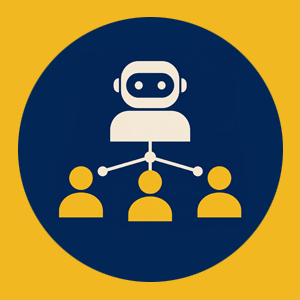 Enterprise AI has officially crossed a line. What started as copilots and assistants has rapidly evolved into something far more operational. AI agents are no longer just supporting work. They are starting to do the work. Across enterprise environments, companies are deploying agent-based systems that can execute workflows, make decisions, interact with systems, and even coordinate with other agents. This shift is happening fast, and in many cases, faster than organizations are prepared to manage. The conversation is no longer about whether AI can assist employees. It is about how AI is beginning to function as a workforce layer inside the business. That shift comes with real opportunity. It also comes with real risk.
What’s Actually Changing Right Now
The current wave of enterprise AI is being driven by multi-agent systems. These are not single models answering prompts. They are coordinated systems of specialized agents, each responsible for a task, working together to complete processes end-to-end.
You are seeing this across use cases like customer support automation, internal IT workflows, sales research, data analysis, and even marketing execution. Agents are being connected to APIs, internal tools, and live data sources, allowing them to operate in real time rather than in isolation. This is what makes them powerful. It is also what makes them harder to control.
Most organizations were not designed to manage autonomous digital workers that can take action without constant human input. Governance models, identity frameworks, and operational oversight are still built around human users, not AI-driven actors. That gap is where the risk starts to show.
The Management Problem No One Is Ready For
When AI systems were limited to generating content or answering questions, oversight was relatively simple. A human reviewed the output. A human made the final decision. AI agents change that model entirely.
Now, agents can trigger workflows, move data between systems, make recommendations that are automatically executed, and operate continuously. In some environments, they are already making decisions faster than humans can review them. This creates a new operational challenge. If AI is acting on behalf of the business, then it needs to be managed like any other workforce. That includes visibility, accountability, access control, and performance tracking. Most companies do not have that infrastructure in place yet.
Where Enterprises Need to Be Careful
The biggest mistake organizations are making right now is not adopting AI agents. It is adopting them too quickly without the right controls.
There are a few areas where this becomes especially risky:
- Over-permissioning and access sprawl: AI agents often require access to multiple systems to be effective. CRM platforms, internal databases, communication tools, financial systems. Without strict access controls, these agents can end up with far broader permissions than any single employee would have. That creates a significant security exposure, especially if those agents are interacting with sensitive data.
- Lack of identity and accountability: Traditional identity models are built around human users. AI agents introduce non-human identities that still need authentication, authorization, and tracking. If an agent takes an action, who is responsible? Without clear identity mapping and audit trails, it becomes difficult to trace decisions or investigate issues.
- Autonomous decision-making without guardrails: Agents are being designed to act, not just suggest. That means they can execute workflows automatically based on predefined logic or learned behavior. If guardrails are not clearly defined, small errors can scale quickly. A misconfigured agent can trigger incorrect actions across multiple systems before anyone notices.
- Data exposure and leakage risks: Because agents interact with multiple data sources, they can unintentionally expose or move sensitive information across environments. This becomes especially concerning in regulated industries where data governance is strict. Without proper controls, agents can break compliance boundaries without malicious intent.
- Operational over-reliance on automation: There is a growing tendency to assume that once agents are deployed, processes can run independently. In reality, most enterprise AI systems still require human oversight, especially in early stages. Over-reliance can lead to blind spots where issues go undetected until they impact business outcomes.
- Scaling complexity faster than governance: It is easy to deploy one or two agents. It is much harder to manage dozens or hundreds of them operating across different workflows. As organizations scale agent usage, complexity increases exponentially. Without a centralized management strategy, visibility and control quickly break down.
Why This Matters Right Now
Enterprises are investing heavily in AI infrastructure, tools, and platforms designed to support agent-based systems. At the same time, security teams, IT leaders, and business stakeholders are trying to figure out how to govern something that does not fit into existing models. This is where the real shift is happening in 2026. Not just in AI capability, but in how organizations think about operations. AI is no longer just a tool layer. It is becoming an execution layer, and execution without control creates risk.
What a Smarter Approach Looks Like
The organizations that will succeed with AI agents are not the ones that deploy them the fastest. They are the ones that build the right foundation around them. That starts with treating AI agents as part of the workforce, not just as software.
That means defining clear identity frameworks for non-human actors, applying least-privilege access principles, and ensuring every action an agent takes is traceable. It means implementing monitoring systems that provide real-time visibility into agent behavior, not just outcomes. It also means keeping humans in the loop where it matters. Especially in decision-heavy workflows, oversight is still critical. AI should accelerate execution, not replace accountability.
Finally, it requires aligning AI deployment with business strategy, not just technical capability. Just because an agent can automate a process does not mean it should without considering risk, compliance, and long-term impact.
The Bottom Line
AI agents are quickly becoming one of the most important shifts in enterprise technology. They have the potential to dramatically increase efficiency, reduce manual work, and unlock new levels of productivity. But they also introduce a new category of operational risk that many organizations are underestimating. The question is no longer whether AI will become part of the workforce. The real question is whether enterprises are prepared to manage it responsibly.
Frequently Asked Questions
What is the difference between an AI agent and a copilot?
A copilot assists users by generating suggestions or content, while an AI agent can take action independently by executing tasks, interacting with systems, and completing workflows without continuous human input.
What are the biggest risks of using AI agents in the enterprise?
The main risks include over-permissioned access to systems, lack of clear identity and accountability, unintended data exposure, and autonomous decision-making without proper guardrails or oversight.
How can companies safely adopt AI agents?
Organizations should implement strict identity and access controls, apply least-privilege principles, monitor agent activity in real time, maintain audit trails, and keep human oversight in place for critical decisions.
