

An AI implementation unit is a dedicated team or organization that embeds engineers and specialists directly inside enterprise customers to help them select, integrate, and deploy artificial intelligence technologies. Rather than simply selling software licenses or API access, these units work hands-on with a company’s internal teams to build AI systems tailored to its specific data, workflows, and business goals. The forward-deployed engineer (FDE) model, originally pioneered by Palantir Technologies over a decade ago, has seen a major resurgence in 2026 as businesses struggle to move AI from experimental pilots into real production environments.
In this article, we’ll discuss Microsoft’s announcement of its new operating entity called Microsoft Frontier Company, how it fits into a broader wave of AI deployment ventures launched by major tech players in 2026, what it means for enterprise customers looking to adopt AI, and why this shift toward embedded engineering teams signals a fundamental change in how AI gets sold and implemented across industries.
TL;DR Snapshot
Microsoft has committed billions of dollars and thousands of employees to a new operating entity called Microsoft Frontier Company, designed to help large enterprises identify, deploy, and generate measurable returns from AI technologies. The unit will work with both Microsoft’s own AI tools and third-party models, and customers will retain full ownership of any solutions built with their internal data.
Key takeaways include…
- Microsoft Frontier Company launches with $2.5 billion in funding and 6,000 industry and engineering experts, making it one of the largest dedicated AI deployment organizations in the world.
- The venture follows similar moves by AWS ($1 billion FDE unit), OpenAI ($4 billion Deployment Company), and Anthropic ($1.5 billion joint venture with Wall Street firms), signaling an industry-wide consensus that the real bottleneck in enterprise AI is deployment, not model quality.
- Customers will be able to use a mix of Microsoft and non-Microsoft AI models and will retain control of the outputs and systems built, reflecting a strategic pivot away from single-model dependency.
Who should read this: Enterprise leaders, IT decision-makers, AI strategists, technology consultants, and anyone tracking the business side of artificial intelligence.
The $2.5 Billion Bet: What Is Microsoft Frontier Company?
On July 2, 2026, Microsoft announced the formation of Microsoft Frontier Company at an event in San Francisco. According to a CNBC report, the new unit is backed by $2.5 billion in funding from Microsoft and will initially draw on 6,000 industry and engineering experts. As TechCrunch reported, Microsoft’s Commercial Business CEO Judson Althoff pushed back against the “Forward Deployed Engineer” label that’s become common in the space, describing the initiative as something that goes beyond FDE work and calling it the largest, most capable, outcome-driven engineering organization in the industry.

The core purpose of Microsoft Frontier Company is to guide corporate customers through the process of selecting and integrating AI tools with each organization’s own data and operations. According to TradingPedia, the entity will initially work with large enterprise clients including Unilever, Novo Nordisk, London Stock Exchange Group, Land O’Lakes, and Accenture. A crucial element of the offering is that customers retain ownership of any AI solutions developed using their internal data, rather than feeding those results back to Microsoft.
This matters because many large organizations have expressed growing concern about data sovereignty when working with AI providers. As analyst Patrick Moorhead of Moor Insights & Strategy noted in the TradingPedia report, large businesses worry that relying heavily on models from frontier AI labs could eventually grant those labs the expertise to compete with them, especially in areas like coding and legal work.
A Lesson Learned: Microsoft’s Pivot Away From Single-Model Dependency
Perhaps the most revealing aspect of this announcement is the strategic thinking behind it. In an interview with Reuters, Althoff was candid about past missteps, such as Microsoft binding its Copilot product exclusively to OpenAI models three years ago. As competing AI models from China’s DeepSeek, Google’s Gemini, and Anthropic’s Claude narrowed the gap with OpenAI’s offerings, that single-vendor approach became a limitation.
The lesson Microsoft took from this experience is that enterprises want model flexibility. They want AI systems that can amplify their intelligence with the ability to swap between models as new state-of-the-art options emerge, or as fine-tuning requirements evolve. Customers increasingly believe that the combination of their proprietary data with a range of models is more valuable than locking into any one ecosystem.
This is a significant philosophical shift for Microsoft, which has invested billions in its partnership with OpenAI and has been among the most prominent advocates for OpenAI’s technology. The company has since incorporated models from Anthropic into its Copilot AI assistant to address enterprise demand, and Microsoft Frontier Company will extend that multi-model approach further by working with both Microsoft and several external AI providers.
The broader context reinforces this pivot. According to SEC filings, Microsoft’s AI business surpassed a $37 billion annual revenue run rate in Q3 FY2026, up 123% year-over-year. With that kind of growth, Microsoft has strong incentive to ensure that its enterprise customers are actually realizing value from AI.
The Bigger Picture: Why Every Major AI Player Is Launching Deployment Units
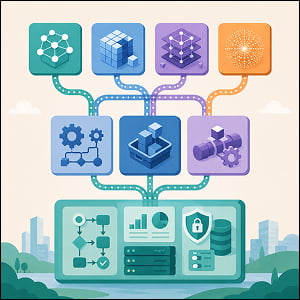
Microsoft Frontier Company is the latest entry in what’s become an unmistakable industry trend, every major AI company is building or investing in dedicated deployment organizations.
Just two days before Microsoft’s announcement, AWS launched a $1 billion Forward Deployed Engineering unit, embedding thousands of engineers directly within customer teams. As reported by CNBC, AWS’s FDE engagements run in roughly 45-day cycles, with pods of about five or six engineers per client, and the emphasis is on leaving customers self-sufficient once deployment ends.
The trend started earlier in the year when both OpenAI and Anthropic announced similar ventures. In May 2026, TechCrunch reported that Anthropic partnered with Blackstone, Hellman & Friedman, and Goldman Sachs to form a $1.5 billion enterprise AI services company, while OpenAI launched The Deployment Company with over $4 billion in funding from 19 investors, including TPG, Brookfield, Advent, and Bain Capital. Both ventures are structured to give their private equity backers’ portfolio companies preferred access to AI deployment resources.
The underlying message across all of these moves is the same, model access alone isn’t enough. The real constraint on enterprise AI adoption is the shortage of engineers who can wire AI systems into real business processes with proper governance, security, and data controls. As Anthropic CFO Krishna Rao put it in the company’s announcement, “Enterprise demand for Claude is significantly outpacing any single delivery model.”
Here’s how the major AI deployment ventures compare so far:
| Company | Investment | Structure | Key Partners |
|---|---|---|---|
| Microsoft Frontier Company | $2.5 billion | Internal operating entity | Unilever, Novo Nordisk, LSEG, Land O’Lakes, Accenture |
| AWS FDE Unit | $1 billion | Internal organization | Allen Institute, NBA, NFL, Southwest Airlines |
| OpenAI Deployment Co. | $4 billion | Joint venture (majority OpenAI-owned) | TPG, Brookfield, Advent, Bain Capital |
| Anthropic AI Services | $1.5 billion | Joint venture with PE firms | Blackstone, Goldman Sachs, Hellman & Friedman |
What This Means for Enterprise AI Adoption
The emergence of these deployment organizations has several important implications for businesses.
First, enterprises now have more options than ever for hands-on AI implementation support. Instead of hiring expensive consultants or building internal AI teams from scratch, they can tap into deployment units that come with deep model expertise and proven integration frameworks.
Second, the competitive dynamics among these deployment units could benefit enterprise customers in terms of pricing, flexibility, and speed. Microsoft’s explicit commitment to multi-model support and customer data ownership sets a bar that other providers will likely need to match.
Third, this wave of activity challenges the traditional consulting model. When model providers themselves are sending engineers into client organizations, the role of third-party systems integrators and management consultants shifts. Companies like Accenture (which is notably listed as a Microsoft Frontier Company partner) will need to position themselves as complementary rather than competitive to these new in-house deployment arms.
Finally, the focus on customer self-sufficiency is worth watching. Both AWS and Microsoft have emphasized that their deployment engagements are designed to leave customers with lasting capabilities, not ongoing dependencies. If that promise holds, it could accelerate AI adoption among mid-market companies that don’t have the budget for perpetual consulting relationships.
Frequently Asked Questions
Microsoft Frontier Company is a new operating entity announced by Microsoft on July 2, 2026. It’s backed by $2.5 billion in Microsoft funding and staffed by 6,000 industry and engineering experts. Its mission is to help enterprise customers select, integrate, and deploy AI technologies using both Microsoft and third-party AI models. Customers retain ownership of any AI solutions built using their data.
A forward-deployed engineer is a specialist who is embedded directly within a client’s organization to accelerate technical transformation. Rather than working remotely or delivering a software product, FDEs sit alongside the client’s own teams to build, deploy, and maintain systems on-site. Palantir Technologies originated this model over a decade ago, and it has seen a resurgence in 2026 as AI companies look for ways to help businesses move from AI experimentation to real production deployments.
Judson Althoff is the CEO of Microsoft’s Commercial Business. He was a key figure in the announcement of Microsoft Frontier Company and has spoken publicly about the strategic reasoning behind the initiative, including Microsoft’s decision to move away from a single-model AI approach.
The OpenAI Deployment Company is a joint venture launched by OpenAI in May 2026 with over $4 billion in funding from 19 investors, including TPG, Brookfield Asset Management, Advent, and Bain Capital. Valued at $10 billion, the venture embeds forward-deployed engineers inside enterprise organizations to help them adopt and implement OpenAI’s AI tools at scale.
Anthropic announced a $1.5 billion joint venture in May 2026 in partnership with Blackstone, Hellman & Friedman, and Goldman Sachs. The venture deploys Anthropic’s Claude AI models into mid-sized companies’ core business operations, with engineering teams working alongside client staff to build custom systems. Additional backers include Apollo Global Management, General Atlantic, and Sequoia Capital.
Amazon Web Services launched a $1 billion internal FDE organization on June 30, 2026, embedding thousands of engineers within customer teams. The unit focuses on deploying agentic AI systems, with engagements running in roughly 45-day cycles. Unlike the OpenAI and Anthropic ventures, AWS’s investment comes entirely from Amazon’s own balance sheet with no outside investors.
Palantir Technologies is a data analytics and software company that originated the forward-deployed engineer model over a decade ago. Palantir is known for embedding its engineers within government and enterprise clients to build custom data integration and analysis platforms. In the current AI landscape, Palantir works with large enterprises using models like Nvidia’s open-source offerings.
Multi-model AI refers to an approach where enterprises use multiple AI models from different providers rather than committing to a single model. This allows organizations to choose the best model for each specific use case, fine-tune models for particular tasks, and swap between providers as newer or better options become available. Microsoft Frontier Company is designed to support this approach by working with both Microsoft and third-party AI tools.
Other Enterprise AI Articles You May Be Interested In
How Meta’s New Cloud Business Could Disrupt the AI Market
Anthropic Relaunches Fable 5 and Mythos 5 After Government Ban
GPT 5.6 Sol, Terra, and Luna: A Complete Guide to OpenAI’s New Model Family
Micron’s AI-Driven Boom: How HBM4 Chips Are Fueling a 700% Stock Rally
Big Tech’s $2.7 Trillion AI Reckoning: What Investors Need to Know
