
 Demand generation and lead generation are often used interchangeably in B2B marketing, but they represent two very different approaches to growth. While both are important, confusing the two can lead to strategies that prioritize short-term results over long-term impact. More importantly, it can create a disconnect between marketing activity and actual pipeline performance.
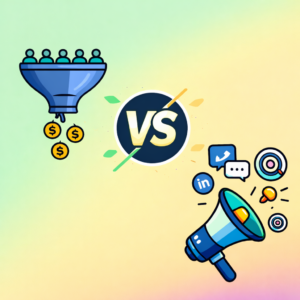
At a high level, lead generation focuses on capturing interest, while demand generation focuses on creating it. That distinction may seem subtle, but it has a significant impact on how campaigns perform and how buyers engage.
What Lead Generation Actually Does
Lead generation is centered around capturing contact information. This typically happens when a buyer downloads a piece of content, registers for a webinar, or fills out a form. In exchange for that action, the business receives a new lead that can be passed to sales or entered into a nurture flow.
This interaction is inherently transactional. The buyer takes a single action, and the business records it as a conversion. While this can be an effective way to build a pipeline of contacts, it does not necessarily indicate true interest or readiness to buy. In many cases, it simply reflects a moment of curiosity or a desire to access a specific piece of information.
What Demand Generation Actually Does
Demand generation takes a broader and more strategic approach. Instead of focusing on immediate conversion, it is designed to build awareness, educate buyers, and create multiple touchpoints over time. The goal is to engage the right audience early and consistently, long before they are ready to fill out a form or speak with sales.
This shows up through ongoing content exposure, repeated interactions across channels, and messaging that aligns with the buyer’s stage in the journey. Rather than asking for information right away, demand generation prioritizes building familiarity and trust. By the time a buyer converts, they are not encountering your brand for the first time—they are continuing a process that has already begun.
The Core Difference: Capture vs Create
The simplest way to understand the difference is that lead generation captures demand, while demand generation creates it. Lead generation depends on a buyer already being interested enough to take action. Demand generation works earlier in the process, influencing that interest before it fully forms.
Without demand, lead generation often struggles to produce meaningful results. Campaigns may generate volume, but that volume is frequently made up of low-intent or poorly aligned contacts. When demand has been established, however, lead generation becomes far more effective, because buyers are already familiar with the brand and more prepared to engage.
Why Lead Generation Alone Falls Short
Many teams rely heavily on lead generation as their primary strategy, often optimizing for cost per lead and overall volume. While this can produce impressive top-of-funnel numbers, it frequently leads to challenges further down the funnel. Sales teams may receive a high number of leads, but struggle to convert them into meaningful conversations or opportunities.
The issue is not that lead generation is ineffective, but that it is incomplete when used on its own. When buyers have not been properly engaged or educated beforehand, a form fill becomes a weak signal. It indicates interest in a moment, but not necessarily intent to buy.
What Demand Generation Looks Like in Practice
Demand generation is not tied to a single campaign or tactic. It is an ongoing effort to build visibility and engagement over time. This includes distributing content across multiple channels, creating consistent messaging, and ensuring that buyers encounter your brand more than once.
In practice, this often means that buyers will interact with your content several times before ever becoming a lead. They may read an article, see a social post, engage with a webinar, or revisit your website before deciding to take the next step. By the time they convert, they already have context, which changes the quality of the interaction entirely.
How the Two Work Together
Demand generation and lead generation are not competing strategies. In fact, they are most effective when used together. Demand generation creates the environment in which interest can develop, while lead generation captures that interest at the right moment.
When these two approaches are aligned, the buyer experience feels more natural. Instead of being pushed into a conversion, buyers are more likely to engage because they are already familiar with the brand and understand its value. This results in stronger leads and more productive sales conversations.
The Impact on Pipeline
The difference between demand generation and lead generation becomes most apparent when looking at pipeline performance. Lead generation can produce a high volume of contacts, but demand generation influences the quality and readiness of those contacts.
When buyers have already engaged with your brand multiple times, the transition from lead to opportunity is more efficient. Sales conversations begin with a higher level of understanding, reducing the need for basic education and allowing for more meaningful discussions. This is where pipeline is actually built—not at the moment of capture, but through the interactions that happen before it.
Why This Matters More Now
Modern B2B buyers are more independent and informed than ever. They conduct their own research, compare options, and form opinions before ever speaking to a sales representative. In many cases, a significant portion of the buying journey is completed before a lead is officially created.
This shift makes demand generation more important than ever. If your strategy only focuses on capturing leads, you are engaging buyers too late in the process. Demand generation allows you to influence decisions earlier and build familiarity before competitors enter the conversation.
Final Thought
Lead generation tells you who has raised their hand, but demand generation explains why they did. If your goal is simply to increase the number of leads, lead generation can achieve that. If your goal is to improve pipeline and drive revenue, demand generation is what makes those leads meaningful.
The most effective B2B strategies do not choose between the two. They use demand generation to build interest and lead generation to capture it, creating a more complete and effective path to pipeline.
