
Quick Definition
Event-driven AI infrastructure is a system design approach where data triggers actions in real time, enabling AI models and applications to respond instantly to events instead of relying on scheduled batch processing.
AI Summary
AI infrastructure is rapidly shifting from static, batch-based pipelines to event-driven architectures that support real-time data processing and continuous inference. This change is being driven by the need for instant decision-making in applications like AI agents, fraud detection, and personalization engines. Event-driven systems improve responsiveness, scalability, and efficiency by processing data only when relevant events occur, making them a foundational requirement for modern AI environments.
Key Takeaways
- Static, batch-based pipelines introduce latency that modern AI systems can no longer tolerate.
- Event-driven architectures enable real-time data processing and continuous inference, making AI systems more responsive and effective.
- The shift to event-driven infrastructure is not optional, as it is required to support scalable, always-on AI applications.
Who Should Read This
IT leaders, data engineers, AI architects, DevOps teams, and business decision-makers looking to modernize infrastructure for real-time AI applications and scalable data systems.
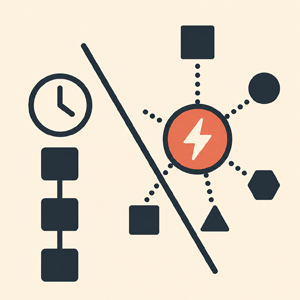 For years, enterprise data pipelines were built around a simple assumption: data arrives in batches, gets processed on a schedule, and feeds downstream systems in predictable intervals. That model worked when analytics was retrospective and applications were not dependent on real-time intelligence. But AI has fundamentally broken that paradigm, and static pipelines are quickly becoming a bottleneck rather than a foundation.
Frequently Asked Questions
What is the difference between batch pipelines and event-driven pipelines?
Batch pipelines process data on a fixed schedule, such as hourly or daily, regardless of when the data is created. Event-driven pipelines, on the other hand, process data immediately when a specific event occurs, allowing systems to react in real time. This makes event-driven systems significantly faster and more aligned with modern AI requirements.
Why are event-driven architectures important for AI?
AI systems depend on real-time data to make accurate and timely decisions, especially in use cases like fraud detection, recommendations, and automation. Event-driven architectures ensure that models can act instantly when new data arrives instead of waiting for the next batch cycle. This improves both performance and user experience.
Are event-driven systems more expensive to run?
Not necessarily, as event-driven systems can actually be more efficient when designed properly. They only use compute resources when events occur, rather than running constant scheduled jobs that may not always be needed. While they may require investment in low-latency infrastructure, they often reduce waste and improve overall cost efficiency.
