Internal marketing and employer branding refer to the strategies companies use to communicate their values, culture, and identity to two critical audiences: current employees and prospective hires. While external marketing focuses on winning customers, internal marketing focuses on winning the hearts and minds of the people who actually build, sell, and support your product. A strong employer brand doesn’t just help you attract better candidates. According to LinkedIn Hiring Solutions, it can reduce your cost per hire by up to 50%, decrease employee turnover by 28%, and help your company grow 20% faster than competitors with weaker talent brands. With AI now woven into almost every marketing workflow, these numbers are becoming more attainable for teams of all sizes.
In this article, we’ll discuss how AI is transforming the three interconnected pillars of internal marketing, those being recruitment marketing, employee advocacy, and internal communications. We’ll explore how AI tools can help you write more compelling job descriptions, empower employees to become authentic brand ambassadors on social media, and deliver internal messaging that actually resonates with your workforce. We’ll also cover the pitfalls to avoid, because the line between “AI-assisted” and “AI slop” is thinner than most marketers realize.
TL;DR Snapshot
The modern employer brand doesn’t live on your careers page alone, it lives in every Glassdoor review, every employee’s LinkedIn post, every internal email your team skims or ignores, and increasingly, in the AI-generated summaries that candidates see when they ask ChatGPT or Perplexity what it’s like to work at your company. AI gives marketing and HR teams the ability to shape all of these touchpoints at scale, from drafting personalized recruitment campaigns to analyzing employee sentiment in real time, without sacrificing the authentic human voice that makes your brand credible.
Key takeaways include…
- AI-powered employee advocacy platforms can dramatically extend your brand’s organic reach, since employee-shared content generates up to 561% more reach than corporate account posts.
- Internal communications teams are rapidly adopting AI for drafting, sentiment analysis, and personalization, with 78% of communicators now using AI in some capacity.
- There’s a big risk in using AI without a human layer of authenticity, which can widen the gap between what your employer brand promises and what employees actually experience.
Who should read this: HR leaders, employer brand managers, recruitment marketers, internal communications professionals, and marketing generalists responsible for company culture content.
AI-Powered Recruitment Marketing: From Job Posts to Talent Pipelines
Recruitment marketing is where employer branding meets the real world. It’s the job descriptions, career site content, social media campaigns, and targeted outreach that turn passive browsers into active applicants. Traditionally, this work has been slow, manual, and inconsistent. AI changes that equation.
One of the most immediate applications is using AI to write and optimize job descriptions. AI tools can analyze your existing postings, flag language that may discourage certain demographics from applying, and suggest alternatives that better align with your employer value proposition (EVP). They can also A/B test different versions of the same listing across platforms, learning which phrasing, tone, and structure generates the most qualified applicants.
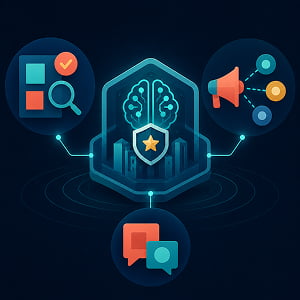
But smarter job posts are just the starting point, AI-powered career sites can now personalize the candidate experience in real time. When a visitor lands on your careers page, AI can recommend roles based on their browsing behavior, skills, and experience, much like an e-commerce site recommends products. Mastercard saw this firsthand after implementing an AI-driven recruitment marketing platform, as reported by Phenom. Within a year, they grew their talent community from fewer than 100,000 lifetime profiles to over one million. Their “influence hires” from recruitment marketing and sourcing campaigns jumped from less than 200 in 2021 to nearly 2,000 in 2023.
AI chatbots on career sites are delivering similar results. As noted by Benchpoint, Stanford Health Care deployed a chatbot that generated over 250,000 interactions, drove 11,000 candidate leads, and produced more than 12,000 apply clicks in just six months. Perhaps more telling, the chatbot’s ability to proactively answer common questions reduced recruiter support tickets from roughly 50 per week down to just a couple.
For marketers running recruitment campaigns across paid and organic channels, AI also enables programmatic job advertising, automatically shifting budget toward the platforms, geographies, and audience segments delivering the best-quality applicants. Instead of manually managing spend across job boards and social platforms, AI continuously optimizes in the background, improving cost per applicant and time to fill.
The key to making all of this work though, is to resist the temptation to let AI run on autopilot. Your recruitment marketing content still needs to sound like it was written by a human who genuinely works at your company, not by a language model trained on every generic job posting ever published. AI can help you to draft, test, and personalize quickly, but you’ll still need to rely on real human personality, specificity, and honesty.
Turning Employees Into Brand Ambassadors With AI-Driven Advocacy
Employee advocacy, the practice of empowering employees to share company content and their own professional insights on social media, has matured from a “nice-to-have” experiment into a core pillar of employer branding. The reason is simple math, people trust people more than they trust logos. According to the Edelman Trust Barometer, as cited by DSMN8, an employee voice is up to three times more credible than a CEO’s when it comes to describing working conditions. And as reported by Salesso, employee-shared content sees up to 561% more reach than the same content posted from a corporate account, with leads generated through employee advocacy being seven times more likely to convert than leads from other sources.
The challenge with this has always been scale. Getting 50, 200, or 1,000 employees to consistently share on-brand content is operationally difficult. That’s where AI comes in. Modern employee advocacy platforms like DSMN8, Hootsuite Amplify, Sociabble, and others now use AI to solve the biggest friction points in advocacy programs. AI can generate personalized caption suggestions for each employee, so hundreds of people aren’t all posting the exact same corporate-sounding message. It can recommend content based on each employee’s role, interests, and network, so a software engineer gets different content than a sales rep. And it can identify which employees are natural advocates and which might need additional encouragement or training.
According to a Guideflow analysis of the 2026 advocacy platform market, AI content creation is now considered table stakes in advocacy tools. The real differentiator is how well AI personalizes content to each employee’s voice rather than generating generic variations that strip out all individuality.
The DSMN8 2025 Benchmark report found that 96% of advocates said social media positively impacted their careers, which means advocacy isn’t just good for the company, it’s good for the employees participating as well. The same report showed that companies using DSMN8’s platform achieved a cost per click of under $1 on LinkedIn, compared to the platform’s average of $5.26, with one company (AWIN) hitting a CPC of just $0.23.
But here’s where marketers need to be careful, the entire value of employee advocacy rests on authenticity. If every employee post reads like it was generated by the same AI tool (because it was), you haven’t built an advocacy program, you’ve built a slop farm. The goal is to use AI to lower the barrier to participation, not to replace your employees’ actual voices. Give them AI-generated first drafts they can edit, personalize, and make their own. Encourage them to add their own perspective, even if it’s a little messy or imperfect. The messiness is what makes it believable.
Strengthening Internal Communications With AI (Without Losing the Human Touch)
Internal communications might be the most overlooked component of employer branding. If recruitment marketing is how you attract people to your company, and employee advocacy is how your people represent you externally, internal comms are how you reinforce culture, build trust, and keep people engaged once they’re in the door. And right now, there’s a significant engagement gap there that needs closing.
Gallup’s State of the Global Workplace report found that global employee engagement fell to just 20% in 2025, its lowest level since 2020. That means roughly four out of every five employees worldwide aren’t fully engaged in their work. Gallup estimates that this disengagement costs the global economy approximately $10 trillion in lost productivity annually, equivalent to about 9% of global GDP. These aren’t abstract numbers, they represent real people who aren’t connecting with their organization’s mission, values, or culture, and internal communications plays a direct role in whether that connection exists or not.
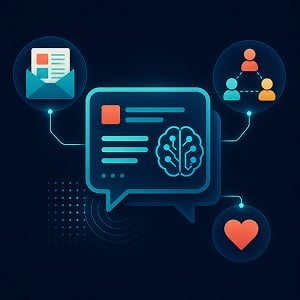
AI is beginning to reshape how internal comms teams operate. According to a PoliteMail and Ragan Communications survey, 78% of internal communicators are now using AI in the workplace. The most common applications are drafting and editing content (75% of respondents), transcribing meetings and interviews (47%), and analyzing employee sentiment (25%). The ContactMonkey Global State of Internal Communications report found that AI in the workplace is the top area of focus for internal communicators this year, cited by 57% of respondents.
These tools can genuinely help. AI can analyze engagement data across internal emails, intranet posts, and company newsletters to identify which messages resonate with different employee groups and which ones get ignored. It can segment audiences so that a frontline warehouse worker receives different communications than a remote software developer. It can summarize leadership updates into concise, readable formats, and flag content for accessibility issues before it goes out. As IBM’s approach to AI in employee engagement demonstrates, AI can even personalize internal communications at massive scale, tailoring check-ins, recognition messages, and learning recommendations based on individual roles and preferences.
But here’s the tension every internal comms team needs to navigate, employees can tell when content is AI-generated, and increasingly, they don’t resonate with it. The same PoliteMail and Ragan survey found that while AI is a powerful enabler, employees want to hear from a real person, not an algorithm. The survey recommended that comms teams find ways to “humanize their content by centering personalized, detailed stories that AI couldn’t invent.”
This is the central challenge for anyone using AI for internal marketing. It’s exceptionally good at producing content efficiently, but efficiency isn’t the same as quality or authenticity. The most effective approach uses AI for the operational heavy lifting (drafting, data analysis, personalization, scheduling, sentiment tracking) while keeping the storytelling, vulnerability, and leadership voice unmistakably yours. Use AI to rough out the first version of a company-wide email, then have a real leader rewrite the opening paragraph in their own words, reference a specific team win from last week, acknowledge a challenge the company is actually facing, and adjust the tone and verbiage to match their unique style. That combination of AI efficiency and human specificity is what separates comms that build culture from comms that get ignored and/or ridiculed.
How AI Shapes Your Employer Brand in Places You Don’t Control
There’s one more dimension of employer branding that marketers can’t afford to ignore, AI is now actively shaping how candidates perceive your company before they ever even visit your website. When someone asks ChatGPT, Claude, Gemini, or Perplexity what it’s like to work for you, they construct an answer by pulling from your careers site, Glassdoor reviews, Reddit threads, LinkedIn content, news articles, and other public sources. The summary candidates receive may be the single most influential touchpoint in their decision to apply or move on.
According to BrandPointZero, AI will amplify whichever narrative about your employer brand is loudest. Old issues, viral posts, or sensational headlines can outweigh years of steady progress, because AI models tend to prioritize recency and repetition. If your EVP promises flexibility but your Glassdoor reviews highlight burnout, AI will connect those dots and surface the contradiction.
This reality makes the connection between internal marketing and external perception more important than it’s ever been. Your internal communications shape employee sentiment. Employee sentiment shapes Glassdoor reviews and social media posts. Those reviews and posts shape AI-generated summaries. And those summaries shape whether top candidates have any interest in joining your team.
Employer Branding News describes this as a shift from campaign-led employer branding to “data-led reputation discipline,” where organizations need structured, specific public information about their working conditions so that AI tools can accurately represent them. Vague culture pages and generic “we value our people” statements don’t cut it anymore. AI models need concrete data (e.g. internal promotion rates, skills development programs, real employee stories, and specific details about how roles use and interact with technology).
The practical takeaway is this, treat your employer brand content as if it needs to be machine-readable, not just human-readable. Structure your careers site with clear, specific FAQs. Publish actual data points about internal mobility, pay transparency, and professional development. Encourage employees to share authentic experiences on LinkedIn and review platforms. The more consistent, specific, and honest your employer brand signal is across multiple sources, the more accurately AI tools will represent you to candidates.
Frequently Asked Questions
Employer branding is the process of shaping and communicating your company’s identity and reputation as a place to work. It encompasses your employer value proposition (EVP), company culture, employee experience, career development opportunities, and how all of these elements are communicated to both current employees and prospective candidates. A strong employer brand helps attract better talent, reduce hiring costs, and improve employee retention.
An EVP is the unique set of benefits, experiences, and values that an employee receives in return for the skills, capabilities, and experience they bring to a company. It typically includes elements like compensation, career growth opportunities, company culture, work-life balance, and organizational purpose. Your EVP serves as the foundation of your employer brand messaging across recruitment marketing, internal communications, and employee advocacy.
Employee advocacy is the practice of empowering and encouraging employees to share company-related content, industry insights, and their own professional experiences on their personal social media accounts. It leverages the trust and reach that individual employees have within their own networks. Employee advocacy platforms are software tools that make this process easier by curating shareable content, providing AI-generated captions, tracking engagement metrics, and gamifying participation.
Recruitment marketing applies traditional marketing strategies and tactics to the talent acquisition process. It includes activities like writing compelling job descriptions, building and optimizing career sites, running targeted campaigns on social media and job boards, nurturing talent communities, and using analytics to improve the candidate experience. AI is increasingly used in recruitment marketing for tasks like programmatic job advertising, chatbot-driven candidate engagement, and personalized content delivery.
Glassdoor is an online platform where current and former employees can anonymously review companies, share salary information, and rate their experience with leadership, culture, work-life balance, and other factors. For employer branding purposes, Glassdoor is significant because it’s one of the primary sources that both human job seekers and AI tools reference when evaluating what it’s like to work at a particular company.
The Edelman Trust Barometer is an annual global survey conducted by the communications firm Edelman that measures public trust in institutions, including businesses, governments, media, and NGOs. In the context of employer branding, it’s frequently cited for findings about how much more credible employee voices are compared to corporate or executive messaging when it comes to describing workplace conditions.
The State of the Global Workplace report is an annual publication by Gallup, a global analytics and advisory firm, that tracks employee engagement, well-being, and workplace trends across 140+ countries and territories. It’s based on data from the Gallup World Poll and is widely considered one of the most comprehensive ongoing studies of the global employee experience. The 2026 edition, based on 2025 data from over 263,000 respondents, found that global employee engagement had fallen to 20%.
Other AI Training Modules You May Be Interested In
The Right Way to Use AI for Seasonal and Moment Marketing
Using AI to Optimize for Voice Search and Conversational Commerce
Using AI to Identify and Evaluate Co-Marketing and Partnership Opportunities
